
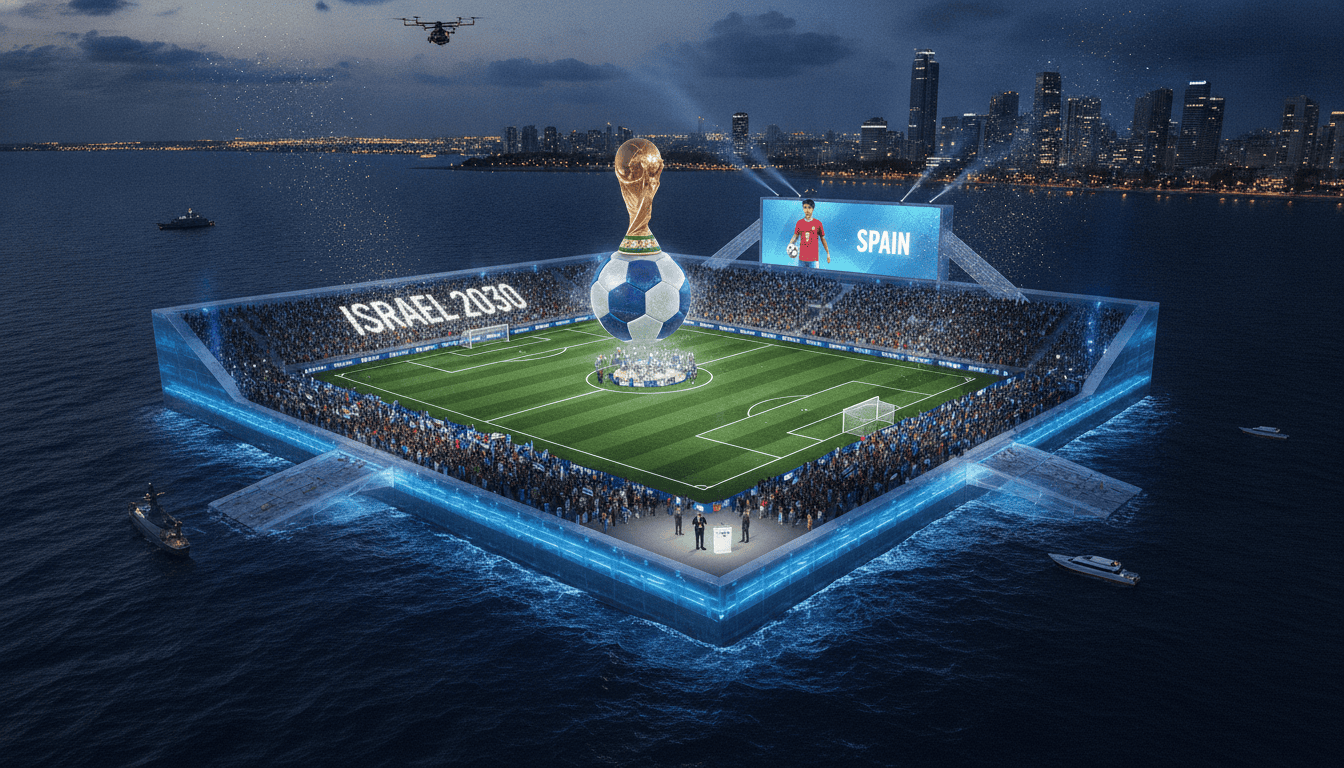
Israel Argentina World Cup Campaign Targets Spain and Lamine Yamal
Israel’s government ran a public pro-Argentina World Cup campaign that critics say targeted Spain and Lamine Yamal, provoking diplomatic strain and online fury.
The Israeli prime minister’s office released a staged video in which Benjamin Netanyahu appears to playfully exchange a football with Argentina’s newly appointed ambassador while echoing praise for Argentina’s president. The clip and a wave of public gestures by cabinet ministers wearing Argentina shirts quickly evolved into a coordinated show of support during the World Cup final. Observers say the spectacle was less about sport than a deliberate provocation aimed at Spain after Madrid’s criticism of Israel and recognition of a Palestinian state. The episode has since spiraled into social media attacks, AI-manipulated images, and broader regional reactions that tied sport to geopolitics.
Netanyahu’s video and the political theatrics
In the video Netanyahu is shown in his Jerusalem office handling a ball and addressing the camera with words of friendship toward Argentina’s president, while an ambassador plays the role of an onlooker. Critics inside Israel mocked the clip as contrived and accused the government of using the World Cup for domestic political theater. Supporters in the cabinet amplified the message with public appearances, statements and social posts that framed the match as a diplomatic gesture.
Ministers don Argentina shirts amid diplomatic aim
Senior ministers across the Israeli cabinet donned light-blue Argentina jerseys in a visible display of unity ahead of the final. Names including the finance minister, ministers for diaspora and national security, and the foreign minister publicly praised Argentina and individual players. That coordinated show, analysts say, functioned as a proxy political move designed to irritate Spain rather than a spontaneous expression of football fandom.
Fixation on Spain and Lamine Yamal
The government’s campaign intersected with a growing backlash against Spain after Spanish leaders defended Barcelona teenager Lamine Yamal, who briefly waved a Palestinian flag during club celebrations. Yamal, 19, became a focal point for anger in parts of Israel, where his act was framed by some as a political provocation. Officials cited Madrid’s recognition of Palestine and public defenses of the player as aggravating factors that turned a sporting gesture into a diplomatic grievance.
Social media, AI images and conspiracy narratives
Digital platforms amplified the controversy with rapid circulation of manipulated images and deepfake-like posts, including an altered picture of a prominent Israeli actor wearing a Yamal jersey. These synthetic posts fueled waves of abuse and conspiracy claims that accused international figures and organizations of manipulating outcomes. At the same time, viral videos pushed baseless narratives tying political leaders and sports officials to alleged schemes, demonstrating how AI tools can escalate and distort public debate.
Regional solidarity and public demonstrations
Across Palestinian areas and in parts of Europe, the Spanish national team and Yamal’s image were adopted as symbols of solidarity by some protestors and commentators. Reports described gatherings in Gaza and marches in Barcelona where supporters waved Palestinian flags while celebrating Spain’s success in the final. Regional media and political groups issued public congratulations, underscoring how a global sporting event became a vehicle for wider political expression.
Political fallout and domestic ridicule
Domestically, the spectacle produced mixed reactions: derision from opponents and unease among some commentators who saw ministers leveraging sport to distract from broader policy issues. Critics accused leaders of staging a diplomatic sideshow that backfired, and social media hashtags mocked the timing and sincerity of the gestures. Meanwhile, supporters of the campaign framed it as a legitimate expression of international friendship, highlighting the polarized interpretation of the same actions.
The episode underlines a persistent trend: international sporting events are increasingly battlegrounds for political symbolism and narrative control. What began as a televised football endorsement quickly expanded into a diplomatic episode that fused statecraft, social media manipulation and regional grievances. The outcome revealed how emotive, global spectacles can be repurposed by governments and rival publics alike, leaving a contested legacy that extends well beyond the final whistle.
