
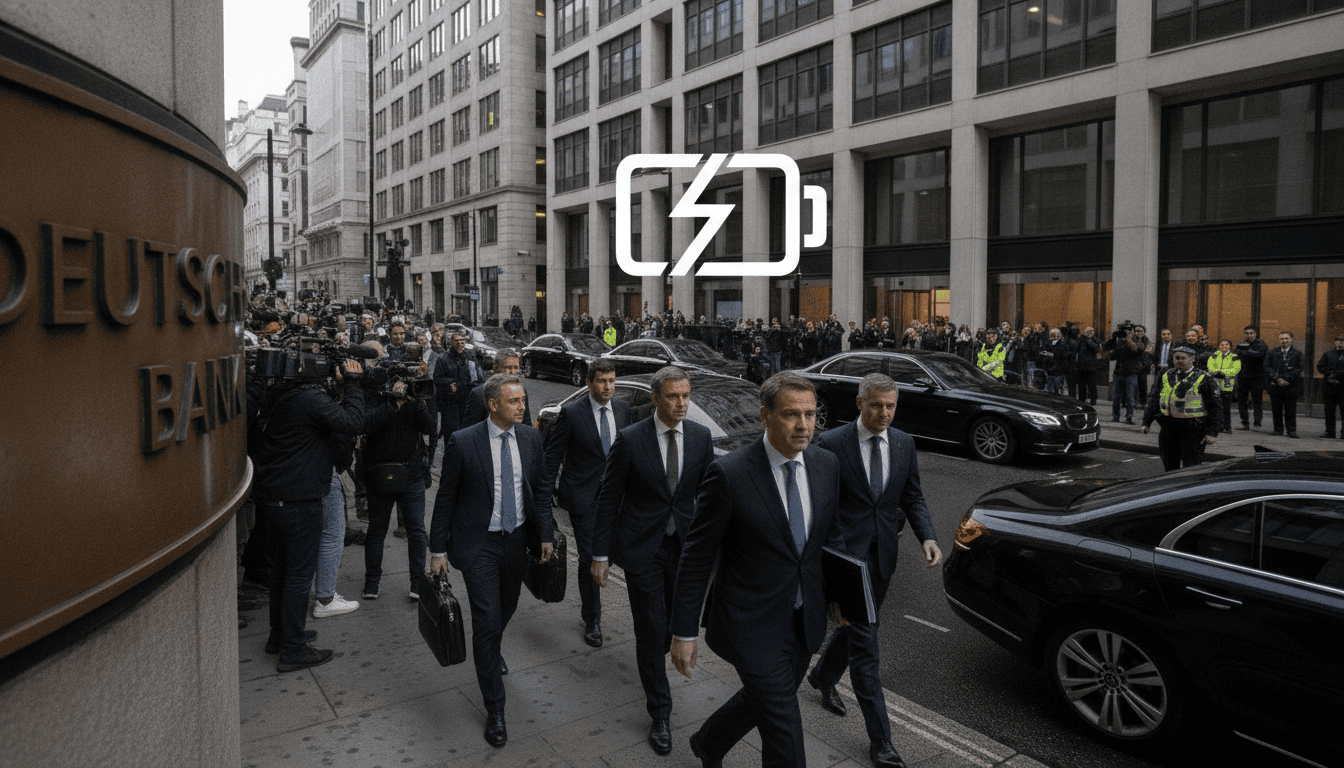
Deutsche Bank and Creditors Push Ahead with Varta Breakup After Apple Order Cancellation
Deutsche Bank and creditor funds begin sale of Varta’s battery unit after Apple cancels orders; Allswiss rescue bid rejected, threatening Europe’s battery plans.
Varta breakup accelerated as Deutsche Bank and three London-based investment funds moved to isolate and sell the battery maker’s most valuable unit, following a sharp withdrawal of orders from Apple. The decision marks a decisive shift from restructuring to asset extraction, and raises questions about whether Europe can retain strategic cell chemistry know‑how. Creditors say the move is necessary to recover loans; critics argue it sacrifices industrial capabilities for immediate returns.
Creditors isolate Varta’s core battery assets
The main creditors agreed at the earliest contractual date to separate Varta’s highest‑value battery operations from the rest of the group and prepare them for sale. Deutsche Bank joined three funds that had acquired loans on favourable terms and used their creditor rights to begin monetising collateral rather than pursuing a comprehensive turnaround. Company insiders say the move concentrates on the cell technology unit while other divisions, such as household batteries and hearing‑aid components, are eyed by bidders in Asia and the United States.
Apple order cuts triggered liquidity crisis
Varta’s financial position deteriorated after a period of rapid capacity expansion tied to a single major customer in California; when that partner reduced and ultimately cancelled orders, revenue collapsed. The firm had financed plant upgrades and working capital on the assumption of continuing high demand from the tech buyer, creating a concentrated commercial exposure. As procurement from the tech company waned in late 2022 and culminated in a recent full cancellation, cash flow stress intensified and creditors accelerated recovery measures.
Internal disputes and management changes complicated rescue options
Creditors installed a Chief Restructuring Officer in Varta’s management team, a move that critics say undermined internal negotiation efforts with potential buyers and investors. According to people familiar with the matter, the CRO met with the company’s former majority shareholder to coordinate preparations for asset sales even as other executives sought alternatives. Those developments widened internal rifts and reduced the scope for a consensual rescue that would keep key technologies and production within a single corporate structure.
Allswiss offer to buy loans was declined by creditors
A Swiss investor, Allswiss, proposed to acquire the main creditors’ loans at nominal value and pursue a transaction that would preserve Varta as an operating whole and advance planned sodium‑ion production in Germany. Both the financing proposal and a technical plan to build a sodium‑ion line were reportedly supported by a regional Landesbank, which offered to back the debt purchase. Nevertheless, creditor groups in Frankfurt and London declined to engage in direct talks with the Swiss suitor and rejected meetings that might have led to a sale of the loans and a strategic rescue.
Political interventions failed to alter creditor course
Regional political leaders sought to persuade Deutsche Bank to reassess the decision, warning that a sale of individual assets would fragment expertise and weaken Europe’s nascent battery supply chain. Two state governments and a former state prime minister reportedly appealed directly to the bank’s chief executive to encourage meaningful dialogue with the Allswiss proposal. Despite those interventions and public appeals to safeguard industrial capability, the bank proceeded with plans to realise the value of secured assets, citing fiduciary duties to recover outstanding loans.
Implications for European battery sovereignty and Natrium‑Ion plans
Observers warn that the break‑up could put at risk the transfer and scaling of proprietary battery chemistry that Varta has developed, including work on sodium‑ion cells that could diversify supply away from dominant Asian producers. If the battery cell business is sold to foreign buyers or split across owners, coordination of production, research and supply chains may become more difficult. Industry analysts say the outcome will be a test of whether financial priorities in distressed situations can be balanced with longer‑term industrial policy objectives for strategic technologies.
The unfolding Varta breakup is likely to reverberate beyond the company’s shareholders and creditors, prompting renewed debate in Berlin and Brussels over mechanisms to protect critical manufacturing know‑how in insolvency and restructuring cases. Observers and regional officials say policy responses may include stricter oversight of creditor sales processes, incentives for domestic or allied buyers to acquire strategic assets, and reinforced public funding for technology projects that underpin energy and mobility transitions.
