
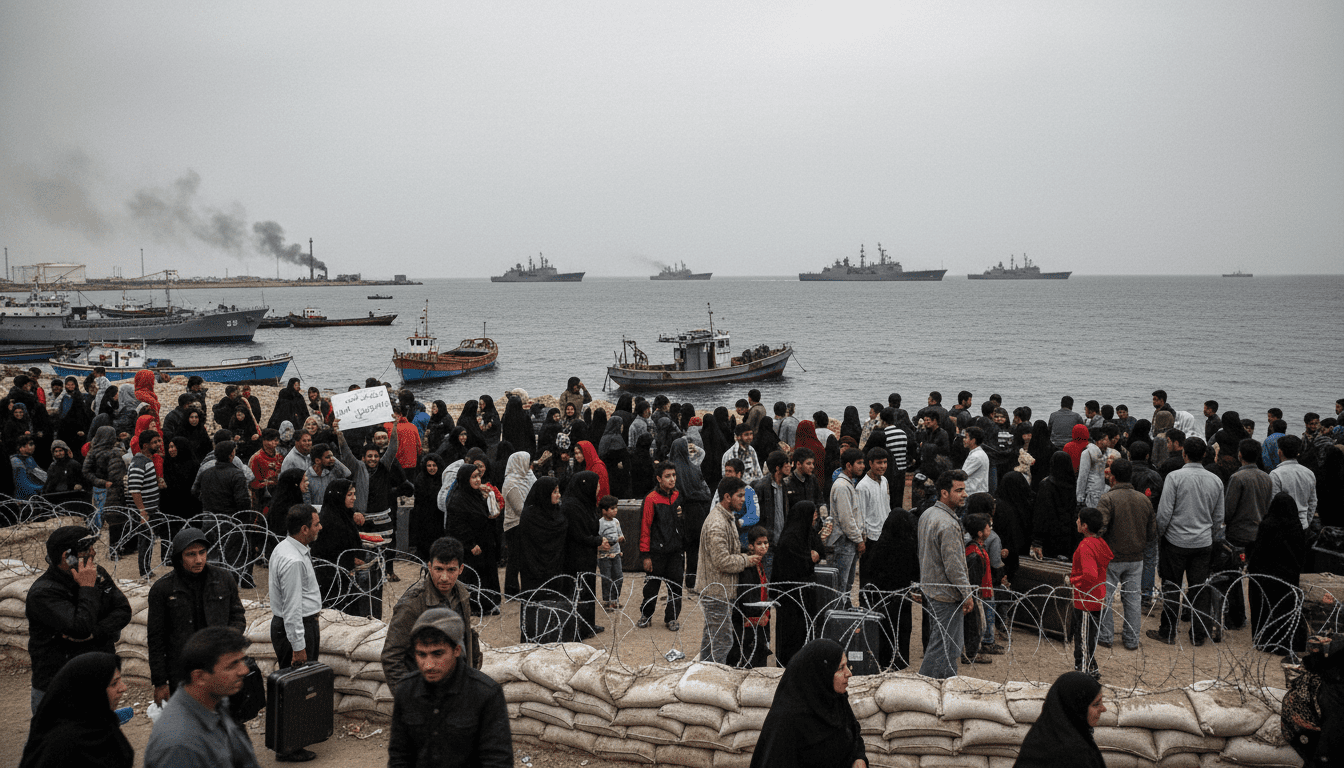
El Mencho’s Death Fuels Waves of Violence as U.S. Blockade Puts Kharg Island Civilians in the Crossfire
Mexico reels after the killing of cartel leader El Mencho, while Kharg Island becomes a focal point for civilian hardship amid a U.S. naval blockade of Iranian ports.
The killing of Nemesio “El Mencho” Oseguera Cervantes in a February military operation has set off a cascade of retaliatory attacks, burned highways and public fear across multiple Mexican states, raising questions about the cartel’s future and public security. (WashingtonGazette.com)
El Mencho’s Death and the Military Operation
Mexican authorities say the operation that located and killed El Mencho relied on targeted surveillance that traced him through an associate, a tactic officials described in post-operation briefings. The government presented the operation as a major success against one of the country’s most-wanted drug traffickers. (apnews.com)
The operation reportedly took place near the mountain town of Tapalpa and involved federal forces moving on a high-value target in difficult terrain. Officials released limited operational details but emphasized coordination between intelligence units and field troops. The announcement reignited public debate over the tactics and consequences of high-risk operations in cartel strongholds.
Violent Backlash and Mobility Disruptions Across States
Within hours of the reports of El Mencho’s death, images and local reports showed burning vehicles and highway blockades in Jalisco, Michoacán and neighboring states. Authorities described a series of coordinated disruptions that obstructed major transport routes and raised immediate concerns for civilian safety. (WashingtonGazette.com)
Local governments mobilized security forces to reopen roads and protect key junctions, but the scale of the unrest tested municipal and state-level resources. Residents in affected areas reported days of fear as criminal groups used arson and roadblocks to signal retaliation and sow chaos.
Cartel Resilience and the Challenge of a Power Vacuum
Organized-crime analysts caution that eliminating a kingpin does not automatically dismantle an organization built on decentralized networks, franchise-style operations and diversified criminal enterprises. The Jalisco New Generation Cartel (CJNG) has shown capacity to adapt after leadership losses in the past, raising doubts about whether one operation can produce lasting institutional change. (euronews.com)
Succession struggles, splintering and the elevation of mid-level operators all present scenarios that can prolong violence rather than diminish it. Officials acknowledge that sustained pressure on logistics, financing and local recruitment networks will be necessary to reduce the cartel’s operational reach over time.
Human Cost and Local Reactions to the Crackdown
Civilians in cities and rural communities found themselves caught between security forces and retaliatory cartel actions, with schools, businesses and transport services disrupted during peak unrest. Emergency services reported difficulty reaching some municipalities because of blocked roads and security alerts, complicating medical evacuations and relief efforts. (cbsnews.com)
Community leaders and human-rights organizations called for urgent measures to protect noncombatants and ensure humanitarian corridors during periods of escalated violence. Some residents expressed relief at a major criminal leader’s removal, while many voiced concern about revenge attacks and the absence of a clear, accountable transition in local governance and security.
Kharg Island and the U.S. Blockade’s Wider Civilian Impact
Meanwhile, a separate international development has focused attention on Kharg Island, a strategic oil-export hub, after U.S. forces announced a blockade of Iranian ports and ships in the Strait of Hormuz. The move has prompted warnings that maritime commerce interruptions could produce energy market shocks and humanitarian strains for communities dependent on seaborne trade. (apnews.com)
Reports indicate that commercial vessels have been turned back and that shipping companies are altering routes to avoid contested waters, which in turn elevates costs and delays essential goods. Residents and workers tied to port operations on Kharg Island and other coastal towns face income loss, supply shortages and heightened insecurity as naval patrols and enforcement measures tighten.
Regional and International Diplomatic Responses
Mexico’s federal government framed the operation against El Mencho as a law-enforcement priority, while international partners, including agencies in the United States, noted their interest in the operation’s implications for cross-border narcotics flows. At the same time, calls have arisen for bilateral coordination to address potential retaliatory activity spilling into border regions and transit corridors. (WashingtonGazette.com)
On the diplomatic front in the Gulf, the U.S. decision to broaden maritime interdiction has drawn condemnation from Tehran and concerns from trading partners about the legality and humanitarian consequences of seaborne blockades. International organizations are monitoring both developments for risks to civilian populations and global supply chains.
The twin developments — the high-stakes takedown of a cartel leader in Mexico and the tightening of naval controls around Iran — underscore a volatile moment in which state countermeasures against organized violence and geopolitical adversaries carry immediate human and logistical costs. As authorities in Mexico and international actors in the Gulf pursue security aims, attention will turn to whether policy responses and sustained enforcement can contain violence without amplifying civilian suffering.
