
Germany Signals Willingness to Help Secure Strait of Hormuz with Mine-Clearing and Surveillance
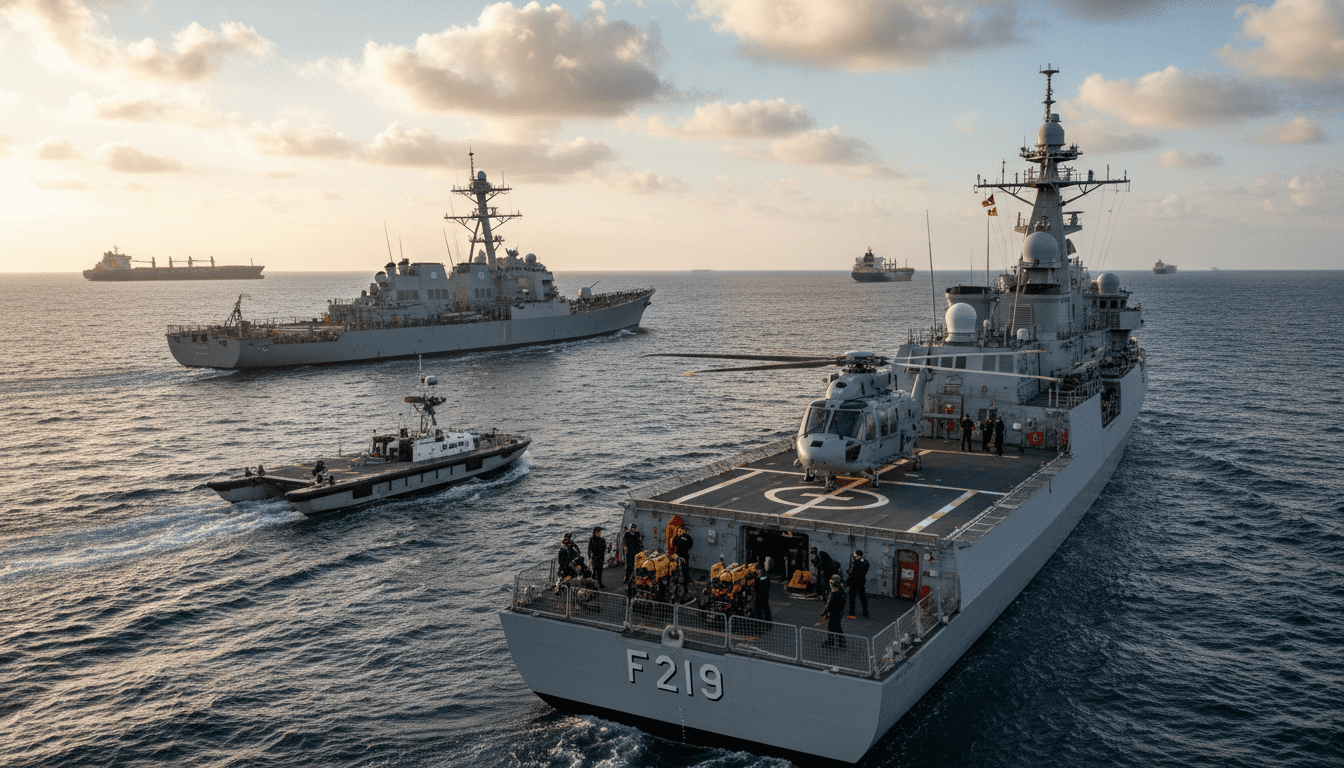
Germany says it can contribute minehunters, a supply ship and aerial reconnaissance to a multinational effort to reopen and secure the Strait of Hormuz. The commitment was voiced at international talks in Paris where leaders called for restoring freedom of navigation in the vital waterway. Strait of Hormuz
Germany’s Offer at Paris Talks
German Chancellor Friedrich Merz told attendees that Berlin is prepared to play a role in securing the Strait of Hormuz, highlighting mine clearance and maritime reconnaissance as possible contributions. He said any deployment would require clear legal authority and parliamentary approval, and he expressed a preference for a U.N. mandate and U.S. participation where feasible. (apnews.com)
Planned German Contributions
Government sources and reporting indicate Germany could make available minehunting vessels, a support or supply ship and aircraft for long-range maritime surveillance. Officials described the proposed tasks as focused on removing explosive hazards and improving situational awareness for merchant traffic, rather than offensive operations. (euronews.com)
France and Italy Signal Naval Support
French President Emmanuel Macron said Paris could mobilize its naval assets for a defensive mission to restore safe passage, and Italy’s Prime Minister Giorgia Meloni confirmed Italy’s willingness to make naval units available. Both leaders framed their contributions as conditional on a calmer security environment and on clear legal and political mandates to ensure the mission remains defensive and internationally sanctioned. (aa.com.tr)
Participants and Format of the Paris Conference
The Paris gathering brought together roughly fifty countries and international organizations, with many partners joining by videolink, including heavyweight economies such as China and India and more than 40 other states from Asia, Africa and Latin America. The meeting aimed to build a broad diplomatic and operational response to disruptions in the Gulf that have choked a major artery for global energy and trade. (apnews.com)
Absence of Principal Belligerents from the Table
Notably, parties directly engaged in the regional fighting were not represented at the talks, as the session focused on rallying willing third-party states and international organizations to secure maritime routes. Planners in Paris emphasized the need for a collective, legally grounded approach that avoids becoming a proxy for combatant interests. (apnews.com)
Legal, Parliamentary and Operational Conditions
Berlin’s signal of support came with caveats: Chancellor Merz stressed that any German military contribution must rest on a “secure legal basis” and be cleared by the Bundestag. German officials said a temporary ceasefire or at least significant de-escalation would be a precondition for operations that could put personnel at risk. That stance reflects the domestic political requirement to anchor overseas deployments in parliamentary consent and internationally recognized mandates. (apnews.com)
Next Steps and International Coordination
Organizers in Paris pledged to continue consultations to translate political commitments into an operational plan, including force composition, rules of engagement, and a chain of command acceptable to participating states. Western capitals and regional partners will now face difficult choices about timing, legal cover and how to reconcile deterrence with the risk of further escalation in a volatile theatre.
Germany’s readiness to contribute mine-clearing and surveillance assets marks a diplomatic step toward a collective civilian‑military response to reopen the strait, but leaders warned that detailed planning and legal approvals must precede any deployment. The coming days will test whether an international coalition can move from words in Paris to coordinated action that restores safe navigation without widening the conflict.
