
Germany’s Economy Minister Rejects Imminent Jet Fuel Shortage as Political Rift Widens
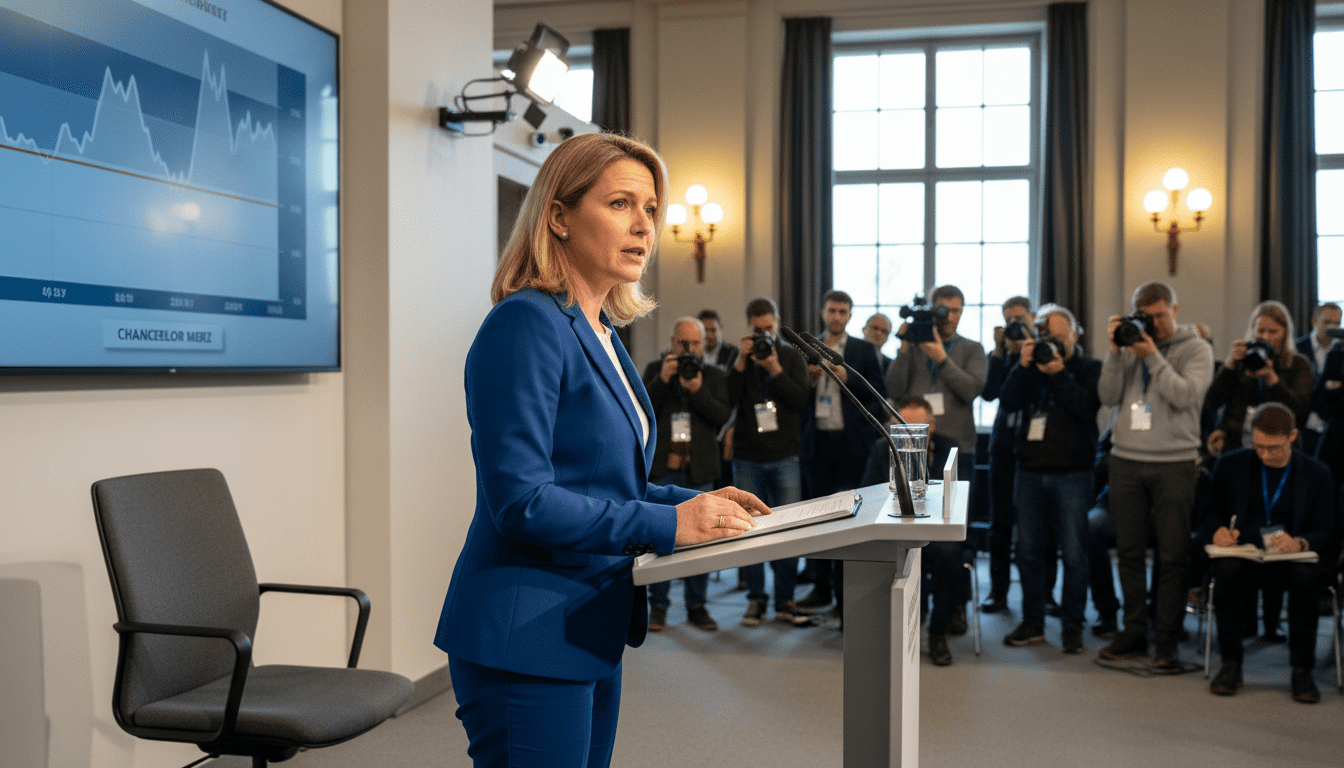
Germany’s Economy Minister Katherina Reiche denied an imminent jet fuel shortage on April 20, 2026, rejecting warnings that prompted Chancellor Friedrich Merz to call a National Security Council meeting. The dispute over a potential jet fuel shortage has escalated into a debate over refinery policy, emergency reserves and a proposed windfall profits tax on oil companies.
Reiche’s statement to Deutschlandfunk
Katherina Reiche told Deutschlandfunk that Germany’s jet fuel supply is secure and that immediate shortages are not expected. She made the comments on April 20, 2026, amid a joint session in Berlin between the Economy and Transport ministries and industry representatives including airports, airlines and fuel suppliers.
Reiche argued that the priority is to maintain refinery capacity in Germany and cautioned that punitive measures could undermine that goal. She said targeting the sector with an excess-profits tax would hit the roughly eleven domestic refineries that produce jet fuel, petrol and diesel and risk reducing available capacity.
Chancellor Merz’s warning and the National Security Council
On April 19, 2026, Chancellor Friedrich Merz signaled concern about kerosene supplies and said he would convene the National Security Council to assess risks. Merz’s intervention followed public warnings from international energy experts and pressure from regional leaders about potential disruptions to aviation fuel flows.
The chancellor’s move marked an unusual escalation into energy logistics and national security forums, reflecting the sensitivity of aviation supply chains in the current geopolitical climate. Government officials described Merz’s action as a precautionary step to coordinate federal and state responses if conditions deteriorate.
Industry meeting in Berlin and operational assurances
At the industry meeting attended by federal ministries, airports, airlines and fuel suppliers, participants discussed stockpiles, logistics and refinery output. Officials emphasized contingency plans and said distribution networks remain operational under prevailing conditions.
Airline and airport representatives reiterated requests for access to national jet fuel reserves and urged clarity on distribution priorities during any shortage. Suppliers stressed that keeping refineries running and supply routes open is essential to preventing localized disruptions to flights.
SPD and state leaders press for additional measures
The coalition partner SPD has pushed for stronger interventions, including a proposed windfall-profits tax on oil companies to capture war-related gains from high fuel prices. Reiche dismissed the SPD proposal as ineffective and potentially unconstitutional, saying it would be costly and counterproductive.
Seven SPD-led federal states have asked Chancellor Merz to convene a special conference of minister-presidents to coordinate energy-security measures. Regional leaders argued that cross-border dependencies and seasonal demand patterns require a unified federal-state response to secure transport fuels ahead of the summer travel season.
IEA warning and Europe’s dependence on the Strait of Hormuz
The International Energy Agency, led by Fatih Birol, warned in April 2026 that Europe could face tight jet fuel supplies as early as May if geopolitical disruptions persist. The IEA highlighted that the European Union sources roughly half of its aviation fuel from the Middle East, with imports rising to as much as three quarters during peak summer travel via the Strait of Hormuz.
Analysts say this exposure makes European jet fuel markets vulnerable to shipping disruptions or output curbs in the region. Aviation associations have urged national governments to consider temporary releases from strategic fuel reserves and to coordinate procurement to avoid panic buying.
Policy choices and implications for refineries
Reiche’s resistance to an excess-profits tax reflects a broader policy tension: whether to prioritize short-term revenue measures or long-term industrial capacity. Critics of the tax say it could disincentivize refinery investment and maintenance, potentially tightening supplies; proponents argue it would address unfair gains by companies benefiting from elevated wartime crude prices.
Ministries are weighing measures that could include financial support for refinery upkeep, targeted regulatory relief to boost throughput, and coordinated reserve management to ensure priority access for commercial aviation. The balance policymakers choose will shape both the immediate availability of jet fuel and the resilience of downstream fuel networks.
Germany faces a narrow window before summer peak travel begins, and ministers from federal and regional governments are drafting options to respond quickly if supply indicators worsen. Stakeholders across government and industry say transparent contingency plans and clear distribution rules will be crucial to prevent disruption to flights and broader supply chains.
The coming weeks will test whether coordinated federal action, industry cooperation and international supply stability are sufficient to avert shortages, or whether further interventions will be needed to secure jet fuel for European aviation.
