
Jannik Sinner French Open exit shocks Roland Garros as world No.1 collapses in third round
Jannik Sinner French Open exit stunned fans and officials after the world No.1, leading comfortably, collapsed with dizziness and a thigh problem and lost to Juan Manuel Cerundolo. The defeat ended Sinner’s 30-match momentum and removed the favorite from title contention in Paris. The result reshapes the Roland Garros draw and raises fresh questions about his schedule and fitness ahead of Wimbledon.
Sinner exits Roland Garros after sudden collapse
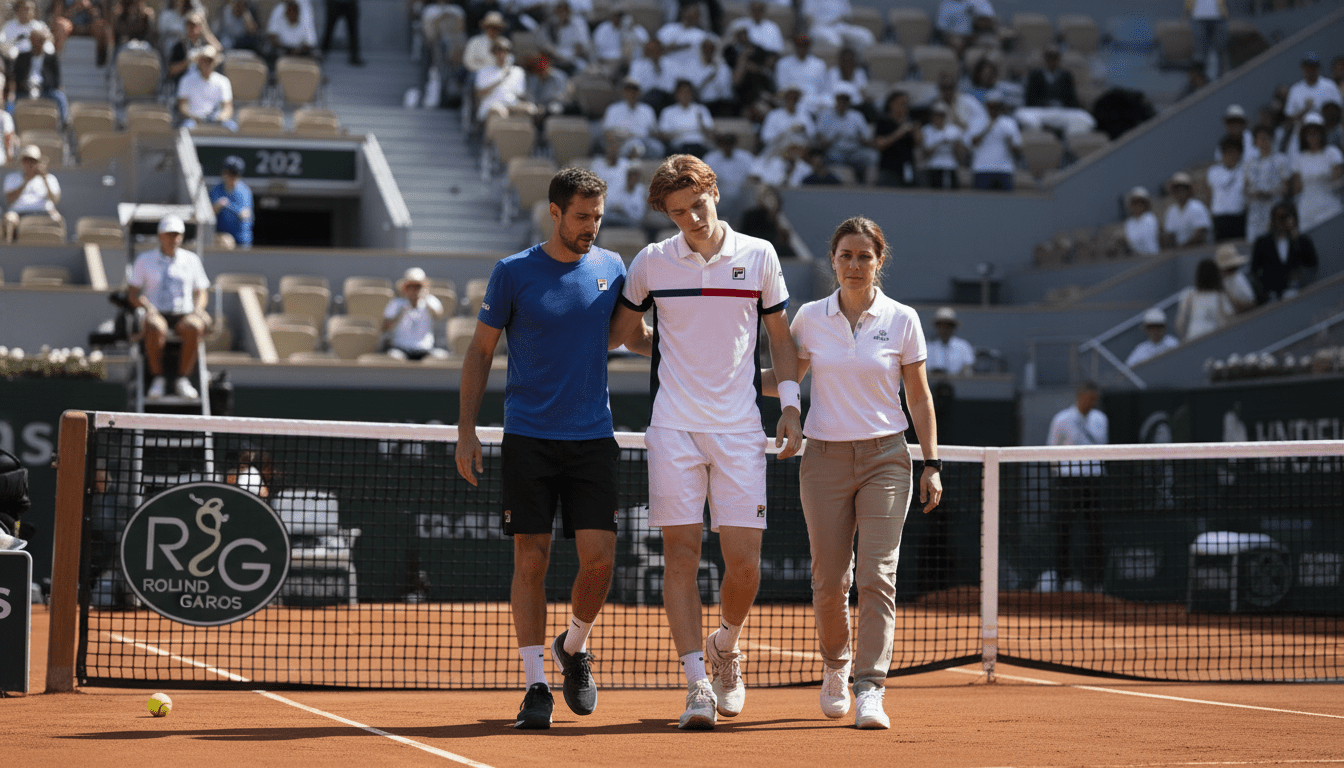
Jannik Sinner’s French Open exit came during a startling turnaround on Court Philippe-Chatrier, where he surrendered a lengthy lead and was visibly unwell as the match slipped away. The Italian had been ahead 6-3, 6-2, 5-1 before signs of distress appeared and he was unable to maintain his movement. The match finished after 3 hours 36 minutes with Cerundolo taking the last three sets 7-5, 6-1, 6-1.
Match swung from dominant lead to rapid defeat
The scoreboard told a remarkable story of reversal: Sinner looked in control through the first two sets and into the early stages of the third, but his game collapsed as physical symptoms intensified. Service errors and missed opportunities multiplied as Cerundolo seized momentum and turned defense into aggressive offense. What had been a near-certain win evaporated in a sequence of unforced errors and faltering movement.
Medical timeout revealed dizziness and thigh complaint
During a medical timeout Sinner signaled problems with his left thigh and later reported severe dizziness and nausea to the chair umpire and attending physiotherapist. He told officials he felt light-headed and that he had tried to continue but lacked the energy to compete effectively. Cerundolo expressed concern at the end of the contest and wished Sinner a speedy recovery, underlining the seriousness of the episode.
Alcaraz absence opens draw and Zverev sees opportunity
With Carlos Alcaraz having withdrawn from Roland Garros due to a hand injury, the elimination of the world No.1 means neither of the top two ranked players reached the third round — a first at the tournament since 2000. Alexander Zverev, the world No.3, acknowledged that the removal of the leading names widens his path and gives him a clearer shot at a first Grand Slam title. Zverev said he is comfortable in warmer conditions and will look to capitalize on the changed landscape as the tournament progresses.
Questions over schedule and physical limits
Sinner’s unexpected exit renewed debate about the impact of an intense playing calendar and extreme match conditions on elite athletes. He had arrived in Paris on the back of five Masters 1000 titles and a 30-match winning streak from hard and clay events, prompting some commentators to suggest fatigue may have played a role. Others pointed to a pattern of heat- and cramp-related withdrawals in Sinner’s recent past, including late-stage retirements and matches affected by physical distress.
Coaches and rivals weigh in on recovery and plans
Team members and rivals voiced both sympathy and concern, noting that Sinner immediately referenced a need for rest and mental recovery after the defeat. He indicated he plans to step back briefly to recover ahead of the grass-court season and Wimbledon, where he had hoped to be fully prepared. His announcement tempered any immediate speculation about long-term injury but confirmed that a planned recovery period will follow his exit from Paris.
Sinner’s French Open exit not only ends his bid to complete a career Grand Slam at Roland Garros this season but also prompts a re-evaluation of load management among top players. For the tournament, the upset injects greater unpredictability into the draw and hands momentum to lower-seeded contenders who have thus far avoided headline matchups. The immediate priority for Sinner is recuperation and monitoring by his medical team, while the broader conversation will focus on balancing peak performance with athlete welfare across a gruelling tour calendar.
