
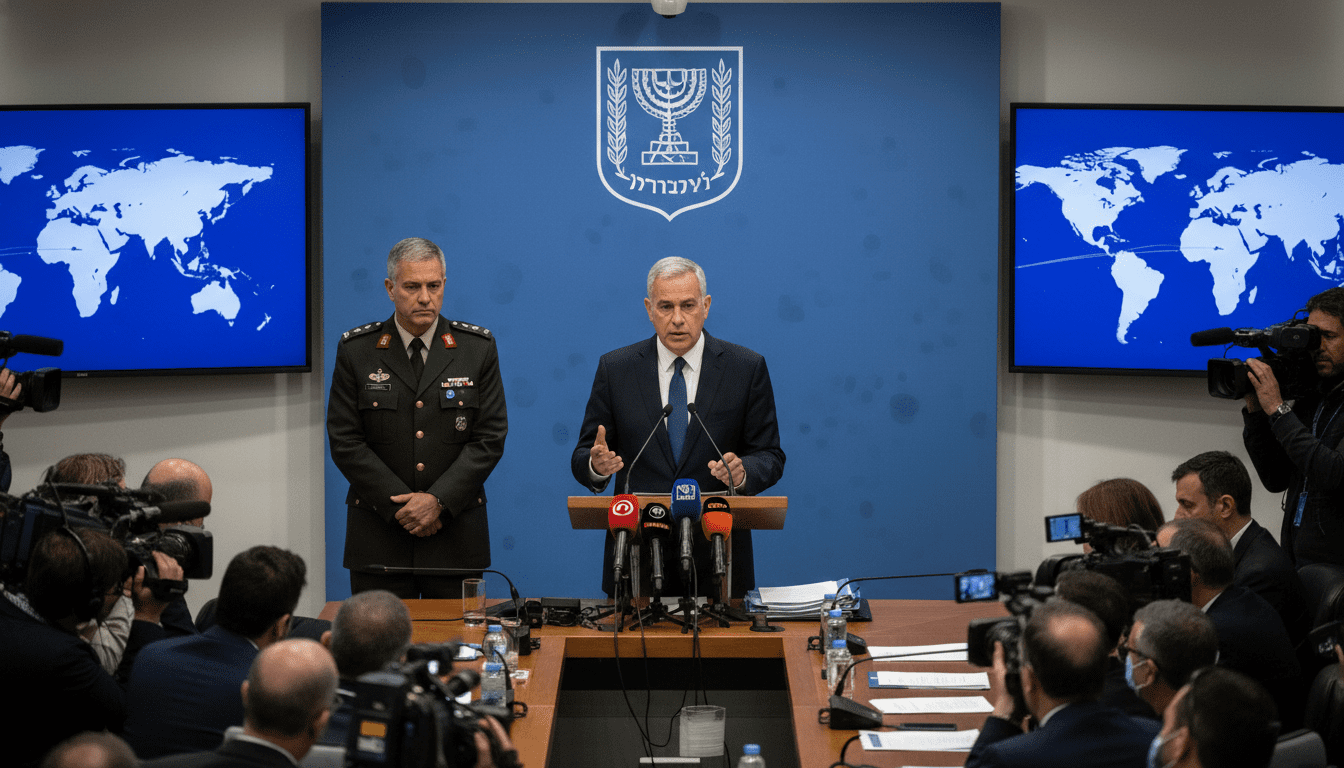
Israel says emerging US-Iran framework fails to address missiles and proxy threats
Israeli officials warn the emerging US-Iran framework leaves Iran’s missile program and regional proxy networks unaddressed, raising concerns about Israel’s freedom to operate.
Israeli leaders have expressed sharp reservations about an emerging US-Iran framework, saying it addresses nuclear enrichment but overlooks wider security threats from Tehran. The criticism centers on the framework’s focus on uranium and centrifuges while Iran’s ballistic missile development and support for proxy militias remain largely untouched. Officials in Jerusalem argue that a nuclear-centric agreement could reduce the scope for Israeli countermeasures against threats that lie outside nuclear constraints. The growing unease comes as negotiators in Washington and Tehran edge toward a political understanding that has not yet been finalized.
Israeli leadership expresses misgivings
Israeli officials have described the proposed framework as incomplete and potentially risky for national security. They caution that even if uranium stockpiles are declared removed, other elements of Iran’s military posture would be unaffected. Government sources say those gaps could embolden Iran’s regional strategy and complicate Israel’s long-term deterrence. Public statements from senior security figures underline the depth of concern within Israel’s defense and diplomatic circles.
Missiles and regional proxies remain central concerns
Jerusalem’s criticism emphasizes Iran’s missile program and its patronage of militias across the Middle East as primary security threats. Israeli analysts note that ballistic missile capabilities and precision-guided munitions are not constrained by a nuclear framework unless explicitly included. Likewise, Tehran’s training, arming, and financing of proxy groups in Lebanon, Syria, Iraq, Yemen and elsewhere are seen as force multipliers beyond the scope of a deal limited to fissile material. Officials warn that neglecting these vectors risks allowing Iran to pursue asymmetric means to project power while technically complying with nuclear restrictions.
Operational freedom in Lebanon and beyond at stake
Particular unease has been voiced about potential limits on Israel’s operational freedom, especially in Lebanon where the Hezbollah threat is front and center. Some Israeli strategists fear that diplomatic arrangements could translate into political or legal constraints on how and when Israel can act against cross-border attacks or military build-ups. Military planners are considering how to maintain freedom of maneuver if Washington’s approach imposes new parameters on regional military activity. The prospect of constrained options has provoked contingency planning within Israel’s defense establishment.
U.S. objectives and diplomatic trade-offs
U.S. officials advancing negotiations say the priority is to prevent Iran from acquiring a near-term nuclear weapons capability, and that focusing on enriched uranium is the most verifiable path. That approach aims to secure tangible, inspectable limits while opening broader diplomatic channels on other matters. Yet senior Israeli voices argue that separating nuclear issues from missile and proxy behavior creates an incomplete security architecture. Western diplomats involved in discussions acknowledge the trade-off between achieving measurable non-proliferation outcomes and addressing the broader regional dynamics, and they say parallel diplomatic tracks could be used to tackle the other concerns.
Regional ripple effects and Lebanon implications
The debate over the framework is already reverberating through the region, with capitals watching closely for changes in Tehran’s posture that a deal might enable. In Lebanon, Israeli officials are particularly focused on whether a political understanding will affect the timing or legality of strikes intended to degrade Hezbollah’s missile and rocket arsenals. Neighboring states are weighing the potential for shifts in deterrence and escalation calculus if parts of Iran’s toolkit remain intact. Analysts warn that an agreement perceived as one-dimensional could spur new rounds of strategic competition as actors seek to fill perceived security vacuums.
The coming days and weeks will be critical as negotiators refine language and as regional partners press Washington for wider commitments. Israeli leaders are preparing a mix of diplomatic outreach and contingency operational planning should a final agreement emerge that fails to incorporate missile and proxy constraints. For now, officials stress that while a nuclear restriction is necessary, it will not be sufficient to remove what they regard as the full spectrum of Iranian threats.
