
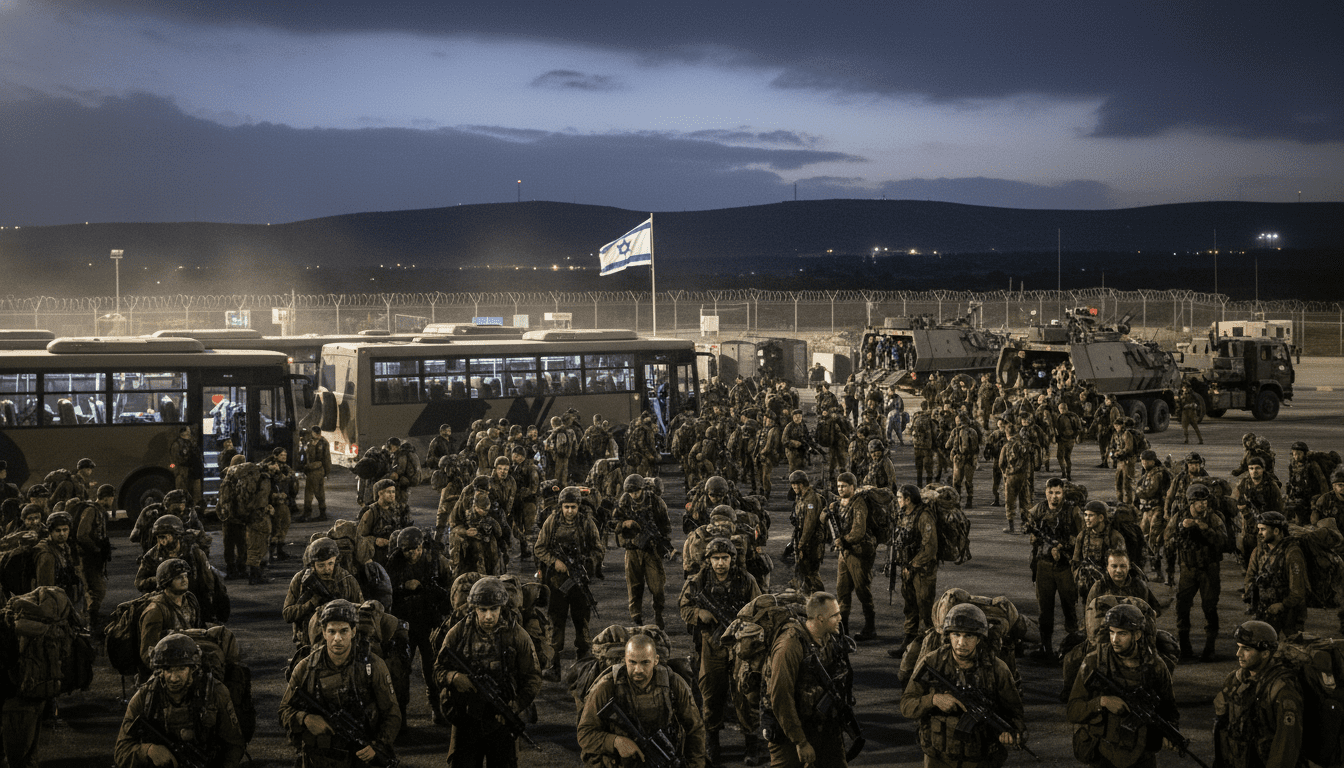
Israeli mobilization in Lebanon: Reserve soldiers called up as attacks continue
Israel has begun mobilizing reserve soldiers in Lebanon as military leaders consider renewed strikes on Beirut, sources say, raising fears of a wider offensive and further civilian harm.
Reserve call-up reported
Israel’s public broadcaster KAN reported that the Israeli army has started calling up reserve forces to expand operations in Lebanon.
The mobilization comes amid internal deliberations by military leadership about intensifying strikes and widening the geographic scope of operations.
Officials gave no immediate public timetable for the troop increases, but the move signals a shift from targeted raids toward preparations for sustained action.
Military leaders discussed strikes on Beirut
Israeli military leaders held discussions about renewed strikes on Beirut during meetings on Sunday, according to multiple accounts of the talks.
Those discussions reportedly weighed options for precision strikes and broader campaigns against Hezbollah infrastructure in urban areas.
Analysts say such deliberations reflect concerns in Jerusalem that current measures have not sufficiently reduced cross-border attacks or degraded militant capabilities.
Continued attacks reported by Lebanon’s NNA
On Tuesday, May 26, 2026, Lebanon’s National News Agency reported continued Israeli attacks, with a concentration of strikes in the south of the country.
The NNA’s bulletins described air and artillery strikes that Lebanese authorities said targeted infrastructure and positions near populated areas.
Local officials and emergency responders warned that ongoing operations were complicating rescue efforts and deepening shortages of fuel and medical supplies.
Civilian toll rises sharply
Since the start of March 2026, the assault has killed nearly 3,200 people in Lebanon and displaced more than 1.6 million residents, Lebanese authorities and humanitarian organizations report.
The casualties include a high proportion of women and children, according to hospital records and civil defense summaries shared with local media.
Humanitarian groups warn that continued escalation will drive further civilian suffering and make large parts of southern Lebanon uninhabitable for months to come.
Search, rescue and damage in the south
Civil defence teams in southern cities such as Tyre have been undertaking round-the-clock search and rescue operations amid heavy damage to residential districts.
Photographs from recent operations show crews working amid rubble after strikes, with hospitals overwhelmed and sanitation systems under strain.
Local mayors and relief coordinators say roads and bridges damaged in the attacks are hampering deliveries of food, water and medical supplies to besieged communities.
Displacement and humanitarian access challenges
More than 1.6 million people displaced since March are now sheltering in informal camps, schools and host communities, stretching Lebanon’s already limited resources.
Aid agencies report acute shortages of shelter materials, winterized relief items and basic medicines as demand outstrips supply inside the country.
Humanitarian corridors remain difficult to operate amid continued hostilities, and agencies say safety guarantees are essential to move lifesaving assistance into hardest-hit areas.
Regional and diplomatic implications
The mobilization and talk of strikes on Beirut have prompted concern among neighboring states and international actors about the risk of wider regional escalation.
Diplomatic channels in Beirut, Damascus and capitals across the region intensified contacts this week as governments urged restraint and called for measures to protect civilians.
Observers note that a broader Israeli offensive into urban Lebanese areas could draw military responses from allied groups and complicate efforts to stabilize the situation.
Military posture and uncertainty
While reserve call-ups indicate preparation for larger operations, military planners may still be weighing the political and operational costs of an expanded offensive.
Urban fighting and extended occupation would likely increase casualties and complicate post-conflict governance, according to defense analysts familiar with the region.
The pace and scale of any move toward Beirut or additional southern operations will depend on both battlefield developments and high-level political decisions in Israel.
The mobilization of reserve soldiers and the renewed emphasis on possible strikes in Beirut mark a dangerous phase in the conflict that observers warn could deepen the humanitarian crisis in Lebanon and increase risks across the region.
