
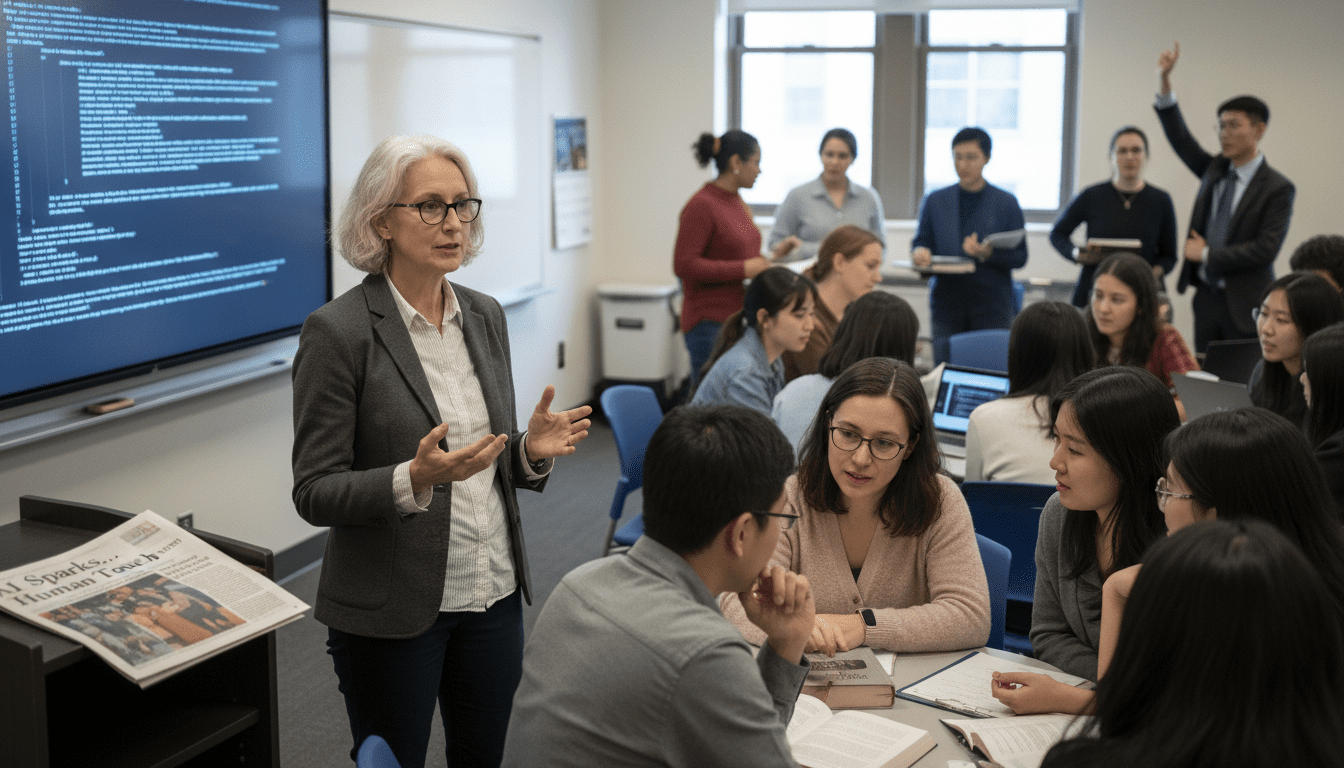
ChatGPT and the Persistence of Human Advice: Sociologist Allison Pugh Sees a Resurgence in Interpersonal Trust
Sociologist Allison Pugh observed that people continue to consult other humans even after using ChatGPT, suggesting human judgment may regain economic value as AI assistants proliferate.
Allison Pugh, a sociologist who studies culture and economic behavior, highlighted a small but telling moment during a recent public lecture when discussing ChatGPT and digital advice. She recounted that a participant described how her daughter had asked ChatGPT for guidance but still turned to her mother for an honest opinion. That anecdote, Pugh argued, points to an emergent pattern in which people treat AI as a first pass but still prize human candor and context.
Sociologist’s Lecture Note
Allison Pugh shared the example while speaking about the social dynamics of technology and trust.
She framed ChatGPT as a widely adopted informational tool that often becomes a conversation starter rather than a final arbiter.
Pugh suggested the persistence of face-to-face judgment could shift how value is allocated in both markets and everyday exchanges.
The Personal Anecdote That Resonated
The anecdote involved a lecture attendee whose daughter consulted ChatGPT and then asked her mother for reassurance.
That choice—to seek human confirmation after consulting AI—caught Pugh’s attention because it underscores a common behavioral pattern.
People appear to be using ChatGPT for rapid information but still rely on trusted interlocutors for candid appraisal and moral or emotional nuance.
Why Human Counsel Still Matters
Human advisers provide context, accountability, and a willingness to challenge expectations in ways current AI systems do not.
Unlike automated models, people understand local norms, long-term relationships, and the reputational consequences of advice.
This combination of empathy and accountability is difficult to replicate with present-day AI, making interpersonal counsel valuable for decisions that go beyond factual accuracy.
Economic and Labor Implications
If interpersonal trust becomes more prized, industries built on human-to-human interaction may see renewed demand.
Sectors such as counseling, eldercare, bespoke financial advising, and boutique consulting could derive competitive advantage from demonstrable empathy and reliability.
At the same time, routine informational tasks are likely to be increasingly automated by tools like ChatGPT, reshaping job descriptions rather than eliminating the need for human judgment entirely.
How Businesses and Policymakers Might Respond
Companies can differentiate services by integrating AI assistance with verified human oversight and transparent accountability.
Policymakers and regulators may need to consider standards for when AI should be accompanied by a human adviser, particularly in high-stakes domains like health, finance, and legal counsel.
Training programs and professional development focused on relational skills could regain prominence if markets reward the interpersonal competencies AI cannot easily replicate.
Public Trust and the Future of Advice
The pattern Pugh described suggests a hybrid model of advice: AI for speed and data synthesis, humans for interpretation and trust.
Consumers are unlikely to abandon AI tools like ChatGPT, but they may increasingly adopt a layered approach that combines algorithmic input with human judgment.
This hybridization could lead to new business models and professional roles that explicitly sell verification, empathy, and moral clarity alongside automated insights.
The anecdote shared by Allison Pugh is small but revealing: when people ask ChatGPT and then still ask another person because they expect honest, contextual feedback, they are signaling where social value may flow next. Markets, employers, and regulators that recognize the complementary strengths of AI and human advisers could shape a future economy where interpersonal trust is once again a measurable asset.
