
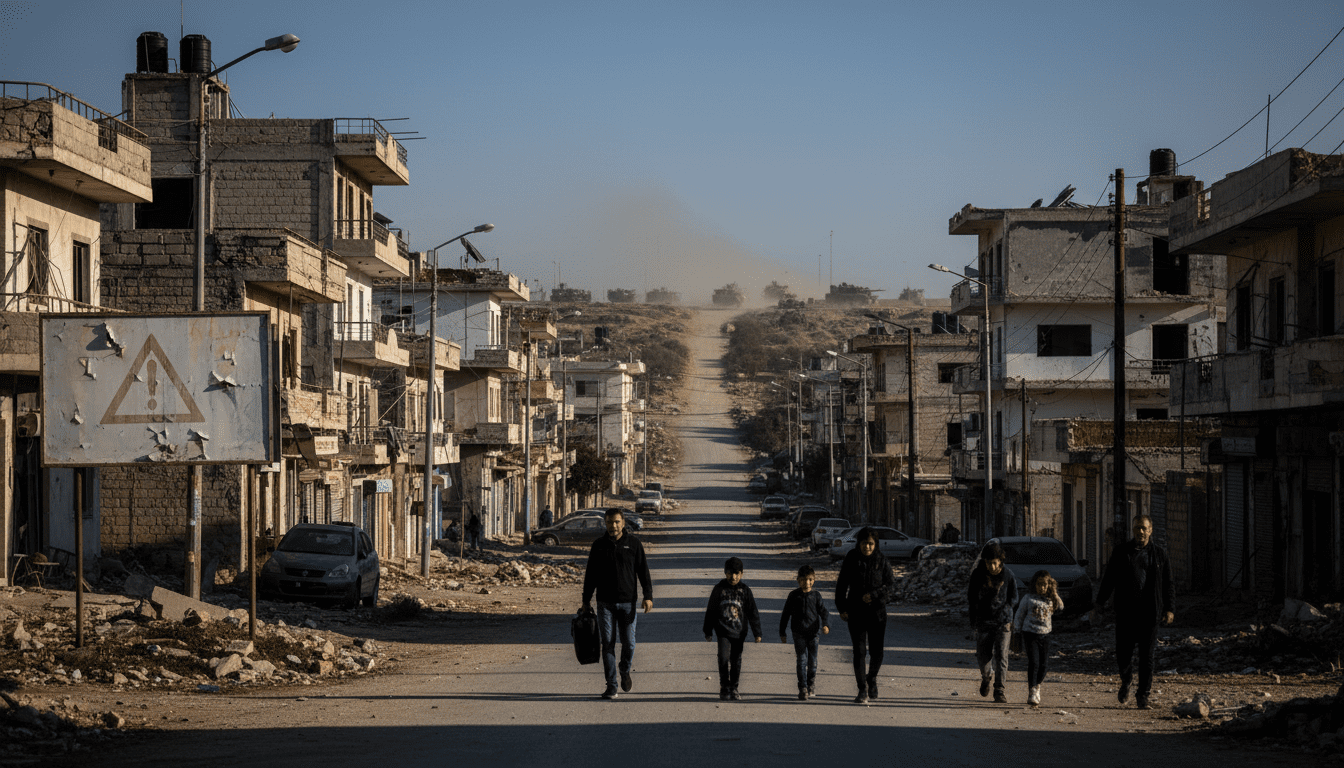
Israel issues evacuation orders for six southern Lebanese towns amid cross-border strikes
Israel issues evacuation orders for six southern Lebanese towns, warning residents to move 1,000 metres away as rockets, aerial interceptions and a false alert spike tensions.
Residents in multiple southern Lebanese towns received new evacuation orders from the Israeli military on Tuesday, with officials warning they would act “forcefully” if people remained in targeted areas. The orders covered Meiss El Jabal, Yanouh, Borj El Chmali, Houla, Debl and Aabbasiyyeh and directed civilians to relocate at least 1,000 metres to open ground. The military framed the moves as necessary to reduce risk to both troops and civilians as cross-border incidents intensified.
Evacuation orders issued for six towns
The Israeli military named six specific localities in the latest evacuation notices and said anyone who did not comply would be endangering their lives. Residents were ordered to move to open areas at least 1,000 metres from their towns to reduce exposure to military operations. Officials emphasized the distance in the orders, specifying open ground as the recommended relocation sites.
Local municipal authorities and community leaders in the affected towns faced the immediate task of relaying the orders and assisting residents, particularly those with mobility challenges. The notices did not specify a deadline for full compliance in public statements, but the military’s warning that it would act “forcefully” indicated an expectation of swift movement.
Military warning and operational rationale
The Israeli military framed the evacuation orders as a safety measure tied to ongoing operations near the border region. In its announcement, the military said anyone remaining in the designated areas would be risking their lives and that action could be taken against locations that did not comply. The language suggested a readiness to escalate operations to remove perceived threats or deny hostile forces the use of populated areas.
The orders reflect a pattern of targeted evacuation directives that aim to reduce civilian casualties while conducting cross-border activities. Military statements also noted recent hostile activity in the area, which officials linked to the need for precautionary relocation of civilians.
Reported rocket launches toward Israeli troops
Separately, Israeli authorities reported that Hezbollah had launched several rockets toward Israeli soldiers operating in southern Lebanon in recent hours. The military said the projectiles landed near Israeli troops but did not cause injuries, portraying the strikes as limited in their physical impact. The report did not indicate whether any Israeli equipment or positions sustained damage.
The exchange underscores the persistent threat of localized firefights and projectile exchanges along the Israel-Lebanon frontier. Both sides have, at times, framed such incidents as tactical responses to movements or operations across the border, keeping the risk of wider escalation present in the region.
Air interception and Avivim warning sirens
Israeli air defences intercepted what the military described as a “suspicious aerial target” in the border area, according to official statements. The interception followed an earlier series of warning sirens in the northern Israeli town of Avivim, which residents initially understood as an alert to a potential hostile aircraft infiltration. Authorities later determined the Avivim alarm to be a false alert linked to the suspected aerial activity.
False alarms and intermittent interceptions have heightened civilian anxiety in communities near the frontier, where rapid alerts interrupt daily life and prompt immediate shelter-seeking. Military spokespeople said defence systems were operating to distinguish genuine threats from ambiguous aerial traces and to protect troops and nearby populations.
Bombardment reported in Arnoun; first responders seen on scene
Photographs circulating from the region showed first responders gathering after an Israeli bombardment struck a facility in Arnoun on 12 May 2026. Emergency teams were pictured at the site as local rescue services assessed damage and aided any potential wounded. The bombardment and subsequent images contributed to reporting on the impact of the latest round of cross-border operations.
Local health and rescue workers in southern Lebanon have frequently been the first to respond after strikes, dealing with damaged infrastructure and civilian needs amid constrained resources. The images from Arnoun illustrated the immediate aftermath that emergency services must now manage alongside the logistical challenges created by evacuation orders.
Humanitarian and displacement concerns
Humanitarian actors warn that repeated evacuation directives and intermittent strikes compound displacement and strain relief efforts in southern Lebanon. Moving to open areas can expose residents to the elements and complicate access to food, water and medical care, particularly for elderly or chronically ill civilians. Aid agencies and local authorities often call for clear corridors and time to relocate safely, but military necessities can compress those windows.
The new orders add to displacement pressures in a region where communities have faced repeated cycles of warnings and operations. Observers note that durable safety for civilians requires not only temporary moves but also coordinated humanitarian access and assurances that basic services will be available during and after such movements.
The situation on the Israel-Lebanon frontier remains volatile, with evacuation orders, rocket fire and air operations contributing to heightened tensions and immediate humanitarian challenges. Authorities on both sides maintain that their actions are defensive or protective of forces and civilians, while residents in affected towns confront the uncertainty and disruption of sudden dislocation.
