
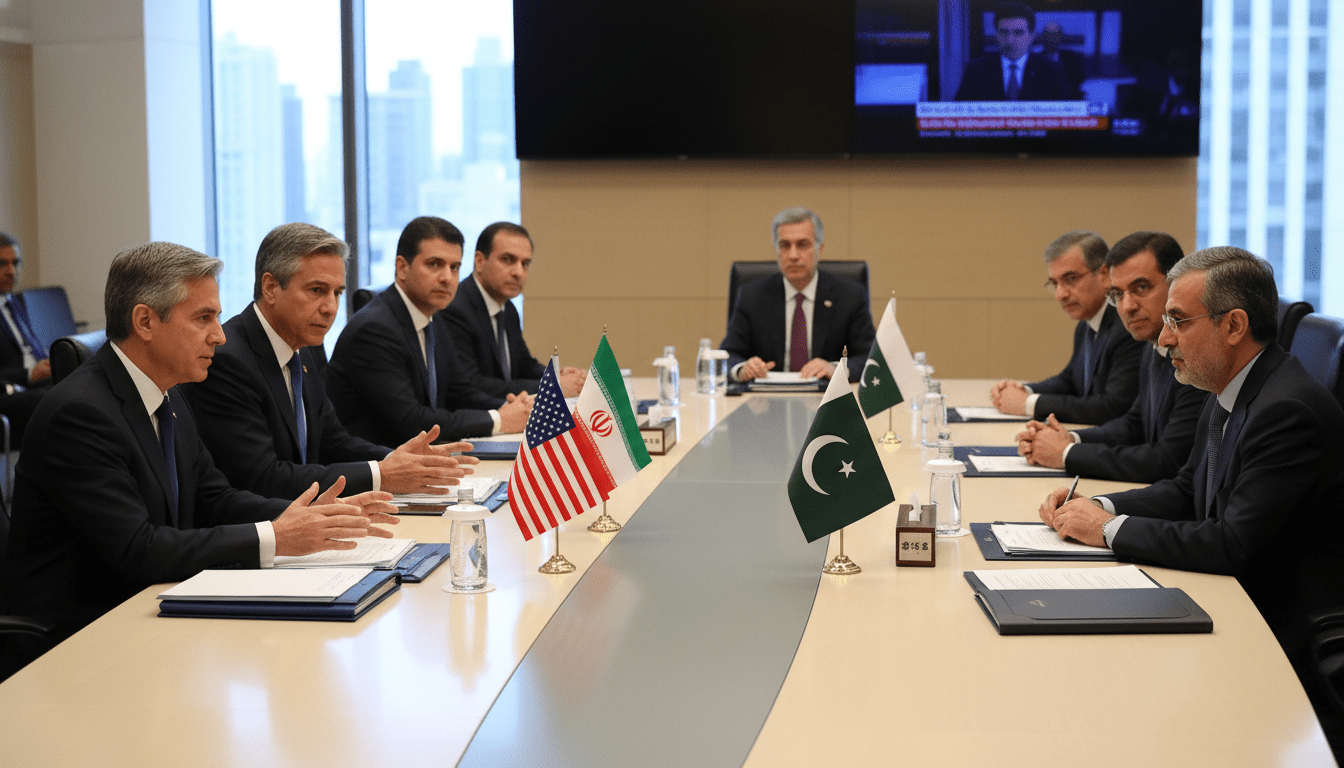
Iran-US ceasefire deal said to be near completion as Pakistan mediates
Diplomats say an Iran-US ceasefire deal could be finalised within days, with a 30–60 day framework, Strait of Hormuz steps and phased sanctions relief.
Officials from the United States, Iran and Pakistan signalled on Friday that an Iran-US ceasefire deal appears close, after intense shuttle diplomacy and meetings in Tehran. Pakistan’s military chief and senior Iranian officials reported encouraging progress toward a short-term framework that would pause hostilities while negotiators work on a more permanent settlement.
Negotiations in Tehran Intensify
Field Marshal Syed Asim Munir of Pakistan met senior Iranian officials in Tehran over the past 24 hours, and Pakistan’s military described the talks as producing “encouraging progress” toward a final understanding. Pakistani mediation has been central to exchanges between Washington and Tehran, providing a discreet channel that both sides have used to test proposals.
US Secretary of State Marco Rubio told reporters that a deal could be reached within days and possibly as soon as Saturday, though he offered no specifics about timing or content. Diplomats involved in the process cautioned that officials still needed to agree on the full text and sequencing of measures before any public announcement.
Proposed 30–60 Day Framework
Iran’s Foreign Ministry spokesperson Esmaeil Baqaei said Tehran was finalising a memorandum of understanding intended to serve as an initial framework agreement lasting between 30 and 60 days. According to Baqaei, the draft would set out a temporary arrangement that pauses major hostilities and creates space for more detailed negotiations.
The provisional nature of the document is designed to buy time for negotiators from both sides to iron out complex security, economic and regional issues without the immediate pressure of fighting. Officials said the initial framework would be followed by talks aimed at reaching a permanent settlement.
Key Clauses Under Discussion
Reports indicate the proposed 14-clause framework would address multiple theatres of the conflict and a range of security concerns, including operations in Lebanon and the Gulf. Negotiators have also discussed measures targeted at reducing naval confrontations and steps to ease the maritime choke points that have intensified regional tensions.
Media reporting has suggested the package may include commitments on the gradual reopening of the Strait of Hormuz and arrangements for monitoring compliance. Parties are reportedly working to sequence actions so that confidence-building measures can proceed in parallel with reciprocal concessions.
Security Measures for the Strait of Hormuz
One of the central elements under discussion is a phased reopening of the Strait of Hormuz to regular commercial and naval traffic, according to mediators familiar with talks. The strait’s security has been a flashpoint, and negotiators are exploring mechanisms to reduce the risk of incidents that might reignite broader hostilities.
Diplomats said the plan could involve stepped reductions in naval blockades, combined with verification arrangements and a temporary cease to interdiction operations. The aim is to restore commercial flows while maintaining a degree of oversight acceptable to both sides.
Sanctions Relief and Asset Releases
Under the reported proposal, Washington would ease restrictions on Iranian ports, provide targeted sanctions relief and begin a phased release of Iranian assets frozen abroad in exchange for Tehran’s commitments. Financial easing is intended to be conditional and reversible, tied to implementation of the 30–60 day confidence-building measures.
Mediators also said discussions include technical proposals on Iran’s stockpile of highly enriched uranium, with options such as dilution or transfer under multilateral supervision being explored. These nuclear-related measures, however, are not expected to be part of the initial framework and would be handled in subsequent, specialized talks.
Pakistan’s Mediating Role and International Response
Pakistan’s army has played a discreet but pivotal role in bridging communications between the United States and Iran, leveraging long-standing ties with both capitals. Field Marshal Munir’s visit to Tehran is the latest in a series of back-channel engagements that helped shape the current draft agreement.
International actors and regional governments have welcomed signs of progress while urging caution, emphasizing that any truce must be verifiable and durable. Observers warned that political and operational hurdles remain significant and that implementation will be the critical test of whether the talks yield a lasting cessation of hostilities.
Diplomats and mediators said technical work on verification, sequencing and the legal language of the memorandum continues, with negotiators aiming to finalise terms and agree an initial timeline within days.
