
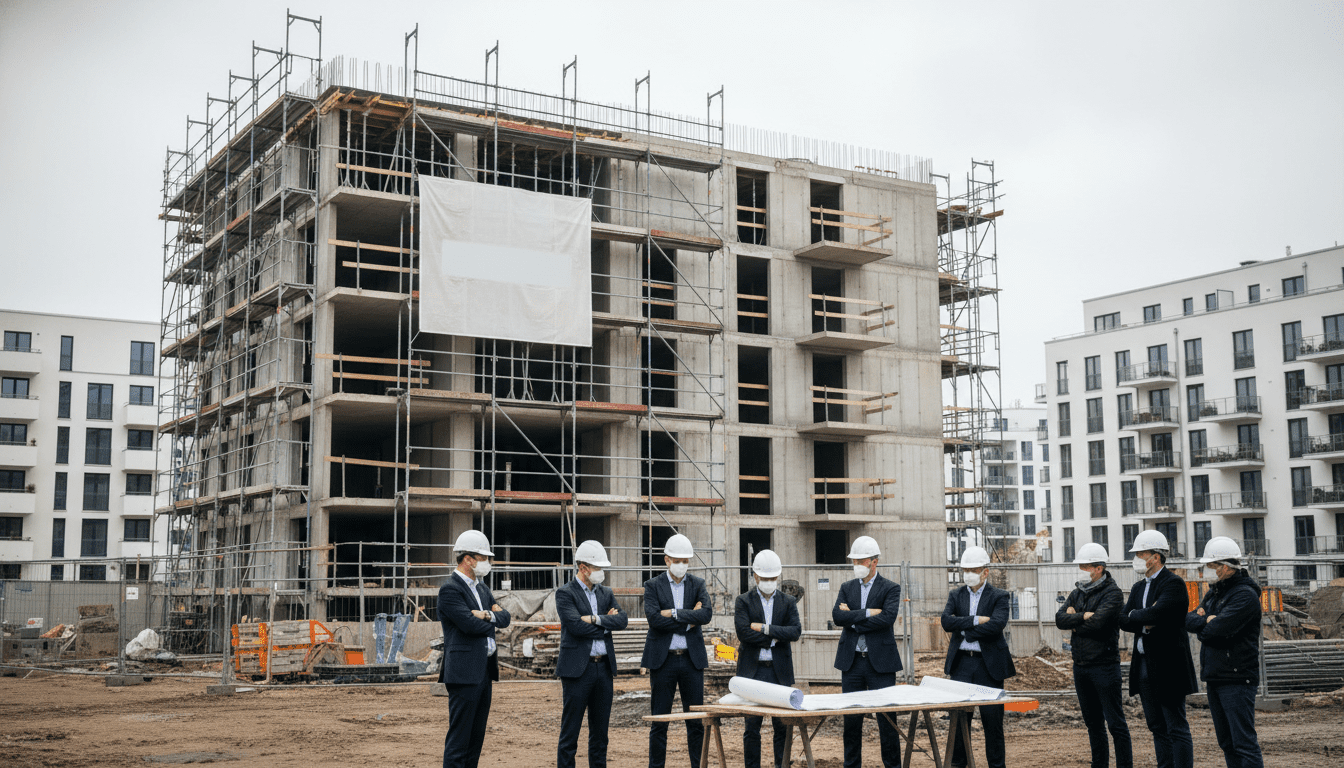
Housing construction in Germany plunges 18% in 2025 to decade low
Housing construction in Germany fell 18% in 2025 to 206,600 completed units, a new low that industry groups and officials say underscores urgent policy and market strains.
Completions hit 206,600 in 2025, down sharply from prior years
The Federal Statistical Office reported that 206,600 dwellings were completed in Germany in 2025, an 18 percent decline from the previous year. That total, which includes new apartments in residential and non-residential buildings as well as newly created units in existing structures, is the lowest yearly result in more than a decade.
The downturn continues a slide that began the year before, when completions fell by more than 14 percent, and contrasts with the roughly 300,000 units recorded annually between 2019 and 2023. The coalition target of 400,000 new homes per year was missed repeatedly and the current government has not set a new numerical target.
Permitting and construction timelines have lengthened
The data show that the period from permit approval to completion has stretched to an average of 27 months for new apartments completed in 2025. That represents an increase from 26 months in 2024 and 20 months in 2020, reflecting longer approval and delivery cycles.
Permitting activity is mixed: March 2025 saw approvals for 21,800 dwellings, up almost 12 percent year‑on‑year, but monthly approval volumes remain below typical levels recorded between 2016 and 2021. At the same time, 35,700 building permits lapsed in 2025—the highest number since 2002 and roughly a one‑quarter rise from the prior year.
New construction declined across housing types
The fall in completions was broad based across building categories. Multifamily housing saw the largest absolute shortfall, with completions down nearly 19 percent to 109,800 units in 2025. Single‑family houses declined by about 23 percent to 41,800 homes, and two‑family dwellings fell roughly 21 percent to 13,800 units.
By contrast, newly created apartments in existing buildings were less affected, decreasing by only around two percent to 30,700 units. The composition of the decline suggests that rising costs and regulatory hurdles have hit larger new developments hardest, while smaller conversions and infill projects have shown greater resilience.
Industry leaders warn of mounting consequences for cities
Leaders of major real estate and housing associations framed the slump as a structural problem for Germany’s competitiveness and social cohesion. Dirk Salewski, president of the Federal Association of Independent Real Estate and Housing Companies, said prospective workers and businesses face difficulty finding affordable accommodation in metropolitan areas.
IVD president Dirk Wohltorf rejected early optimism about a recovery, calling the market situation “hard reality” rather than a transient phase. Axel Gedaschko, president of the GdW housing association, labeled the figures an “alarm call,” attributing the downturn to overregulation, high construction costs and political uncertainty that are already pushing rents higher and shrinking available housing.
Trade groups demand a policy reboot and financial incentives
A coalition of twelve industry associations, including property developers, architects, construction firms and Pfandbrief banks, has called for a comprehensive restart of housing policy. The group is urging a new social consensus that treats building as essential for national cohesion and economic stability.
Their proposals include increased funding, expanded tax depreciation measures and targeted financial support to lower barriers to new construction. The alliance also urged policymakers to refrain from tightening rental controls further, arguing that stricter regulations would deter investment and exacerbate the supply shortfall. The coalition projects another decline in completions for the current year unless measures are implemented.
Federal government outlines a housing‑build “turbo,” but challenges remain
Federal Building Minister Verena Hubertz (SPD) has proposed a housing construction “turbo” aimed at simplifying rules and allowing municipalities to waive detailed local development plans in certain cases to speed delivery. She called the 206,600 completions in 2025 “too few” and described the figure as the consequence of recent crisis years.
The ministry points to rising permit figures for 2025 and the first quarter of 2026 as an indication of improvement, but the overall balance sheet of lapsed permits, higher construction costs and international energy price shocks tempers expectations. Price‑adjusted order intake in the main construction sector fell about two percent in March 2025 compared with the previous month, highlighting ongoing demand and financing pressures.
The near‑term outlook for housing construction in Germany remains uncertain, as industry stakeholders and ministers navigate a mix of regulatory reform proposals, rising input costs and volatile global energy markets. Without coordinated action to cut approval times, stabilize financing and incentivize new supply, market participants warn that the shortfall will continue to put upward pressure on rents and constrain housing availability in urban centers.
