
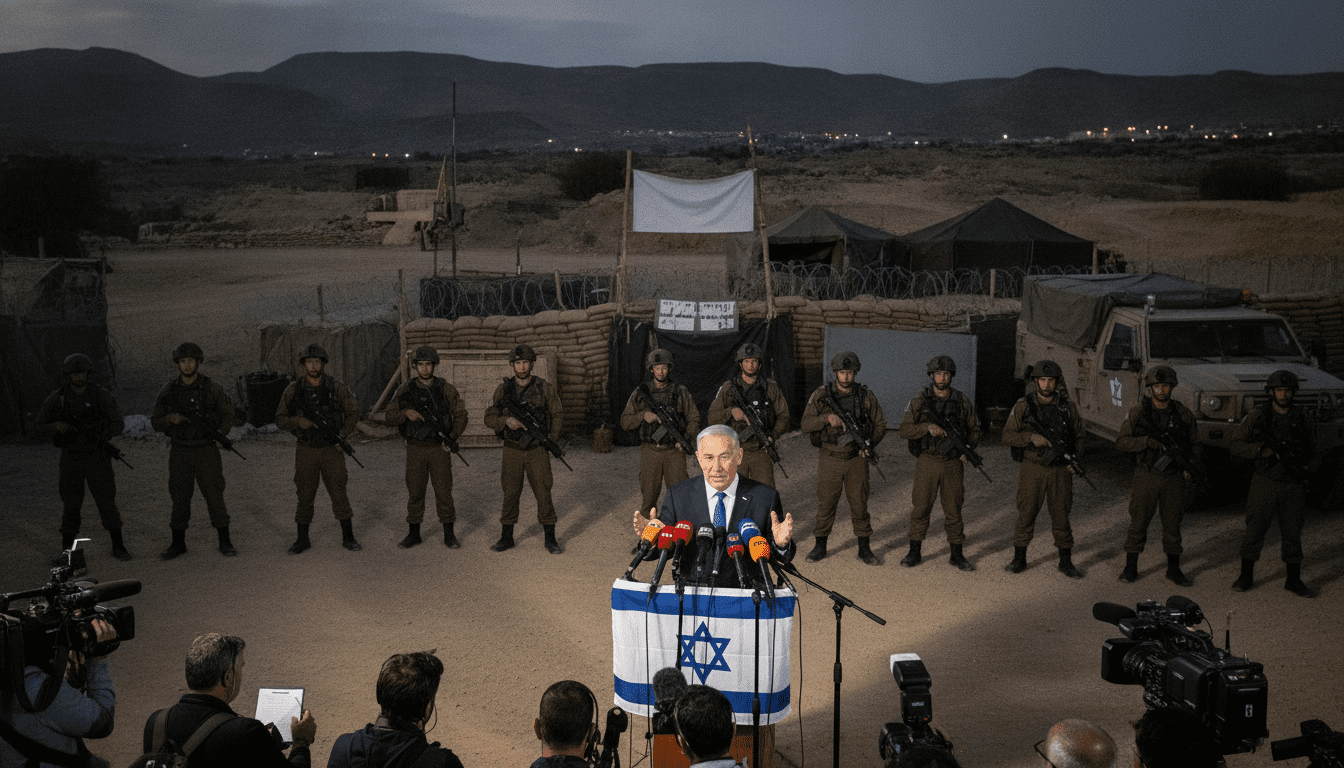
Israel Keeps Troops in Lebanon’s ‘Security Zone’ Indefinitely, Netanyahu Says
Netanyahu says Israel keeps troops in Lebanon’s ‘security zone’ indefinitely, reserving the right to act against perceived threats despite a U.S.-Iran ceasefire framework.
Prime Minister Benjamin Netanyahu announced that Israeli forces will remain in the area of Lebanon under Israeli control for an unspecified period, saying the government will preserve the freedom to respond to security risks on its own terms. The statement follows comments from senior ministers who described the deployments as open-ended and linked the troop presence to broader regional threats.
Netanyahu announces indefinite deployment in Lebanon
Netanyahu told reporters the forces will stay in the so-called security zone and that Israel will maintain freedom of action to counter threats as it sees fit. He framed the deployment as a defensive necessity and said unilateral measures may be taken if Israeli leaders judge them required to protect national security.
The prime minister’s remarks came as officials sought to underline continuity in Israel’s military posture even as diplomacy proceeds elsewhere in the region. The government did not specify a timetable for withdrawal or criteria that would trigger a change in the deployment.
Defense minister expands scope to Syria and Gaza
Defense Minister Israel Katz backed Netanyahu’s position and said Israel’s army should remain not only in Lebanon but also in Syria and the Gaza Strip for an unlimited period. Katz described the wider presence as part of a regional approach to threats that he said could not be addressed by short-term agreements alone.
Officials framed the posture as preemptive and deterrent, arguing that prolonged forward deployments were necessary to disrupt hostile actors and to safeguard Israeli territory. No details were provided on force levels, rules of engagement, or new operational directives tied to the extended presence.
U.S.-Iran framework calls for immediate regional ceasefire including Lebanon
Separately, the United States and Iran announced agreement on a framework intended to end hostilities that have spread across the region, and that framework reportedly includes an immediate ceasefire in Lebanon. Signatories have scheduled a formal signing of the accord for Friday, though many specifics of the deal remain undisclosed.
The proposed arrangement was presented by its backers as a multilateral step to de-escalate fighting and open diplomatic channels, but the lack of published text has left key questions unanswered. Diplomats described the framework as a basis for further implementation talks rather than a fully formed treaty.
Tehran and Hezbollah demand enforcement and Israeli withdrawal
Iran’s foreign ministry spokesman Esmaeil Bakaei publicly called on the United States to ensure that the ceasefire provisions are enforced in Lebanon, saying Washington must honor its commitments under the framework. Tehran framed enforcement as a test of U.S. credibility and urged immediate steps to halt hostilities on Lebanese soil.
The Lebanese armed group Hezbollah also demanded the withdrawal of Israeli forces and warned against continued Israeli military activity near the border. Statements from the group emphasized that any enduring Israeli presence would be unacceptable and could provoke renewed confrontations.
Israeli ministers and opposition reject being bound by the accord
Several Israeli ministers, including hardline figures, signaled they do not consider Israel bound by the U.S.-Iran framework because Israel is not a party to the agreement. Finance Minister Bezalel Smotrich characterized the deal as harmful to Israeli security and said he would press to preserve what he described as the army’s “full freedom of action” against Hezbollah.
Security Minister Itamar Ben Gvir likewise asserted that Israel would not be constrained by an external arrangement that, in his view, fails to guarantee Israeli safety. Opposition leaders cast the framework as a diplomatic setback and argued the government must ensure it can continue to operate independently to counter threats.
Implications for the ceasefire and regional stability
Analysts warned that Israel’s stated intention to maintain troops in Lebanon could complicate implementation of a regional ceasefire and undermine confidence in the framework. Continued Israeli military activity near the border risks sparking incidents that may be interpreted by other parties as violations of a pause in fighting.
Observers said the situation places renewed pressure on Washington and Tehran to clarify enforcement mechanisms and to present a credible plan for monitoring compliance. Without clear verification procedures and buy-in from local actors, a formal agreement on paper may struggle to translate into an enduring halt to hostilities.
The coming days are likely to be decisive: the planned signing of the U.S.-Iran framework and Israel’s public commitment to a sustained military posture create overlapping timelines that could either be reconciled through diplomacy or deepen existing fault lines. The international community has underscored the need for mechanisms that reduce the risk of escalation while addressing the security concerns expressed by all parties.
