
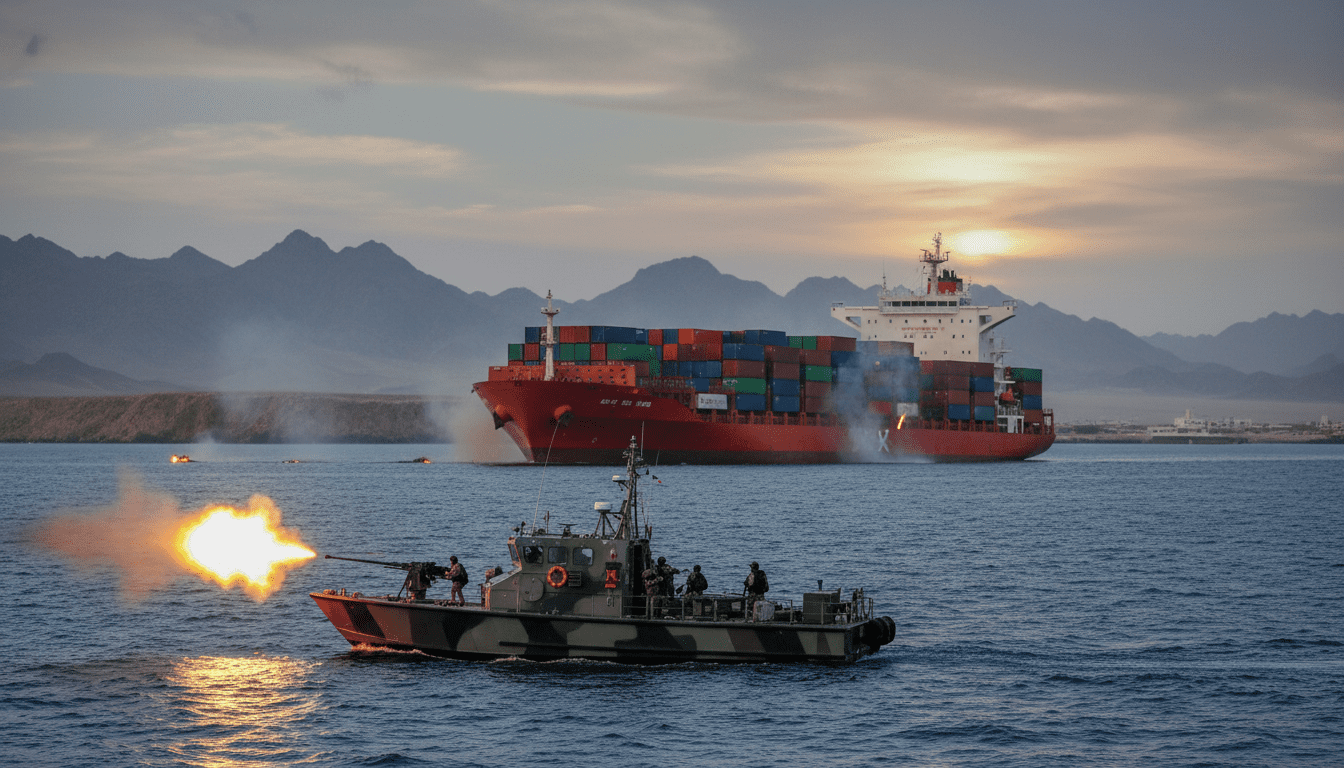
Iranian gunboat fires on container vessel off Oman amid ceasefire extension
Iranian gunboat fires on a Liberian-flagged container vessel off Oman on April 22, 2026, after a US ceasefire extension; crew unhurt, bridge heavily damaged. Ongoing.
An Iranian gunboat of the Islamic Revolutionary Guard Corps (IRGC) fired on a container vessel near Oman’s coast on April 22, 2026, officials and maritime monitors said. The incident occurred hours after United States President Donald Trump announced he would extend a ceasefire with Iran, heightening concern over renewed naval confrontations in the region.
Incident reported off Oman’s coast
The United Kingdom Maritime Trade Operations centre (UKMTO) said the captain of the container ship reported an approach by an IRGC vessel before rounds struck the vessel, causing heavy damage to the bridge. UKMTO added there were no fires and no environmental impact, and that all crew members remained safe.
British maritime security firm Vanguard Tech identified the ship as sailing under a Liberian flag and said the crew had been informed they held permission to transit the area. Vanguard Tech and other monitoring services are tracking the vessel as it proceeds through the busy waterways near the Strait of Hormuz.
Navigation and permissions in the Strait of Hormuz
The ship was reported to be transiting a corridor that is one of the world’s most strategically important chokepoints for oil and freight shipments. Maritime operators routinely seek and receive transit permissions from regional authorities, but enforcement and messaging have grown more fraught amid the recent crisis.
Shipping companies and insurers closely watch such incidents because even isolated attacks can prompt re-routing, convoy requirements or higher premiums for vessels moving through the Gulf of Oman and the Strait of Hormuz. International monitoring centres and naval forces often coordinate advisories to commercial traffic when tensions spike.
IRGC alleges US seizure of an Iranian commercial ship
Iranian state and semi-official outlets quoted the IRGC as saying the firing was a response to what it described as a US seizure of an Iranian commercial vessel in the Sea of Oman. The IRGC’s Khatam al-Anbiya Central Headquarters accused Washington of violating the ceasefire and of using force that it characterized as “armed piracy,” alleging the US had fired on the Iranian ship and disabled its navigation systems.
Those claims were carried by Iran’s IRNA and Tasnim news agencies, which also reported that Iranian forces had warned the container vessel prior to the exchange of fire. The allegations of a US seizure and the specifics of any interdiction have not been independently confirmed by US officials in the immediate aftermath.
US ceasefire extension and military posture
President Donald Trump announced on April 22, 2026, that he would delay a planned military strike on Iran following appeals from Pakistan’s army chief and prime minister, according to his public statements on social media. Trump said the pause would allow Iranian leaders time to present a unified position, while reaffirming that a naval blockade of the Strait of Hormuz would remain in place and that US forces were to stay ready.
The decision to extend the truce marked a shift from comments made a day earlier, when the White House indicated the truce might not be prolonged. US officials have maintained a posture of deterrence in the region even while engaging in behind-the-scenes diplomatic and military consultations with partners.
Mixed signals from Tehran on negotiations and leverage
Reporters in Tehran said Iranian officials were sending mixed messages about their willingness to negotiate and the conditions they would accept. Analysts cited by regional outlets noted a gap between initial Iranian proposals and those put forward by the United States, suggesting substantive differences on core points remain unresolved.
Iranian leaders have framed control over shipping routes such as the Strait of Hormuz as strategic leverage in talks, stressing regional security concerns and insisting that negotiations not be conducted under imposed terms. Observers warn that such rhetoric, coupled with military warnings, increases the risk of miscalculation at sea.
Potential regional and commercial fallout
The exchange of fire underscores the fragile security environment in the Gulf of Oman and the broader Arabian Gulf. Any further incidents involving commercial shipping could prompt a stronger international maritime response, including increased naval escorts, enhanced surveillance and diplomatic pressure to de-escalate.
Commercial shippers, insurers and regional governments will monitor investigations and official responses closely, while ports and operators review contingency plans. The economic significance of safe passage through the Strait of Hormuz means that even limited disruptions can have outsized effects on energy and freight markets.
As of April 22, 2026, maritime agencies reported the crew of the container vessel are safe and that the ship sustained heavy damage to its bridge but no pollution was observed. Investigations by maritime authorities and statements from Washington and Tehran are expected to follow as the incident is reviewed and verified.
