
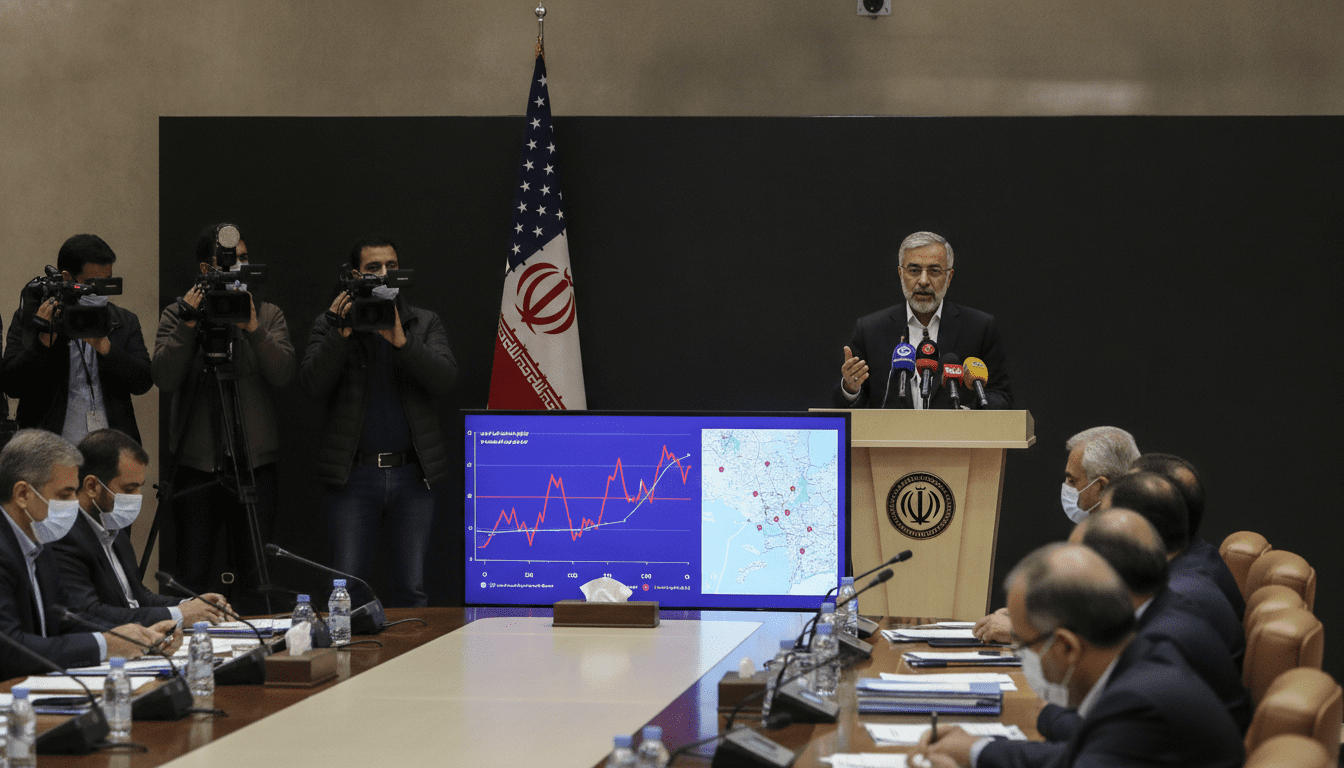
Iran says Iran-US diplomacy cannot advance after Gulf strikes
Iran warns Iran-US diplomacy cannot advance after overnight Gulf strikes and repeated ceasefire violations, urging a reassessment of ties with Washington.
A senior Iranian official said on Wednesday, June 10, 2026, that efforts to pursue Iran-US diplomacy cannot move forward amid what Tehran described as repeated ceasefire violations following overnight strikes in the Gulf. Foreign Ministry spokesperson Esmaeil Baghaei accused the United States of undermining negotiations through contradictory messaging and shifting positions, and warned that the security environment no longer met the minimum conditions for talks. Baghaei also singled out Israel, alleging its actions in Lebanon were further damaging any diplomatic prospects.
Tehran calls for reassessment after overnight Gulf strikes
Baghaei told reporters that the events overnight prompted Tehran to re-evaluate the diplomatic path with Washington and that any continuation of talks now required a reassessment of conditions. He framed the strikes and subsequent incidents as material changes that erode trust and make constructive engagement difficult. The spokesperson emphasized that diplomacy depends on a predictable, stable environment that, he said, is currently absent.
Accusations against the United States over ceasefire breaches
Iran accused the United States of sending mixed signals that, in Tehran’s view, contradict public commitments to de-escalation and ceasefires. Baghaei argued that shifting U.S. positions and what he called repeated violations have undermined confidence in the diplomatic process. He said such inconsistencies complicate any effort to negotiate and compel Tehran to reconsider whether continuing talks is viable under present circumstances.
Iran attributes destabilisation in Lebanon to Israel
In the same statement, Baghaei blamed Israel for recurrent breaches of the ceasefire in Lebanon, saying those actions further harm regional stability and the prospects for diplomacy. He presented Israel’s conduct as part of a broader pattern of violations that, together with the events in the Gulf, have created an unstable environment for negotiations. Tehran’s comments tied developments on multiple frontiers into a single argument that the threshold for constructive diplomacy has not been met.
‘Minimum stable environment’ required for diplomacy
Baghaei used the phrase “minimum stable environment” to describe the threshold Tehran views as necessary for meaningful negotiations with the United States. He told officials and observers that without a baseline of predictable conduct—free of strikes and high-tempo violations—formal diplomatic channels cannot be expected to produce durable outcomes. The assertion underscores a priority for security guarantees and reciprocal restraint before Iran will commit to a sustained diplomatic track.
Potential diplomatic consequences and regional ripple effects
Iran’s declaration that it must reassess talks with Washington raises immediate questions about the fate of any existing back-channel contacts or public negotiation plans. If Tehran follows through, scheduled or prospective meetings could be postponed, downgraded, or conditioned on demonstrable steps to halt further incidents. The statement is likely to affect not only bilateral Iran-US interactions but also broader regional mediation efforts, as interlocutors weigh how to restore the stability Tehran has demanded.
Next steps signalled by Tehran and implications for negotiations
Baghaei did not outline a specific timeline or list of actions Tehran would require to resume full engagement, saying only that the situation demanded reassessment. That leaves room for diplomatic manoeuvring: Tehran could seek concrete commitments, third-party guarantees, or a de-escalation package before reopening comprehensive talks. For the United States and other actors, the challenge will be to respond in a way that addresses Iran’s stated security concerns while preserving avenues for dialogue.
The Iranian Foreign Ministry’s comments on June 10 add a new and explicit hurdle to an already complex diplomatic landscape, linking military incidents and ceasefire enforcement directly to the feasibility of negotiations. How Washington and regional parties respond in the coming days will determine whether Iran’s demand for a more stable environment leads to renewed talks or a further hardening of positions.
