
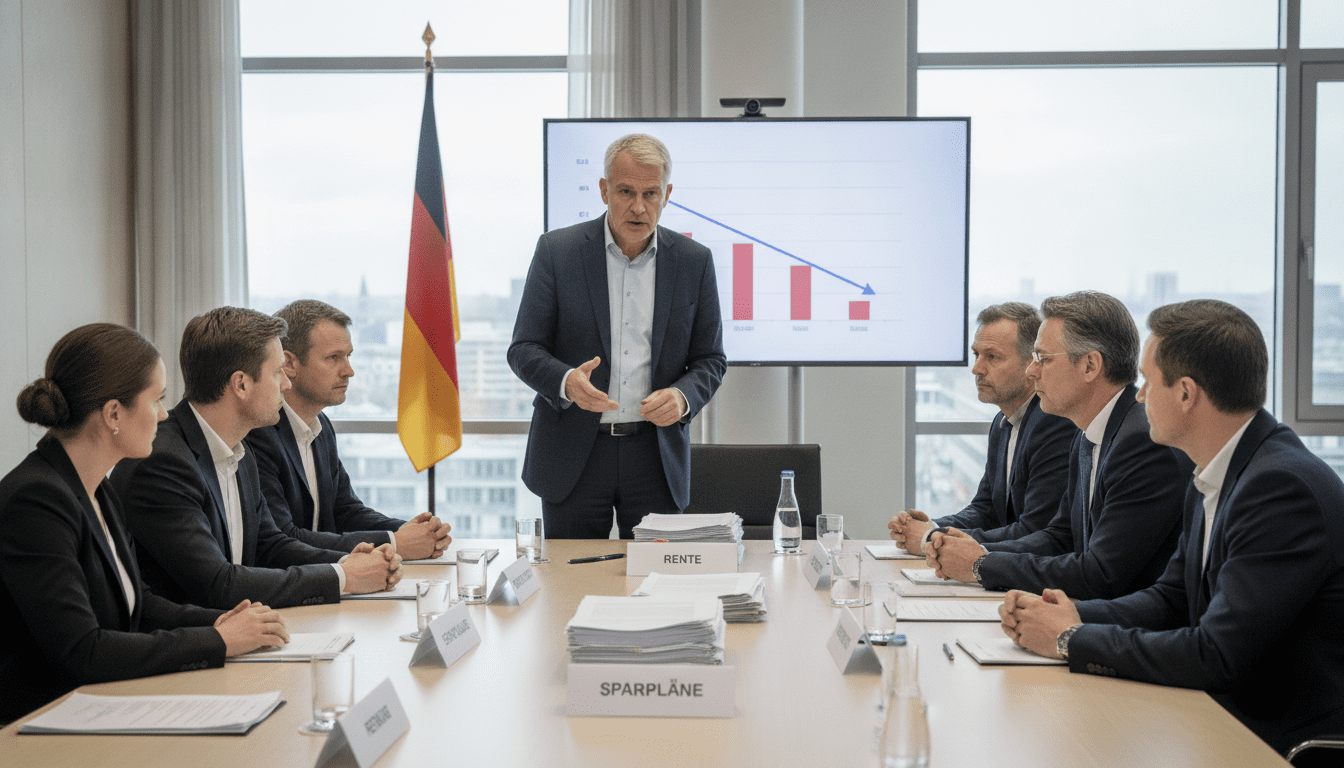
Germany’s Social Partners Meet at Kanzleramt as Unions Warn Against Pension Cuts
Unions and employers met with the federal government at the Kanzleramt amid sharp warnings that proposed pension cuts would undermine the link between pensions and real wages and provoke fierce resistance.
Werneke warns against decoupling pensions from wages
Frank Werneke, head of Ver.di, told the Augsburger Allgemeine that pensions are deliberately tied to real wage development and that breaking that link would be unacceptable to unions. Werneke said the unions would mount “decisive resistance” to any attempt to suspend the mechanism that adjusts pensions with wage trends.
He accused the Junge Union and some employer groups of seeking a long-term retreat from the pay-as-you-go pension model and prioritizing employer cost reductions over adequate retirement incomes for millions. Werneke’s intervention framed pension cuts as not only a fiscal choice but a political realignment of social policy priorities.
VdK urges tax-based financing instead of blanket cuts
Verena Bentele, president of the social welfare association VdK, condemned across-the-board reductions in the social safety net and called the “lawnmower” approach counterproductive. Speaking on ZDF’s Morgenmagazin, Bentele warned that broad cuts would alarm many households and urged the government to discuss alternative financing mechanisms.
Bentele proposed measures including adjustments to inheritance and wealth taxation and reconsidering the contribution assessment ceiling for well-paid earners in health insurance. She also expressed frustration that the VdK had not been invited to the Kanzleramt meeting while stressing the need for a clear reaffirmation of the social state.
Junge Union proposal fuels the debate over July pension rise
The controversy intensified after the Junge Union publicly suggested lowering the statutory pension increase scheduled for July to free funds for a planned BAföG expansion. JU chairman Johannes Winkel advocated a smaller rise, a move that unions and social advocates immediately criticized as a tactical cut to retirement incomes.
The proposal crystallized tensions between short-term budget trade-offs and long-term commitments to pension adequacy, with opponents warning that even a temporary reduction in scheduled inflation-linked increases would erode trust in the system. The July adjustment has become a focal point for broader disagreements about fiscal priorities.
Chancellor convenes three-hour social partners summit
Chancellor Friedrich Merz invited representatives of employers and unions to the Kanzleramt for an evening exchange on planned social and economic reforms, with the session scheduled to last three hours. The government described the gathering as an exchange of political positions and ideas rather than a decision-making forum.
Expectations for immediate policy breakthroughs were muted in advance, as senior politicians publicly downplayed the prospect of concrete agreements emerging from the meeting. Nevertheless, business groups are pressing for a clearer timetable and specific commitments on reform sequencing, signaling that subsequent negotiations could become more adversarial.
Economic adviser Grimm calls for growth-centred reform package
Economist Veronika Grimm, drawing on a study she authored, urged a consistent reform package that simultaneously boosts growth, enlarges fiscal room and strengthens security policy capacity. Grimm argued that Germany’s growth weakness stems from structural problems visible since 2018 and insufficient policy responses.
Her proposal reframes the debate away from ad hoc spending cuts and toward measures that increase productivity and the economy’s capacity to finance social commitments without resorting to pension cuts. Grimm’s stance found resonance among voices seeking durable solutions rather than short-term savings.
Political landscape and practical choices ahead
The Kanzleramt meeting highlighted a sharp divide over whether to protect the wage-link that underpins pension calculations or to pursue savings that some say are necessary to stabilize public finances. Employer associations say reform and cost discipline are needed, while unions and social organisations insist that pension cuts would amount to a rollback of hard-won social protections.
Policy options on the table range from tax reforms aimed at higher contributions from wealthy households to structural reforms intended to stimulate growth and thereby expand fiscal capacity. Each route carries political and economic trade-offs: higher taxes provoke resistance from business and some middle-income earners, while growth strategies require time and may not deliver immediate relief for budget pressures.
The meeting also exposed procedural frictions, including complaints about stakeholder inclusion and demands from economic groups for concrete timelines. Observers say the summit may serve as a launching point for more detailed technical talks, but that contentious decisions—especially any that touch pensions—are likely to move into the partisan arena.
Germany faces a test in reconciling fiscal sustainability with social commitments, and the pension cuts debate will remain a central fault line as parties negotiate options and timetables. The government’s next steps, including whether to pursue tax-based financing, adjust benefit rules or prioritise growth-enhancing reforms, will determine whether consensus can be built without undermining confidence in the pension system.
