
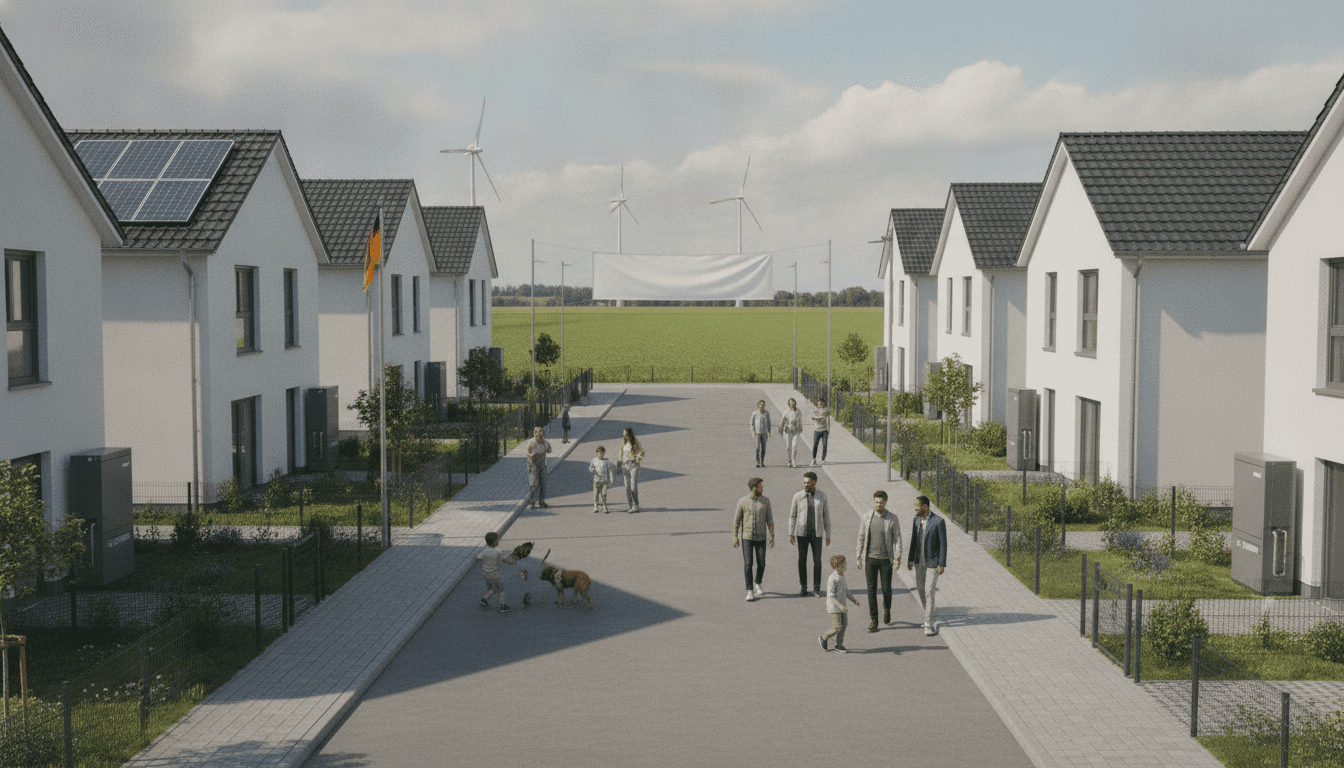
Heat pumps power nearly three-quarters of new German homes in 2025 as renewables surge
Heat pumps were the primary heating source in 73.6% of newly completed residential buildings in Germany in 2025, signaling a rapid shift toward renewable heating technologies nationwide.
Germany’s build-to-code landscape shifted markedly in 2025 as heat pumps became the dominant heating technology for newly finished homes, the Federal Statistical Office (Statistisches Bundesamt) reports. Of roughly 58,900 residential buildings completed that year, nearly three-quarters relied mainly on heat pumps for heating energy, a share that represents a dramatic rise from a decade earlier. The acceleration underscores an industry-level move away from fossil-fuel appliances in new construction and highlights growing demand for technologies that use ground and ambient thermal energy.
Heat pump adoption rises from 31% to 73.6% in ten years
The Statistisches Bundesamt data show a rapid adoption curve: heat pumps accounted for just over 31% of the heating systems in newly constructed residential buildings in 2015, while they were predominant in 73.6% of completions in 2025. This change occurred even though the number of newly built dwellings fell from about 105,600 in 2015 to roughly 58,900 in 2025. The figures reflect broader market shifts, including greater availability of heat-pump models, improved installation capacity and stronger consumer interest in low-carbon home heating.
Renewable heating reaches 78.2% of new residential buildings
Renewable energy sources were the main heating supply in 78.2% of new residential buildings completed in 2025, up sharply from 38% a decade earlier. Alongside ground- and air-source heat pumps, renewable heating in new builds includes biomass systems such as pellet boilers and stoves, solar thermal arrays, and the use of biogas and biomethane where available. The rise in renewable heating share reflects both technology uptake and changes in developers’ planning as buyers and regulators increasingly prioritize low-emission solutions.
Single- and two-family houses lead the transition
The shift toward heat pumps has been most pronounced in single- and two-family homes, where nearly 78% of newly completed units in 2025 were mainly heated with a heat pump. Statisticians note that multi-unit residential buildings have shown slower uptake, leaving apartment-heavy segments behind single-family construction in the transition. The concentration of heat pumps in smaller residential projects has shaped installer workloads and supply chains, and it has influenced where energy-efficiency incentives and infrastructure upgrades are focused.
Natural gas and oil retreat sharply in new construction
Fossil fuels have lost ground in new residential construction. In 2025, natural gas was used as the main energy source in just over 10% of newly completed homes, down from more than half a decade earlier. District heating accounted for about 8% of new builds, while oil-fired systems were installed in only a tiny fraction—around 0.3%. These figures point to a structural change in the choices builders make at the point of construction, with gas and oil giving way to low-carbon alternatives.
Existing stock remains dominated by gas and oil, posing renovation challenge
Despite the rapid turnover in new builds, Germany’s existing residential building stock remains heavily dependent on fossil fuels, according to Zensus 2022 data cited by the Federal Statistical Office. More than half of occupied residential buildings in the stock rely on natural gas as the primary heating fuel, and roughly a quarter still use heating oil. Renewables accounted for about 10% of the heating supply in the standing stock, underscoring the gulf between newly built and existing homes and the scale of the renovation challenge ahead.
Policy shifts complicate pathway to climate-neutral buildings by 2045
The building sector, which contributes around one-third of national CO2 emissions, is central to Germany’s aim of climate neutrality by 2045. Policy choices have therefore been consequential: a previous coalition government had advanced a heating law that aimed to phase out fossil-fuel heating by stipulating a minimum threshold of renewable energy in new systems. The current federal government has since reformed that law and removed the specific requirement that at least 65% of heating energy in new installations come from renewables. Analysts say the legislative shift may alter investment incentives and could slow the pace at which older, fossil-fuel systems are retired unless other measures or market forces intervene.
The statistics for 2025 highlight a decisive transformation in the technologies chosen for newly constructed homes, but they also underline a two-speed reality: new buildings are rapidly decarbonizing while the existing housing stock continues to rely on gas and oil. Achieving broad emissions reductions in the buildings sector will therefore require accelerating renovation of older properties, expanding installer capacity, and aligning policy instruments to sustain and spread the heat pump trend beyond newly built homes.
