
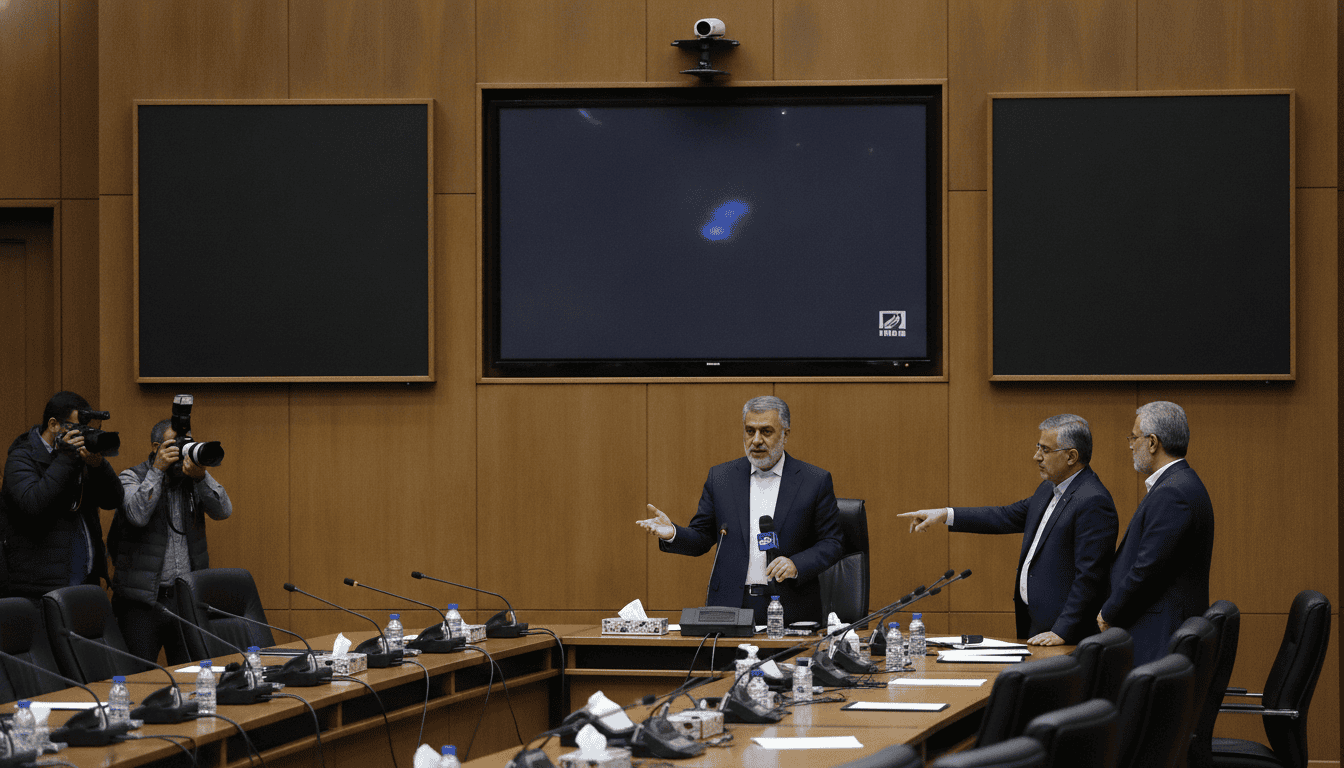
Iran state television censorship sparks public rift between government and IRIB
Iran state television censorship row escalates as officials accuse IRIB of cutting presidential remarks on US talks, deepening tensions amid regional mediation efforts.
Iran’s government and state broadcaster IRIB have entered a public confrontation after officials accused the network of censoring segments of President Masoud Pezeshkian’s speech that discussed secret approval for negotiations with the United States. The dispute, framed by the government as part of a pattern of edits to comments from senior officials, has prompted warnings from parliament and renewed questions about media independence in Tehran. The phrase Iran state television censorship has become central to the debate as both sides trade statements and accuse each other of undermining national unity.
Government Information Council accuses IRIB of censorship
The Government Information Council said on Friday that state television omitted a portion of President Pezeshkian’s remarks about negotiations with Washington, calling the cut an act of censorship. Officials framed the omission as one of several “unusual actions” by IRIB affecting speeches and interviews from the heads of the executive, legislative and judicial branches. The council warned that such editorial decisions risked eroding public trust and could exacerbate political divisions at a sensitive moment.
President Pezeshkian says supreme authority privately approved talks
In his address, President Pezeshkian recounted that after last year’s 12-day conflict with Israel, the supreme authority publicly dismissed talks with the United States but privately authorized negotiators to proceed. He told ministers that they sought and received instruction to open channels, and that subsequent discussions were undertaken based on that directive. Government officials argue that the omitted passage was material to public understanding of the negotiating mandate and therefore should have been aired.
IRIB defends broadcasts, cites need to avoid perception of dual leadership
IRIB responded by rejecting the government’s allegations and arguing that broadcasting the president’s comments would have created an “incorrect and unreal suggestion of duality in the country’s leadership pillars.” The broadcaster, whose director is appointed by the supreme leader, framed its editorial choices as measures to preserve a unified public message during a period of military and diplomatic pressure. IRIB also suggested that a faction within the government had misattributed intent, and it called on other institutions to respect its role in scripting national broadcasts.
Cuts to other officials’ remarks widen the controversy
The government pointed to additional instances where state television edited or omitted comments by key figures, including an interview with parliament speaker Mohammad Bagher Ghalibaf and a speech by judiciary chief Gholam-Hossein Mohseni-Ejei. Foreign Minister Abbas Araghchi separately criticized IRIB for failing to fully air his wartime interviews with US outlets, saying his appearances were intended to present Iran’s case to American audiences and policy makers. Those examples have been used by critics to illustrate a broader pattern of selective coverage and to question whether editorial decisions reflect partisan influence.
Parliamentary oversight and budget threats escalate tensions
A member of parliament and spokesperson for the committee overseeing IRIB said directors have been warned to display diverse viewpoints and to serve as a “sign of national unity.” Conservative and reformist commentators offered contrasting takes, with some calling the broadcaster expensive but ineffective and others alleging that IRIB operates as a parallel government resistant to the administration. Hardline lawmakers claimed the president threatened to cut IRIB’s budget, a move the administration has not confirmed, while accusations surfaced that a faction linked to the Paydari Front may be exerting influence within the broadcaster.
Mediation efforts and wider regional stakes intersect with media dispute
The spat unfolded as mediators from Oman visited Tehran to discuss management of the Strait of Hormuz, a strategic chokepoint central to US-Iran tensions. International and regional diplomacy has continued alongside the domestic fallout, with public statements from both Tehran and Washington underscoring the fragile state of talks. Iran’s Supreme National Security Council official vowed continued missile and drone operations until the “full surrender of the enemy,” remarks that underscore how the media rift is occurring amid active security and diplomatic maneuvering.
The public confrontation between Iran’s government and state television highlights competing claims over who controls the national narrative during a period of heightened external pressure and internal political friction. As mediators press both sides toward negotiation, the dispute over Iran state television censorship has become a proxy fight over institutional authority, editorial independence and the limits of acceptable dissent in official media. Continued oversight, parliamentary warnings and potential budgetary measures suggest the row may have tangible consequences for IRIB’s operations and for the broader balance between state institutions.
