
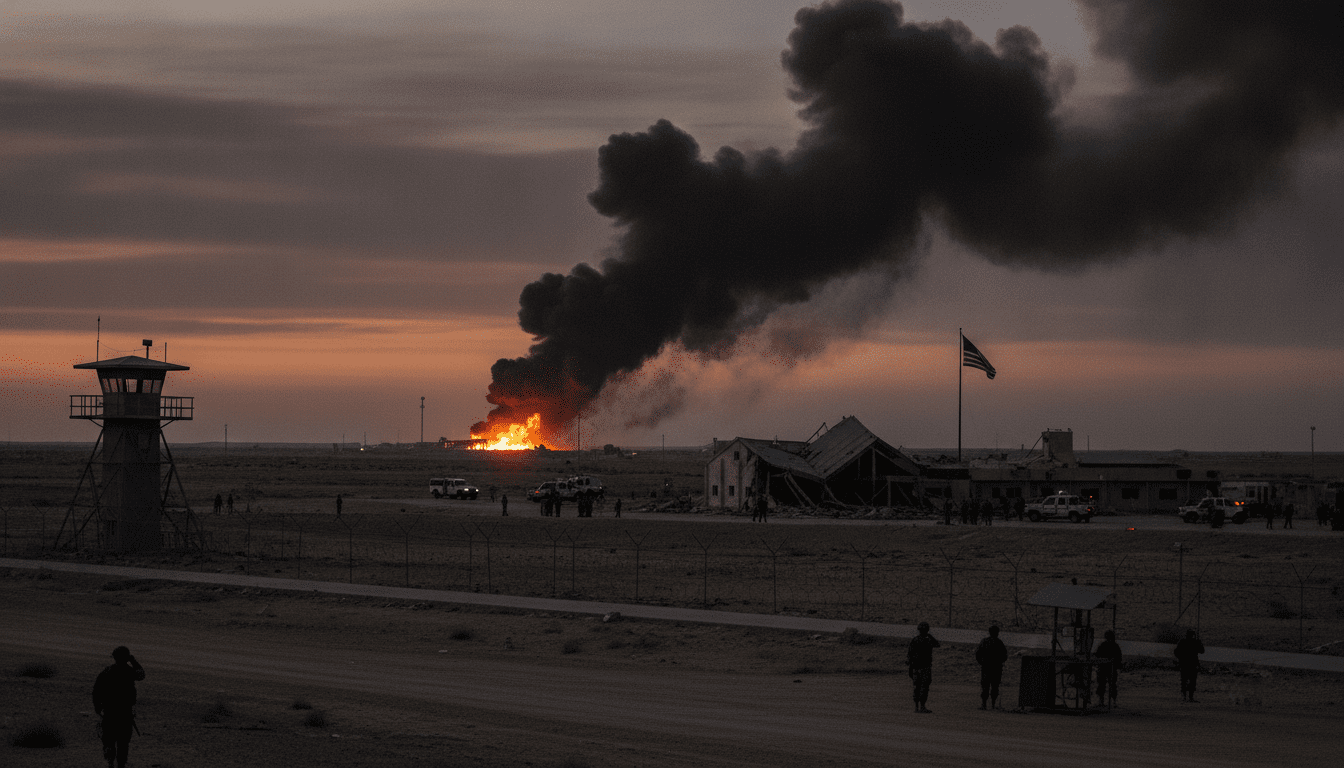
Iran attacks Kuwait and Bahrain after U.S. strikes, raising fears of wider Gulf escalation
Iran attacks Kuwait and Bahrain with missiles and drones following U.S. strikes on Iranian targets, threatening a fragile framework agreement and regional stability.
The Iranian Revolutionary Guard Corps said it launched missile and drone strikes on Kuwait and Bahrain targeting eight U.S. facilities in retaliation for recent U.S. strikes inside Iran, marking a sharp escalation in an already tense Gulf confrontation. Kuwaiti forces reported incoming fire and that air defenses and interceptors engaged missiles and drones, while Bahraini officials warned the attacks represented a dangerous pattern of repeated strikes against the kingdom. U.S. officials confirmed the incidents, which follow U.S. military operations earlier that struck Iranian air defenses, drone depots and surveillance points.
Iran’s stated rationale and targets
The IRGC posted on its Telegram channel that the operation was a direct response to what it described as U.S. aggression and violations of a recently negotiated framework agreement aimed at ending the fighting and reopening the Strait of Hormuz. According to the IRGC, the strikes were aimed at eight American installations across Kuwait and Bahrain, though it did not publicly name each location. Tehran framed the action as retaliation and warned that continued U.S. military pressure would derail remaining diplomatic openings.
Kuwaiti and Bahraini authorities provided more limited, operational accounts, indicating intercepts and countermeasures rather than substantial ground damage. Both Gulf states have sought to deflect direct confrontation on their soil while condemning actions that threaten civilian safety and regional commerce.
Kuwait and Bahrain describe intercepted attacks
Kuwait’s armed forces reported that the country came under attack and that missiles and drones were being intercepted, urging citizens to follow official safety guidance. Bahrain’s foreign ministry called the strikes a “dangerous escalation” and said they followed a pattern of repeated attacks that threaten national security. Both countries appear intent on avoiding further entanglement but are visibly alarmed by the strikes near critical military and commercial infrastructure.
Regional defenses and allied forces remain on heightened alert, and local governments are coordinating with partners to monitor maritime and air routes that could be affected by follow-on actions.
U.S. military action inside Iran and stated justification
U.S. Central Command said its forces conducted strikes on multiple targets inside Iran overnight, including air-defense systems, drone storage facilities and surveillance infrastructure, characterizing the missions as limited, targeted responses. Washington said the actions were triggered by an attack on a commercial vessel that transited the Strait of Hormuz on a route Tehran had not authorized. A U.S. government representative confirmed the strikes and indicated they were intended to degrade Iran’s ability to threaten shipping and regional partners.
U.S. officials framed the operations as defensive measures to protect maritime freedom and U.S. personnel, but noted they were calibrated to avoid a full-scale return to open war.
Political escalation: presidential threats and rhetoric
The confrontation intensified on social and political fronts when former President Donald Trump issued a stern warning on his online platform, asserting that if the United States were forced back into large-scale conflict, the Iranian regime could be destroyed. The statement heightened concerns among diplomats that incendiary rhetoric might reduce the room for de‑escalation and complicate ongoing negotiations. Analysts say such language can harden political positions on both sides, limiting options for quiet diplomacy.
Despite the stark tone from Washington’s political circle, some U.S. military and diplomatic actors emphasize that operational decisions remain focused on specific security objectives rather than sweeping regime-change aims.
Diplomatic framework and the 60-day negotiation window
Only days earlier, negotiators from Washington and Tehran had announced a framework agreement intended to halt hostilities and lay the groundwork for reopening the Strait of Hormuz, with talks scheduled to produce a definitive accord within 60 days. Iranian officials accused the United States of violating that framework by striking targets inside Iran after the freighter incident, saying the U.S. action undermined remaining chances for de‑escalation. U.S. officials countered that their strikes were proportional responses to Iranian attacks on commercial shipping.
Diplomats from third-party capitals are now under pressure to salvage the negotiating process, but military exchanges and public threats have narrowed diplomatic maneuvering room and could delay or derail the 60-day timetable.
Regional security implications and merchant shipping risks
Maritime insurers, shipping companies and Gulf littoral states are watching developments closely, as any further attacks on ports or sea lanes could disrupt global energy and trade flows that pass through the Strait of Hormuz. A renewed cycle of strikes and counterstrikes raises the prospect of accidental clashes among regional forces and foreign militaries operating in the area. Security analysts warn that even limited kinetic exchanges can ripple outward, prompting precautionary diversions, higher insurance premiums and a spike in naval patrols.
Neighboring states and international partners have called for restraint, but their ability to force a return to negotiations depends on the next moves by Tehran and Washington.
The recent sequence of a freighter shooting, U.S. strikes in Iran, and Iran’s missile and drone strikes on Kuwait and Bahrain underscores how quickly the Gulf can move from diplomatic bargaining to military confrontation, leaving the outcome of the 60-day diplomatic window uncertain.
