
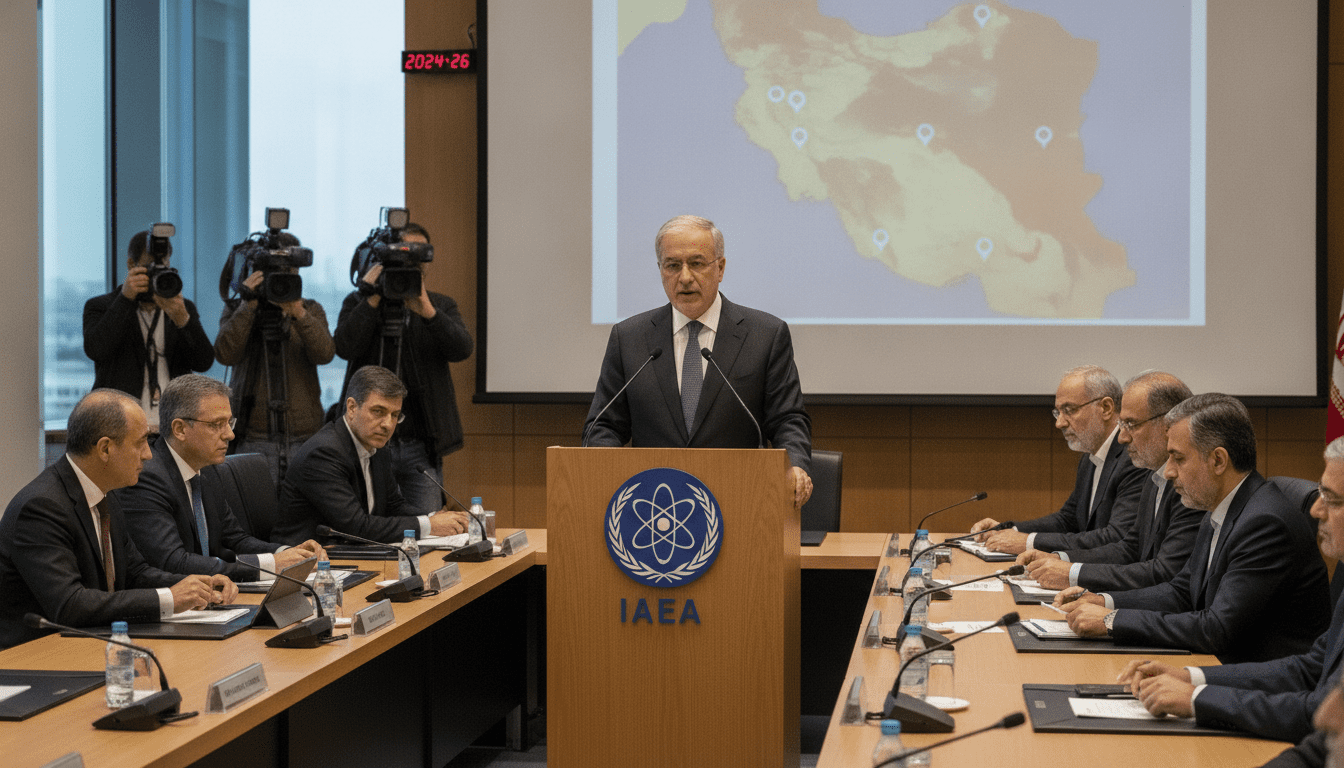
IAEA to Inspect Iran’s Nuclear Facilities Under US–Iran Framework, Grossi Says
IAEA to inspect Iran’s nuclear facilities under a US-Iran framework, Rafael Grossi says; inspections, uranium dilution and timelines will be coordinated.
The head of the International Atomic Energy Agency said Wednesday that IAEA inspections in Iran will take place as part of a recently agreed framework between Tehran and Washington, signaling a renewed push for international oversight of Iran’s nuclear materials. Rafael Grossi told reporters at the Fukushima Daiichi site in Japan that while exact dates remain to be set, the inspections are scheduled to occur and will be arranged with Iranian authorities. Iranian officials have pushed back on immediate access to sites damaged by conflict, creating room for negotiation over scope and timing.
IAEA Confirms Role Under the US–Iran Framework
Grossi emphasized that the inspections derive from commitments made by the leaders of the United States and Iran and that the agency’s mandate is to verify compliance with those commitments. He said the framework envisages IAEA supervision of steps such as the dilution of enriched uranium and requires on-site verification. The agency will now work on detailed timelines and modalities to ensure inspections meet technical and legal requirements while respecting sovereign arrangements.
Tehran Signals Limits on Immediate Access
Iran’s foreign ministry spokesman, Ismail Baghai, stated in Tehran that there are currently no planned IAEA inspections of war-damaged facilities, a category that includes sites where near-weapons-grade material is reportedly stored. That stance sets up a diplomatic negotiation over which installations will be accessible and when, and reflects Tehran’s concern for security and sovereignty amid an unsettled regional environment. Iranian officials are therefore positioning the IAEA engagement as conditional on further talks and clarifications.
Dilution of Enriched Uranium as a Central Measure
A central element of the framework discussed by Grossi is the dilution of highly enriched uranium to levels that are less suitable for weapons use, with the IAEA providing oversight. Grossi said the dilution process must be verified by the agency to ensure it meets the technical benchmarks agreed by the parties. The verification task will include sampling, chain-of-custody measures and continuous monitoring where appropriate, according to the agency’s standard procedures for material accountancy.
Technical and Scheduling Work to Follow
Officials at the IAEA will now draft detailed technical plans and a schedule for inspections, Grossi said, acknowledging that precise timing — whether within days or weeks — is secondary to achieving rigorous verification. The agency must coordinate logistics, access arrangements and safety protocols before deployment of inspectors, especially for sites affected by damage or instability. Those technical steps will be coordinated with Iran to establish agreed points of entry, inspection teams and reporting protocols.
Cooperation Claimed but Conditional
Grossi stressed that the inspections will be carried out in cooperation with the Iranian government, framing the work as jointly implemented rather than imposed. That phrasing seeks to reduce political friction and to bind Tehran to procedural commitments, even as differences over scope persist. Observers note that meaningful cooperation will require transparent arrangements and reciprocal steps to build confidence among the international community.
Implications for Non‑Proliferation and Diplomacy
If implemented, the inspections would represent a tangible exercise of international safeguards and could ease concerns about the status of enriched uranium stocks in Iran. Diplomats suggest that verified dilution under IAEA oversight would lower immediate proliferation risks and could create political space for broader negotiations. However, successful implementation will hinge on technical access, timely reporting and mutual trust between Tehran, Washington and the watchdog agency.
The coming days are expected to focus on drafting the concrete inspection schedules and technical protocols that Grossi referenced, with the IAEA balancing the need for thorough verification against political sensitivities expressed by Iran.
