
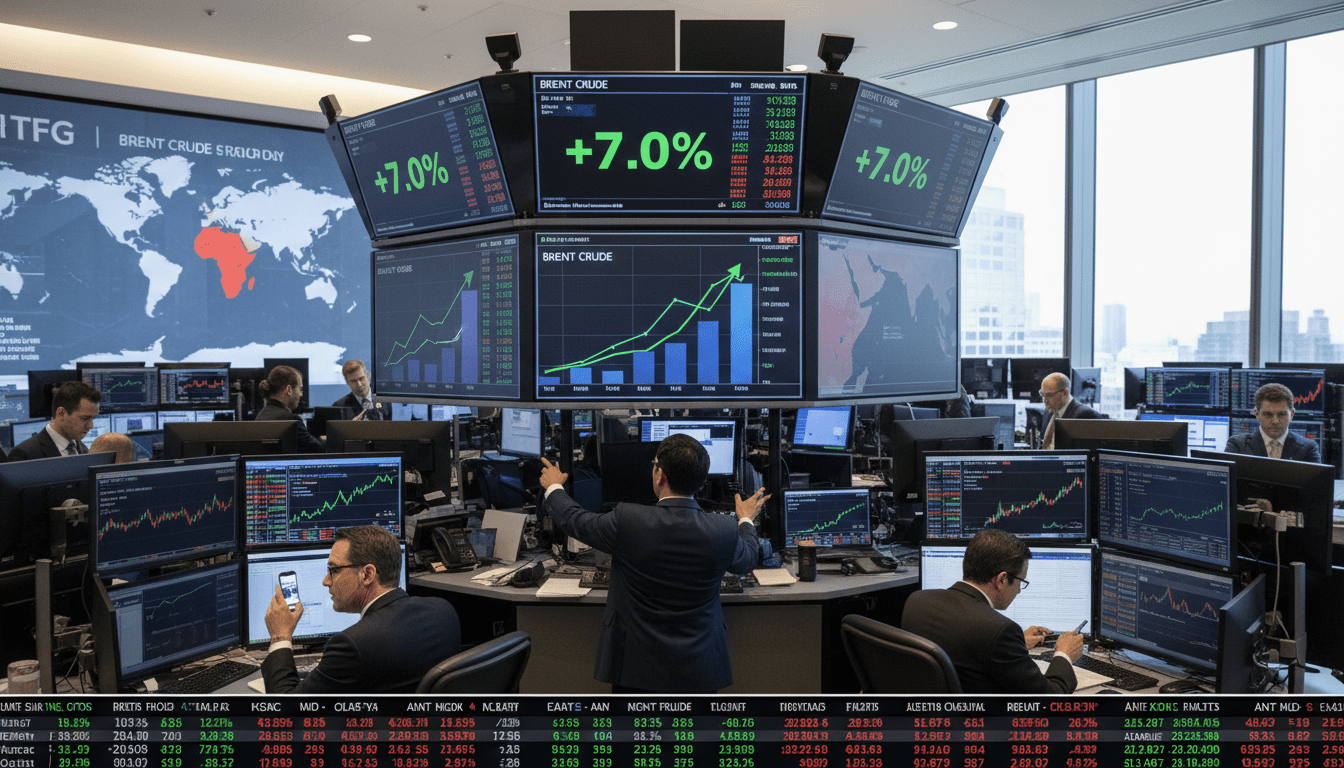
Strait of Hormuz Reports Spark Oil Rally and Shake Global Markets
Rising reports that the Strait of Hormuz has been closed again drove a sharp jump in Brent crude and rattled global markets on Monday, prompting a flight to the US dollar and a sell-off in gold.
The prospect of renewed disruption in the Strait of Hormuz sent Brent crude futures up about 7% to $96.85 a barrel in early Asian trading, while S&P 500 futures slipped roughly 0.9%. Investors reacted to reports that Iran had rejected new peace talks with the United States, reversing optimism from last week and pushing markets toward safer assets.
Markets React to Strait of Hormuz Reports
Reports of the re-closure of the Strait of Hormuz and Iran’s announced rejection of new talks with Washington set off immediate market moves. Oil led the moves higher, equity futures retreated and the US dollar strengthened against major currencies. Traders said the sudden shift reflected a rapid reassessment of geopolitical risk rather than an abrupt breakdown in market functioning.
Market participants pointed to last Friday’s optimism — when Iran signaled it would reopen the Hormuz route — as the primary factor behind this week’s reversal in sentiment. The reversal underscored how quickly energy and financial markets can swing on changing assessments of supply risk and diplomatic progress.
Oil Prices Spike as Supply Risks Reassert Themselves
Brent crude’s roughly 7% rise to $96.85 a barrel reflected immediate concern over potential chokepoints in global oil flows. The Strait of Hormuz is a vital artery for seaborne oil shipments, and any reports suggesting closure can tighten physical supply assumptions and trigger rapid buying in petroleum markets. Traders noted that the price move partly unwound the declines seen when talk of reopening had eased shortages.
Analysts said the move may be amplified by speculative positioning that had already been influenced by last week’s statements. If shipping lanes remain impaired or if physical disruptions are confirmed, the market could see additional upward pressure on crude and refined product prices.
Investor Sentiment Shifts but Panic Is Limited
Despite the volatility, some strategists cautioned against reading the move as full-blown panic. Michael Brown, a strategist at Pepperstone, said markets were retracing some of Friday’s gains and that a large-scale rush for the exits had not yet materialized. He warned, however, that sustained confirmation Iran will not participate in talks could materially increase risk aversion among investors.
Portfolio managers described the day as a classic risk-off reaction: reduce exposure to equities, reassess commodity positions and increase holdings in perceived safe havens. The extent and duration of the risk-off posture will depend on whether diplomatic channels reopen and whether shipping lanes are reliably secured.
Currency and Safe-Haven Flows Intensify
Safe-haven demand pushed the US dollar higher, with the dollar index rising as much as 0.3% to 98.485, a one-week high. The euro weakened to about $1.1731 as dollar demand rose, reflecting investor preference for the greenback in periods of geopolitical uncertainty. Currency traders noted the moves were relatively contained but consistent with a short-term flight to liquidity.
Gold, often seen as an alternative safe haven, fell more than 1% on Monday, trading down to $4,762.09 per ounce, according to market quotes. Dealers attributed the decline partly to the stronger dollar, which reduces the metal’s price attractiveness for holders of other currencies, and to profit-taking after recent gains.
Geopolitical Context: Iran, the US and Maritime Security
The immediate trigger for the market reaction was reporting that Iran would not engage in new peace negotiations with the United States, and that the Strait of Hormuz could be closed again. The waterway’s strategic importance for global energy shipments makes any suggestion of renewed tensions particularly sensitive for oil markets. Regional security developments and state-level rhetoric have repeatedly influenced energy and risk pricing since disruptions began.
Analysts emphasized that credible, verifiable on-the-ground reporting is essential before markets fully price in long-lasting supply disruptions. Diplomatic signals that reduce the chance of closure or secure alternative transit arrangements could quickly calm markets, while further escalatory actions would likely deepen price swings.
What Traders and Energy Markets Are Watching Next
Market participants said they will monitor ship traffic reports, statements from regional navies and any new diplomatic communications between Tehran, Washington and other stakeholders. Oil inventories, tanker routing data and futures positioning will be watched for signs of how sustained the price move might be. Equity markets are likely to remain sensitive to headline risk until clarity on the Strait of Hormuz and related negotiations returns.
Short-term volatility may present trading opportunities but also increased risk for longer-term investors in energy and financial markets. If Iran’s stance hardens and shipping remains constrained, analysts said the risk premium on oil and other commodities could remain elevated for an extended period.
The coming days will be pivotal in determining whether the market’s reaction is a temporary episode of risk repricing or the start of a longer phase of uncertainty tied to maritime security and diplomatic standoffs.
