
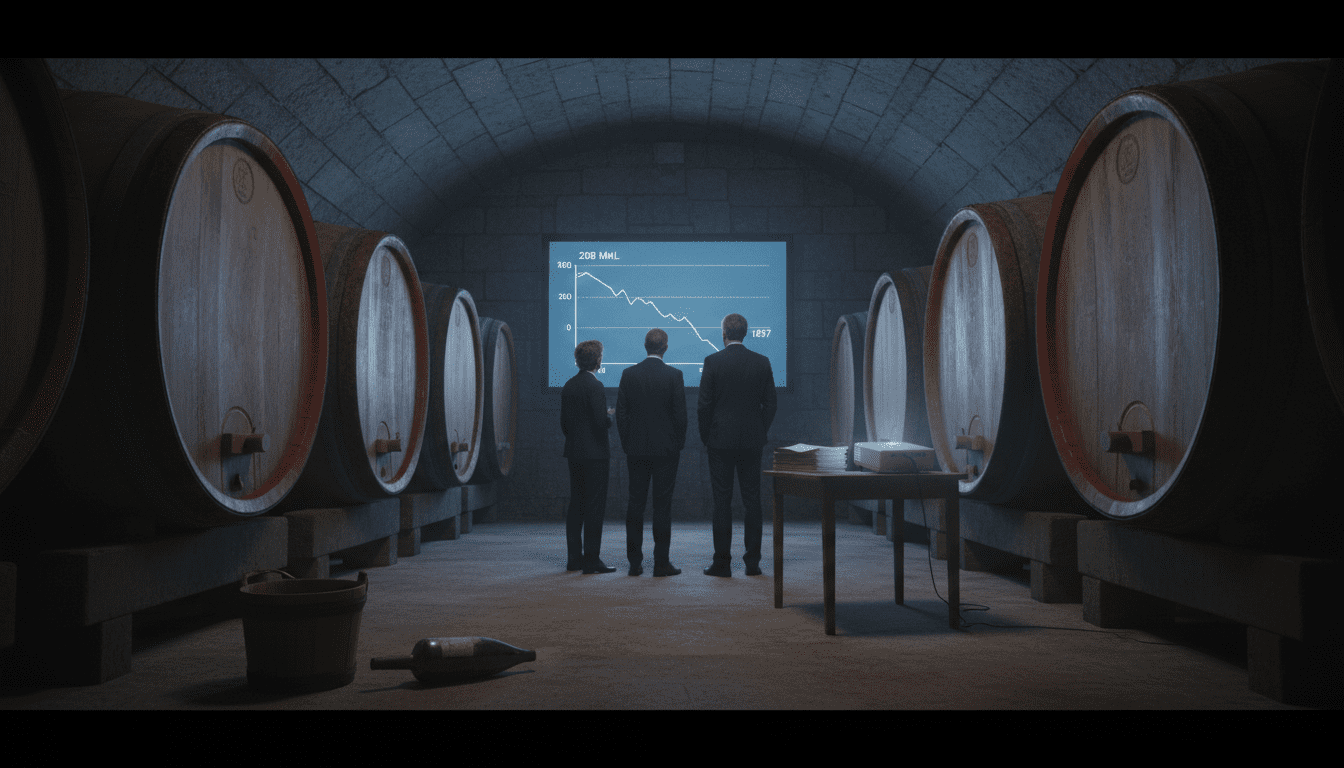
Global Wine Consumption Falls to Lowest Level Since 1957, OIV Reports
Global wine consumption dropped to 208 million hectoliters in 2025, the lowest since 1957, as OIV attributes the decline to rising costs, weaker incomes and changing tastes.
The International Organisation of Vine and Wine (OIV) said in Dijon that global wine consumption fell 2.7 percent from 2024 and is 14 percent below 2018 levels. The report highlights sustained shifts in drinking habits alongside recent economic pressures that have depressed demand across several major markets. Analysts note the data indicates not only a short-term contraction but also a longer-term transformation in how wine is consumed worldwide.
OIV data and historical perspective
The OIV’s figures place global wine consumption at 208 million hectoliters for the year, marking the steepest drop in decades and the lowest total recorded since 1957. The organization compared the new total with prior-year and multi-year baselines, underscoring a 2.7 percent decline versus 2024 and a 14 percent fall compared with 2018. These comparative measures illustrate a structural retreat from peak volume driven by both cyclical and secular factors.
The agency also noted that while total volume has decreased, value in many wine-producing regions has risen due to a shift toward higher-quality, higher-priced bottles. That premiumization trend has partially offset volume losses for some producers, producing a more complex picture for the global wine economy than volumes alone convey.
Major markets show pronounced drops
The OIV singled out several large markets where consumption has meaningfully weakened, including the United States, China and France. Those three markets have driven much of the headline decline in global wine consumption, with decreases tied to different but overlapping economic and social developments. The combined effect in top-consuming countries amplified the global slide in volume.
France, historically one of the world’s largest wine markets, saw consumption fall to roughly 22 million hectoliters in 2025, a decline of about 3 percent year-on-year. Italy recorded 20.2 million hectoliters and a sharp decrease of 9.4 percent, while Germany’s consumption stood near 17.8 million hectoliters, down some 4.3 percent. These national declines underscore how even mature wine markets are not immune to the broader downturn.
Economic pressures and rising costs
The OIV report links the recent fall in global wine consumption to a combination of economic headwinds. The pandemic, elevated inflation, geopolitical conflicts and protective tariffs have raised production and distribution costs across the supply chain. Those higher costs, in turn, have contributed to price increases at retail and a contraction in disposable incomes for many consumers.
Producers face steeper input expenses for materials, energy and logistics, creating pressure on margins and prompting some wineries to adjust output or reformulate commercial strategies. For consumers, higher shelf prices coupled with squeezed household budgets have reduced routine purchases of everyday table wine, affecting overall volume sales.
Changing consumer preferences and market segmentation
Beyond economics, the OIV emphasizes long-term social changes that are reshaping consumption patterns. There has been a steady move away from heavy consumption of inexpensive table wine in a handful of countries toward a greater focus on quality, variety and experiences. Health concerns, moderation trends and younger cohorts favoring different beverages are also altering demand profiles.
This evolution has produced a dual trend: lower aggregate volumes but stronger demand for premium and niche products. Wineries that can capture higher price points and cultivate export markets have sometimes seen revenue gains despite falling liters sold, reflecting a reconfiguration of the sector toward value rather than volume.
Industry response and strategic adjustments
Faced with shrinking global wine consumption, producers and trade groups are recalibrating. Many are redirecting marketing toward premiumization, wine tourism and direct-to-consumer channels to enhance margins. Others are exploring new geographic markets where per-capita consumption remains underdeveloped or where premium wines are gaining traction among emerging middle classes.
Supply-side responses also include cost management, efficiency improvements and increased investment in sustainability and terroir differentiation. Industry observers say such measures may mitigate some short-term pain but will not immediately reverse volume declines if underlying consumer trends and macroeconomic pressures persist.
Outlook and implications for trade
The OIV’s assessment suggests that the near-term outlook for global wine consumption is uncertain and contingent on macroeconomic developments and evolving consumer behavior. If inflationary pressures and disposable-income declines ease, a modest stabilization in volumes could follow, though volumes are unlikely to return quickly to pre-2018 levels. Conversely, continued economic strain or further changes in drinking culture could prolong the contraction.
For exporters and producers, the shift elevates the importance of strategic diversification and value-oriented production. Governments and trade bodies may also play a role in supporting market access and promotional campaigns to sustain demand in key regions. The combination of shrinking volumes and rising value places a premium on agility across the supply chain.
The OIV’s report frames the recent drop not simply as a temporary slump but as part of a broader realignment of the global wine market, where fewer liters are consumed but, in many places, the wines that remain in demand are higher priced and more closely tied to lifestyle, quality and provenance.
