
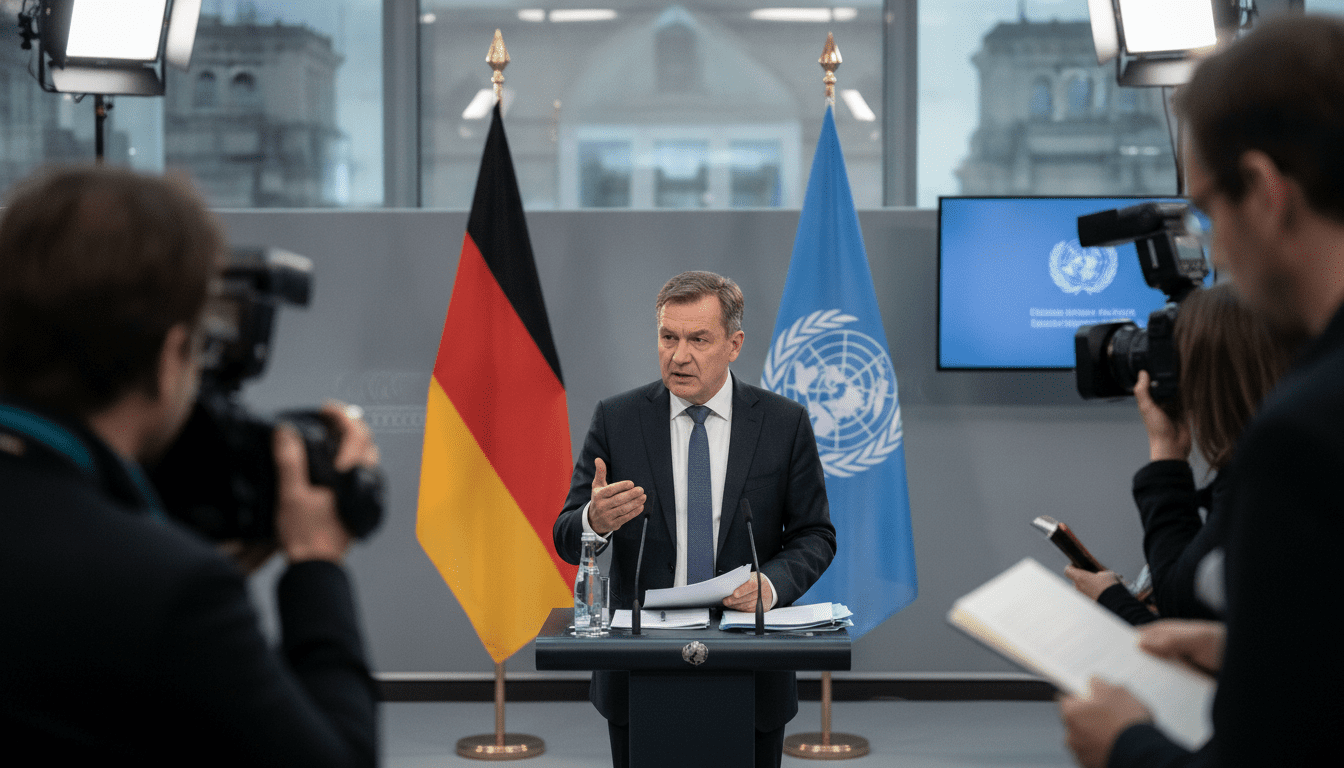
Germany’s shock defeat in UN Security Council election triggers debate over UN payments and political rifts
Germany’s historic loss in the UN Security Council election has sparked a fresh dispute over the country’s contributions to the United Nations and political tensions within the governing coalition, centred on Foreign Minister Johann Wadephul. The failed bid and subsequent comments about Germany’s future financial engagement with the UN have intensified scrutiny of Berlin’s diplomatic standing after the vote. (theguardian.com)
Historic setback in New York
Germany finished a distant third in the vote for two Western European non-permanent seats, trailing Portugal and Austria in the June ballot that decides membership for the 2027–2028 term. The result — a rare defeat for a nation that has traditionally expected to secure such rotating seats — was described in Berlin as a bitter and embarrassing setback for the government’s foreign policy aims. (theguardian.com)
Diplomats and analysts in New York and Berlin immediately began parsing the reasons behind the outcome, pointing to a mix of late campaign efforts, competing regional priorities among member states, and friction over recent German foreign policy positions. Observers also noted that Germany’s rivals mounted effective last-minute lobbying, leaving Berlin short of the two-thirds majority historically expected for such bids. (aljazeera.com)
Wadephul’s comments and a tone shift
Foreign Minister Johann Wadephul publicly called the defeat a “bitter” disappointment and in some interviews suggested that Germany’s firm positions on conflicts — including strong support for Ukraine and alignment with Israel on certain diplomatic matters — may have cost votes. Those remarks were cited by international outlets as part of Berlin’s initial attempt to explain the loss. (aljazeera.com)
At the same time, Wadephul’s messaging to domestic audiences has shown variance. During a televised interview immediately after the vote he was cautious, saying Germany would need to examine its engagement “in individual cases” and to “formulate German interests more clearly.” Days later on an overseas trip he offered a firmer rejection of cutting UN funding, arguing that Germany should remain fully engaged in the UN system. The oscillation has created unease inside the coalition. (tagesschau.de)
Internal party calls and coalition backlash
The defeat prompted voices within the CDU to ask blunt questions about the value of Germany’s large voluntary payments to UN agencies. A prominent regional CDU politician publicly suggested re-evaluating those payments if Berlin no longer enjoyed commensurate influence at the UN. That intervention immediately sparked pushback from the coalition partners, who warned against a politically expedient retreat from multilateral commitments. (tagesschau.de)
Greens and the SPD both rejected any quick move to curtail Germany’s UN contributions, saying that punitive or retaliatory cuts would damage long-term credibility and humanitarian work. Parliamentary leaders from the governing parties framed the debate as one about values and institutional reliability rather than transactional politics. The row highlights growing friction in Berlin over how to balance fiscal pressure with diplomatic obligations. (tagesschau.de)
The payments debate and diplomatic consequences
Germany is among the largest contributors to the UN system when voluntary funding is included, and the question of whether to reduce voluntary payments has resurfaced whenever public frustration with international bodies peaks. Proponents of reassessment argue for tighter prioritisation and accountability; opponents counter that shrinking support would undermine Germany’s influence and global problem‑solving capacity. (dgvn.de)
Foreign policy experts caution that cutting payments in response to one electoral defeat would likely have limited practical benefit and could damage relationships with countries that rely on German funding for development, humanitarian and peacebuilding programmes. They also warn that such a move could be perceived internationally as punitive and short-sighted, especially at a time when several UN agencies face fiscal strain. (tagesspiegel.de)
Political implications for Berlin and Merz administration
The UN result increases pressure on Chancellor Friedrich Merz and on Wadephul as the government seeks to demonstrate coherent leadership on the international stage. Critics in the opposition and within parts of the coalition have already used the defeat to question whether Berlin’s current diplomatic strategy secures the influence its economic weight would suggest. (theguardian.com)
Inside the coalition, the episode has exposed latent disagreements over priorities and communication. Coalition partners have urged unity and cautioned against public spats that could further erode Germany’s standing, while some within the CDU see the episode as evidence that a more transactional approach to multilateral institutions should be considered. The debate is likely to continue in parliamentary committees and budget talks. (tagesschau.de)
Germany’s failure to win a non‑permanent seat on the UN Security Council has become more than an isolated diplomatic setback; it has reopened a domestic debate over the costs and benefits of multilateral engagement and has put intra‑government tensions on public display. How Berlin reconciles immediate political pressures with long‑term strategic commitments to the United Nations will shape both its international reputation and the cohesion of the governing coalition in the months ahead. (aljazeera.com)
