
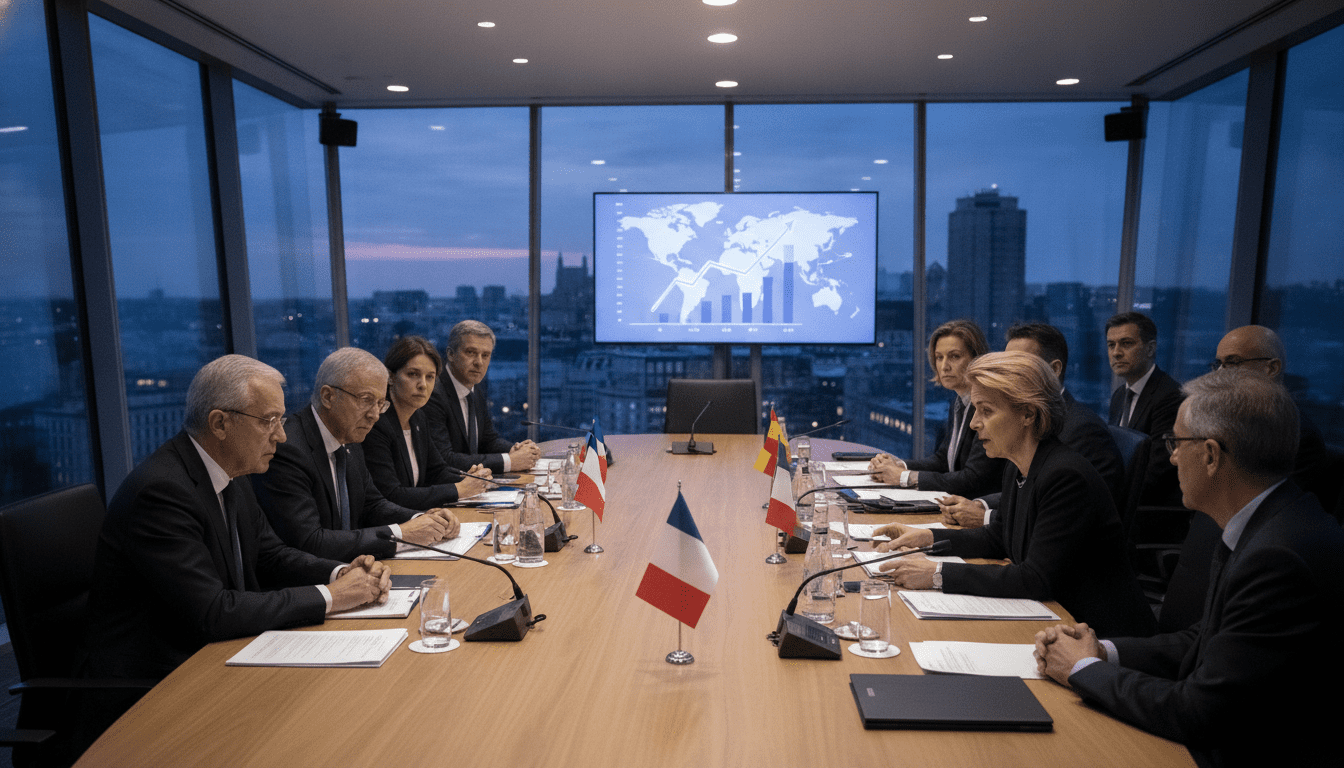
EU-China trade dispute forces EU summit to demand swift industry protections
EU leaders placed EU-China trade at the top of the June summit, urging swift measures to protect industry from China’s import surge and diversify supplies.
The European Council meeting in June placed EU-China trade squarely at the center of the bloc’s policy agenda as leaders warned that the current relationship is unsustainable and requires prompt action. Industry Commissioner Stéphane Séjourné set a three-year window for the EU to shield manufacturers from mounting import pressure, while diplomats flagged a rapidly widening trade gap that could reach €500 billion by 2027. Officials described the discussion as urgent but cautious, seeking tools that can be deployed quickly without immediately provoking retaliatory measures from Beijing.
Summit elevates EU-China trade as a strategic problem
At the June summit, the topic of China dominated evening discussions framed publicly as concerns over “macroeconomic imbalances” to avoid direct diplomatic escalation. Council President António Costa deliberately placed the issue at the top of the agenda, signaling a shift in priority among member states toward economic resilience.
Leaders drew a clear line between the scale of the challenge and the need for a collective response, arguing that piecemeal national actions would not be sufficient to counter deepening market distortions. The summit outcome reflected a consensus that Europe must adapt faster to an aggressive Chinese export strategy.
Industry commissioner sets a three-year deadline
Commissioner Séjourné warned that the EU has at most three years to enact protective measures to prevent further erosion of its industrial base under continued import pressure. He and other officials pointed to indicators showing the deficit is expanding at a rate that will become structurally damaging if left unchecked.
The three-year timeline is intended to push the Commission and member states toward concrete proposals rather than prolonged debate, with an emphasis on measures that can be operationalized within a short political horizon. That urgency is shaping both the tone and the timetable for upcoming legislative and regulatory work in Brussels.
Member states sharply divided on tactics
Member states remain split between those advocating a hard line and those urging restraint, with Poland, the Netherlands, Sweden, Denmark, Lithuania, Belgium and France pressing for tougher responses. Several governments want new instruments that would allow the EU to impose tariffs or other sanctions where foreign subsidies create unfair competition.
Conversely, larger economies such as Germany, along with Spain and Greece, cautioned against immediate confrontation given deep trade ties and the potential economic fallout. Berlin in particular emphasized the risk to German manufacturing, while urging a calibrated approach that avoids a full-blown trade war.
Commission leans toward creative use of existing tools
Within the Commission, officials signaled a preference for maximizing existing trade instruments rather than seeking a brand-new “sector-301” style mechanism modeled on U.S. practice. President Ursula von der Leyen’s team has expressed reservations about launching a lengthy process to create an overcapacity instrument that could trigger protracted legal and political debate.
Commissioners instead propose adapting established safeguards, anti-dumping rules and state-aid controls more flexibly to target distortive practices. This approach is seen as quicker to implement and more defensible under World Trade Organization rules, while still delivering pressure on unfair trade practices.
Proposals focus on diversification and targeted safeguards
Brussels officials are advancing a mix of diversification incentives, targeted safeguards and potential sourcing limits to reduce strategic dependencies. One scenario under consideration would encourage or require companies in critical sectors to source a capped percentage of key components from any single country, with a proposed threshold discussed privately at around 40 percent.
The Commission has also been urged to draft a “diversification instrument” to accelerate supply-chain shifts and to consider tariff-based levers where necessary. Semiconductors and rare earths were singled out as immediate examples where supply concentration has exposed European industry to strategic risk.
Economic risks, jobs and the risk of retaliation
Diplomats warned that hesitation could be costlier than swift action, estimating that tens of thousands of European jobs are at stake each month as competitive pressure mounts. They argued that short-term pain from possible Chinese countermeasures—such as restrictions on critical inputs—may be more manageable than prolonged industrial decline.
At the same time, leaders stressed the need to balance deterrence with dialogue, hoping to preserve channels for negotiation and cooperation where possible. The Commission’s task will be to calibrate measures that protect EU industry while limiting the risk of damaging reprisals that could deepen economic instability.
The Council has charged the Commission with producing concrete proposals in the coming months, and member states will test those options against political, legal and economic assessments before any new measures are adopted. The outcome will determine whether the EU moves quickly to reshape EU-China trade rules or opts for more gradual adjustments that seek to maintain engagement with Beijing.
