
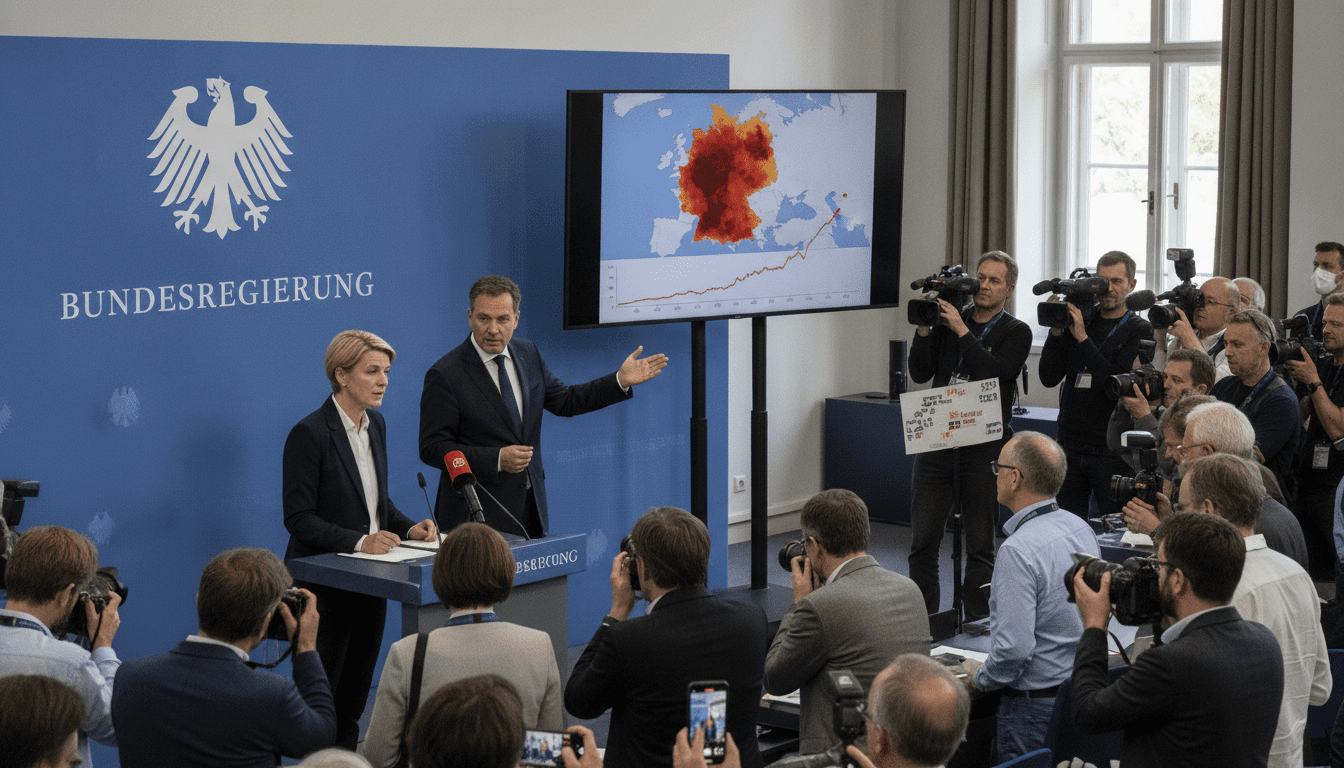
Germany urged to make heat protection binding as experts warn of deaths and $131bn risk
German health and climate groups call for mandatory heat protection as WHO issues guidance and insurers warn of $131 billion economic losses if past heatwaves recur.
Germany faces mounting pressure to enshrine heat protection into law as a coalition of more than 150 organizations from health, care, social services and climate sectors sounded the alarm this week. The campaigners argued that voluntary warnings and recommendations are insufficient to prevent a rising toll from increasingly frequent and intense heat events driven by climate change. Authorities, insurers and public health agencies are now framing heat protection as both a life-or-death public health issue and a significant economic risk.
Coalition demands legal obligations for heat protection
A broad alliance including medical and care associations has urged the federal government to make heat protection obligatory for public institutions and municipalities. The groups say binding measures are needed across health care, social services and education to ensure vulnerable people are shielded during prolonged heat periods. They propose federal financing and legal instruments to support local implementation rather than relying solely on advisory guidance.
Campaigners specifically called for heat mitigation to be integrated into disaster protection frameworks, arguing that current early-warning systems do not translate into standardized protective action. Their proposals include mandatory investment criteria for public projects, earmarked funding channels and statutory duties for states and municipalities to upgrade infrastructure and services. The coalition framed the push as an urgent adaptation priority given projected increases in high-temperature days.
Heat-related mortality and public health data
Public health bodies report that extreme heat already kills more people than other weather extremes such as storms, floods or cold snaps. Germany’s national disease agency recorded roughly 2,500 heat-linked deaths in a typical 2025 summer and past extreme seasons have seen casualties rise into the thousands. Officials warn that without stronger protective measures the human cost will continue to climb as heatwaves lengthen and intensify.
Experts emphasize that older adults and people with chronic illnesses are the groups most likely to suffer severe outcomes during heat events. Health-sector campaigners argue that targeted protections — from shaded public spaces to adapted care protocols — must be standardized so that risks are reduced equitably across regions and care settings. They say monitoring and rapid outreach are essential to reach isolated or immobile residents during heat emergencies.
Economic projections point to large losses
A recent analysis by a credit insurer cited by campaigners projects that repeated heatwaves could cost the German economy roughly $131 billion between 2026 and 2030. The study estimates that national output could be reduced by up to three percent by 2030 if high-temperature patterns persist, with productivity losses intensifying as workplace conditions worsen. These figures underline the argument that heat protection is also an economic resilience measure.
Analysts attribute the projected losses to a combination of lower labor productivity, increased energy use for cooling and strain on critical services. The report used temperature-linked assumptions — including productivity declines of around three percent for each degree above 30°C and rising energy demand — to model fiscal and industrial impacts. Policymakers say such forecasts should prompt investment in adaptive infrastructure to avoid recurring shocks to growth and public finances.
WHO issues guidance aimed at authorities
The World Health Organization’s European regional office released a new guideline this week designed to help governments enhance protection against heat-related harms. The guidance recommends integrated early-warning systems, specific safeguards for at-risk populations, capacity strengthening for health services and adjustments to urban planning and building codes. WHO officials stressed the need for coordinated action across sectors to reduce deaths and hospitalizations.
Hans Henri Kluge, WHO’s regional director for Europe, highlighted that the continent is warming faster than any other and that tens of thousands of heat-related fatalities have been recorded in recent years. The guidance is intended as a practical tool for national and local policymakers to translate warnings into concrete interventions, and it places emphasis on preventive measures that can be deployed before heatwaves peak.
Federal structure complicates national heat strategy
Responsibility for heat preparedness in Germany currently rests largely with the states and municipalities, creating a patchwork of plans and capacities across the country. While the federal environment ministry published guidance and has been examining the shape of a national heat action plan, there is no uniform legal framework obligating subnational authorities to adopt or fund specific measures. Critics say this fragmentation leaves gaps in protection, especially for smaller or resource-constrained communities.
Official data indicate that only about half of the German states have adopted formal heat action plans, and roughly ninety municipalities have local strategies in place with dozens more preparing plans. Advocates argue that federal incentives or statutory duties are required to ensure nationwide coverage and to align public investments with heat resilience objectives. They point to other European countries with more centrally coordinated schemes as examples Germany could adapt.
Local best practices and international comparisons
WHO and researchers have pointed to municipal initiatives that successfully target heat vulnerability, citing examples where local data enabled focused interventions for the most exposed neighborhoods. Barcelona’s local heat plan was praised for combining granular risk mapping with community-based cooling services and designated climate-safe public spaces. Spanish, Swiss and Dutch programs were also highlighted as models where non-centralized systems nonetheless deliver robust local protection.
German officials and advocacy groups say lessons from these cities could inform national guidance and help tailor measures to local needs. They emphasize that combining national funding streams with local implementation and data-driven risk assessments can bridge current capacity gaps. The argument is that replicable local measures, supported by binding national frameworks, would deliver both lifesaving and economic benefits.
As Europe enters another summer shaped by rising temperatures, campaigners and health authorities are pressing Germany to move from voluntary recommendations to legally backed heat protection that covers hospitals, care homes, schools and public infrastructure. They argue that such a shift would translate WHO guidance and economic forecasts into concrete action that saves lives and limits avoidable damage to the economy.
