
German industry loses ground as capacity erosion threatens economic competitiveness
German industry loses ground as investment, skills shortages and rising energy costs combine to erode manufacturing capacity and competitiveness, experts warn.
Germany’s industrial base is showing signs of sustained weakening, with companies reporting lower investment and shrinking market share in key sectors. German industry loses ground amid structural challenges that analysts say stem from domestic policy choices, workforce dynamics and international competition.
Manufacturing output and investment trends
Recent indicators show factory output growth lagging behind major trading partners, and corporate investment has not kept pace with technological shifts. Firms cite uncertainty about taxation, regulation and long-term returns as reasons for delaying modernization of plants and equipment.
Capital intensity in advanced manufacturing remains below historical levels, contributing to slower adoption of automation and digital production methods. Without renewed investment, capacity gaps risk becoming permanent as competitors scale up.
Workforce shortages and skills mismatch
Companies report difficulty in filling skilled technical positions, a problem exacerbated by demographic trends and migration patterns. Training pipelines have not expanded sufficiently to meet demand for engineers, technicians and production specialists.
The result is a growing skills mismatch: firms face vacancies for roles central to high-value manufacturing while educational outcomes emphasize other sectors. This gap raises labor costs and constrains firms’ ability to implement productivity-boosting technologies.
Energy costs and infrastructure burdens
Rising industrial energy prices and grid constraints have altered the cost calculus for energy-intensive producers. Higher electricity costs and intermittent supply increase operating risk for chemical, steel and other heavy industries that traditionally anchored Germany’s export strength.
Logistical bottlenecks and aging infrastructure compound the problem, increasing transport and lead-time costs for manufacturers. Firms considering expansion increasingly evaluate alternative locations with more reliable and competitive energy and transport frameworks.
Policy decisions and international competition
A mix of regulatory complexity and delayed strategic investment has made Germany less attractive for new high-tech projects compared with rival economies. Incentive structures, planning timelines and standards enforcement vary across regions, creating uneven competitive conditions domestically.
At the same time, competitors have pursued coordinated industrial strategies that pair fiscal support with skills initiatives and infrastructure upgrades. That alignment has drawn capital and research projects abroad, eroding Germany’s position in several advanced manufacturing niches.
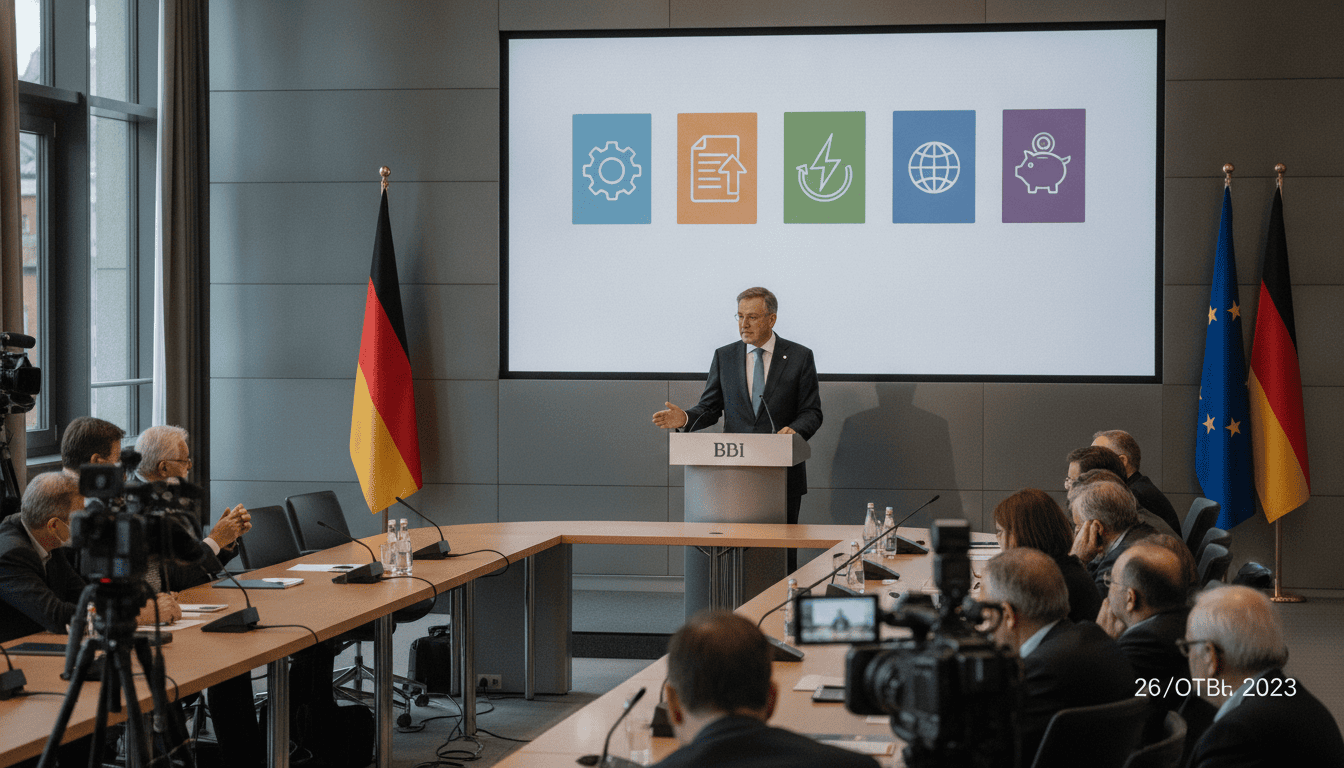
Five practical steps to halt industrial erosion
Observers and industry groups have outlined focused measures to stabilize and rebuild industrial capacity. First, targeted investment incentives for modernization can speed capital renewal while ensuring environmental standards are met through clear transition pathways.
Second, a nationwide skills strategy that expands vocational and tertiary technical training would address immediate shortages and future-proof the workforce. Strengthening public-private partnerships can align curricula with evolving industry needs.
Third, reforms to energy policy should prioritize predictable pricing, grid investment and realistic transition timetables for energy-intensive sectors. Contracts and long-term supply guarantees can reduce operational risk and make domestic facilities more competitive.
Fourth, streamlined permitting and planning processes—especially for industrial projects and new factories—would reduce delays that currently discourage investment. Faster, transparent approvals coupled with regional coordination can unlock projects that are economically viable but time-sensitive.
Fifth, a coherent export and innovation strategy must tie research funding to commercialization pathways, supporting scale-up in areas where Germany still has technical strengths. Public funding can be structured to encourage private follow-on investment and international partnerships.
Policy makers and company leaders emphasize that no single reform will reverse the trend; a combination of measures, implemented with urgency, is required. Many of the steps proposed aim to create predictable conditions that attract long-term capital and encourage firms to retain or expand manufacturing footprints domestically.
German industry loses ground is now a phrase echoed in boardrooms and policymaking circles, reflecting a consensus that the country’s industrial competitiveness cannot be taken for granted. Reversing the decline will demand political coordination, sustained investment and a renewed focus on skills and infrastructure to preserve the industrial foundation that underpins exports and innovation.
