
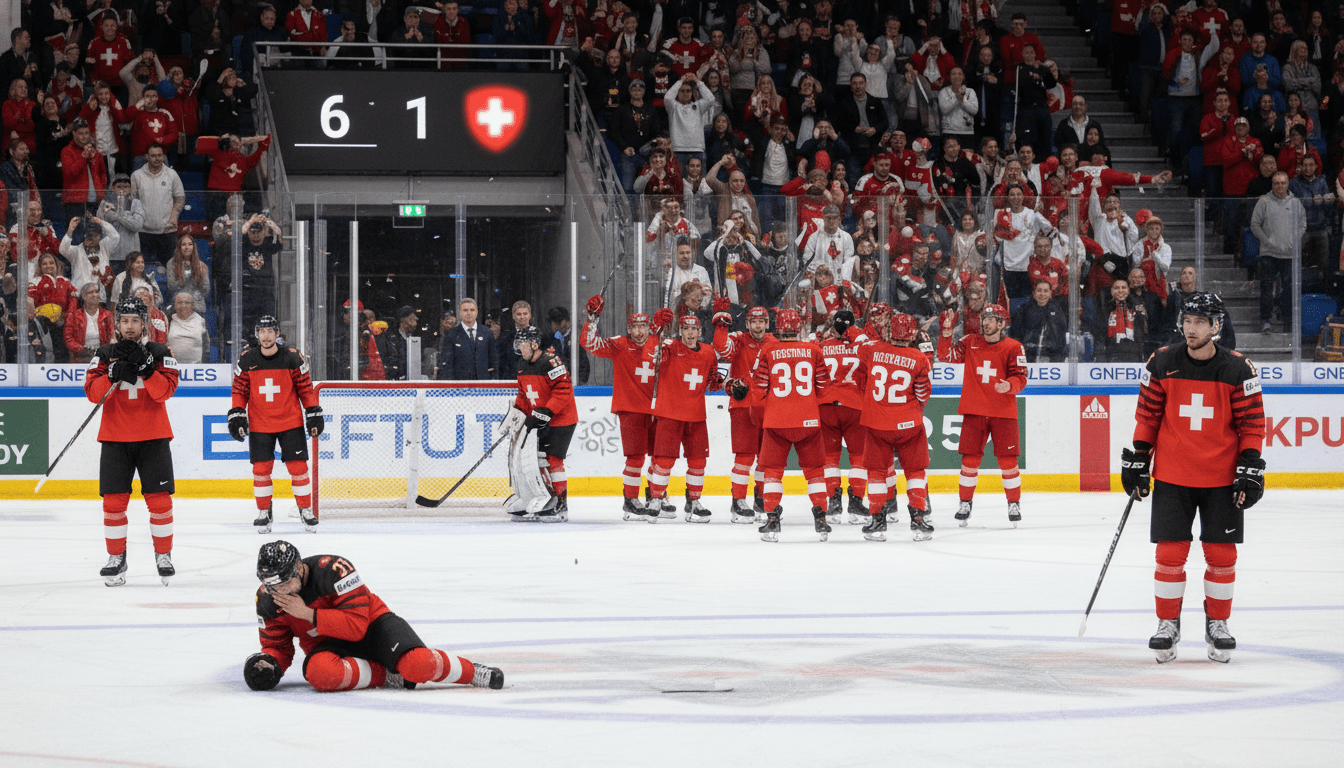
Germany vs Switzerland ice hockey: Switzerland storms to 6-1 win in Zurich, leaving Germany on the brink
Switzerland routs Germany 6-1 in Zurich at the 2026 IIHF World Championship, leaving Germany with zero points after three games and a must-win run ahead.
Swiss rout in Zurich
Switzerland delivered a dominant 6-1 victory over Germany at the Swiss Life Arena in Zurich, turning a goalless opening period into a five-goal avalanche in the second. The result left Germany reeling after losses to Finland and Latvia, and put the German team in immediate danger of failing to reach the tournament knockout phase. The game swung decisively in a three-minute stretch midway through the second period when Switzerland converted repeatedly on German mistakes.
Second-period collapse decides the contest
Germany entered the middle period level but conceded the first goal while on the power play, a moment that visibly shifted momentum. Within minutes the Swiss added two more, and a rapid series of goals reduced the game to a rout by the second intermission. German captain Moritz Seider acknowledged the team “fell apart” in the middle frame, describing how a post on one end was matched by the net bulging at the other in the same sequence.
Power-play problems deepen Germany’s trouble
Special teams were a decisive weakness for Germany, which wasted multiple power-play opportunities and surrendered a string of shorthanded goals. Dominik Kahun, one of Germany’s best threats, struck the post on a power play and the follow-up sequence saw the Swiss score immediately. After three group games the German attack registered a low conversion rate, underlining the necessity of improved discipline and execution in both man-advantage and man-down situations.
Stettmer’s debut provides scant consolation
Twenty-four-year-old Jonas Stettmer, making his senior international debut, kept the scoreline from becoming even more lopsided with several high-quality saves. The Eisbären Berlin goalkeeper, fresh off being named MVP in the DEL final series, was visible in an otherwise porous defensive performance. Stettmer said he had imagined a different debut but maintained that the group stage still offered Germany opportunities to recover.
Coaching context and Swiss momentum
The result also must be read against a broader backdrop in Switzerland, where a coaching change weeks before the tournament followed the dismissal of Patrick Fischer over a falsified COVID certificate. Jan Cadieux has since taken charge and inherited a confident, well-drilled squad with recent success at major tournaments. Switzerland entered the match with a string of strong results at world championships and used home-ice energy and clinical finishing to overwhelm the visitors.
What Germany must do to stay alive
With three defeats in as many games, Germany faces a steep climb to reach the quarterfinals and must win its remaining matches to keep that possibility alive. The immediate task is Wednesday’s game against the United States, scheduled for Wednesday, May 20, 2026, at 20:20 CET, a matchup that has become pivotal for Germany’s chances. Coaching staff led by Harold Kreis will demand urgent improvement in defensive structure, more efficient shooting, and significantly better performance on the power play.
Voices from the arena
German sport director Christian Künast compared the task ahead to an almost mythic effort, arguing the team must remove a “rock” from its path if it hopes to advance. Switzerland’s players praised the result as a necessary statement against a rival that has often been awkward to face in recent years. The crowd of about 10,000, largely hostile when Germany first took the ice, celebrated a comprehensive home performance that reflected both tactical preparation and clinical finishing.
Germany’s tournament trajectory now hinges on immediate corrective measures and mental resilience. The next match against the reigning world champion will offer a clear indicator of whether the team can respond under pressure or whether this World Championship will end sooner than the 17 days many teams aim to survive.
