
Survey exposes reform resistance in Germany as citizens back change but reject personal costs
ZDF-Politbarometer finds nearly 90% of Germans call for reforms in pensions, health and labour policy, yet only 25% are willing to bear personal burdens — pointing to growing reform resistance in Germany.
Public support for sweeping reforms in pensions, health care and the labour market is high, but Germans are reluctant to accept personal sacrifices to make those reforms happen, according to a recent ZDF-Politbarometer. This gap between abstract approval and concrete willingness to shoulder costs illustrates mounting reform resistance in Germany and presents a political dilemma ahead of upcoming policy debates.
Poll reveals broad support, narrow sacrifice
Nearly nine in ten respondents told the ZDF-Politbarometer that “fundamental reforms” in the pension, health and labour sectors are important or very important. The headline figure signals broad recognition that existing systems face long-term pressures from demographics and fiscal strains.
At the same time, only one-quarter of those surveyed said they would accept personal burdens as part of a reform process. That reluctance — a classic public-policy paradox — highlights a disconnect between collective priorities and individual readiness to pay or change behaviour.
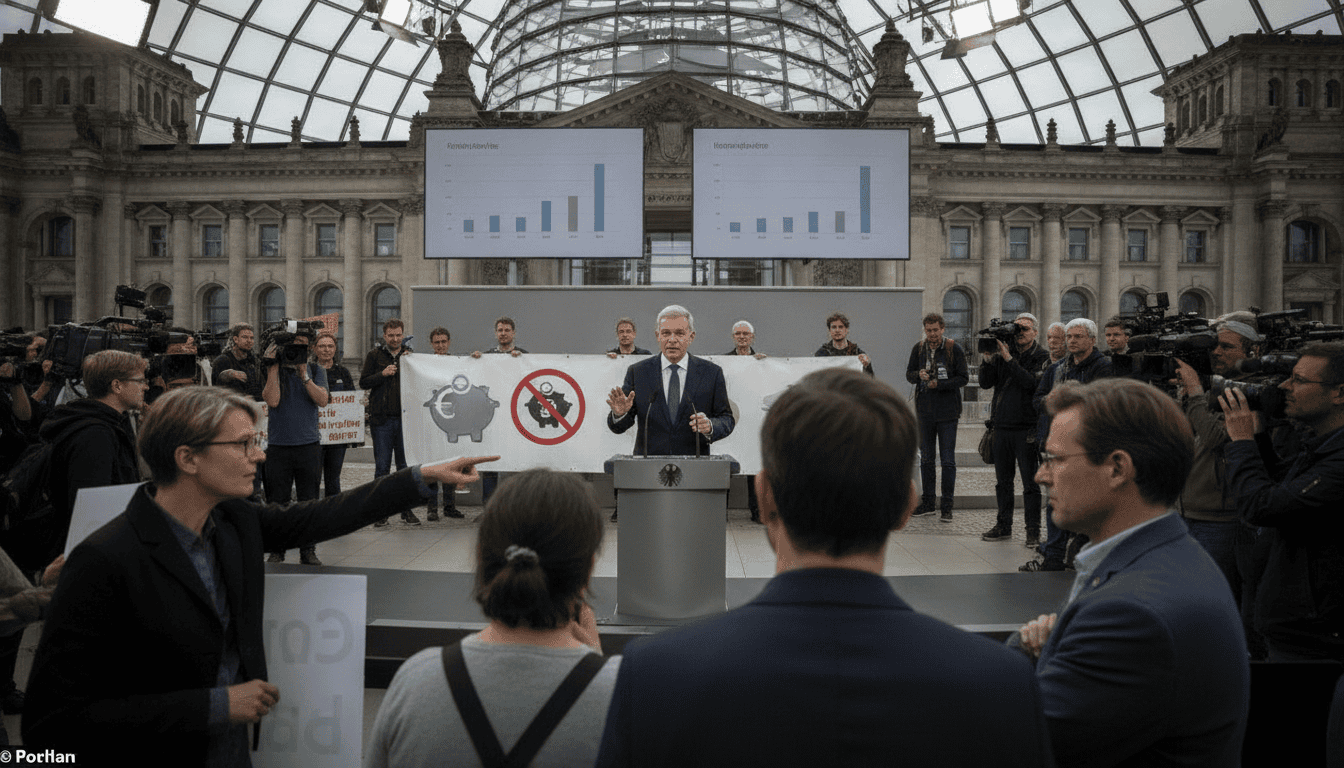
ZDF-Politbarometer numbers at a glance
The survey’s most striking contrast is numerical: strong endorsement of reform objectives versus a low tolerance for individual impacts. Respondents consistently backed the idea of modernization while drawing clear limits around what they personally would endure.
Across age groups and regions, support for reform language remains high, but willingness to take on higher contributions, reduced benefits or stricter eligibility rules drops markedly. The pattern suggests support is conditional and fragile when policy trade-offs become immediately personal.
“Not in my backyard” sentiment shapes responses
Respondents’ behavior fits a widely observed social tendency often described in English as “Not In My Back Yard” or, in German popular parlance, the Sankt-Florian principle: people approve measures in principle, provided the burdens fall on others. That heuristic helps explain why reform agendas repeatedly stall even when public opinion favors change in the abstract.
Psychologists and political scientists say the instinct is partly cognitive — people support general goals but discount distant or systemic consequences of inaction — and partly political, driven by a desire to avoid immediate loss. The result is diffuse backing for reform without the concentrated constituencies necessary to push difficult measures through.
Political fallout for parties and policymakers
For governing parties and opposition alike, the polling creates a strategic trap. Politicians can champion reform rhetorically to tap into widespread concern, but concrete proposals that require redistribution, higher contributions or benefit adjustments risk voter backlash in constituencies that would bear the cost.
This dynamic reshapes campaign tactics and legislative bargaining. Parties may prefer incremental or targeted adjustments, or they might frame changes as temporary and accompanied by protection for vulnerable groups, in an effort to convert abstract approval into electorally viable policy.
Policy options and trade-offs under debate
Experts say there are several pathways to reconcile public support with willingness to act: phased implementation, compensatory measures for low-income households, stronger communication about long-term benefits, and pilot projects that limit immediate exposure. Each approach reduces short-term pain but also slows the pace of reform.
Fiscal trade-offs are unavoidable. Faster, more comprehensive changes lower structural risk sooner but require larger, more visible sacrifices from particular groups. Slower, less intrusive reforms spread costs thinly and risk leaving systemic problems unresolved for longer.
Implications for pension, health and labour reforms
In the pension system, the gap between perceived urgency and personal willingness to sacrifice can complicate debates over retirement age, contribution rates and benefit indexing. Health care reform prospects face similar constraints when proposals imply higher premiums or co-payments.
Labour market reforms that alter job protection, wage-setting mechanisms or unemployment support may encounter the most immediate resistance because they touch daily livelihoods. Policymakers will need clear, targeted safeguards to prevent reforms from deepening insecurity for those already vulnerable.
Public opinion that favors “reform in principle” but resists bearing costs is not unique to Germany, but its political salience is amplified by demographic realities and budgetary limits at a time when long-term pressures on pensions and health spending are rising. Translating broad acceptance into durable policy will require a combination of careful sequencing, credible compensation for losers and sustained public engagement to close the gap between endorsement and personal sacrifice.
