
Drone strikes and siege push el-Obeid into crisis as power, water and fuel systems collapse
RSF drone strikes and a siege have devastated el-Obeid’s power, water and fuel supplies, displacing thousands and sending food and water prices soaring
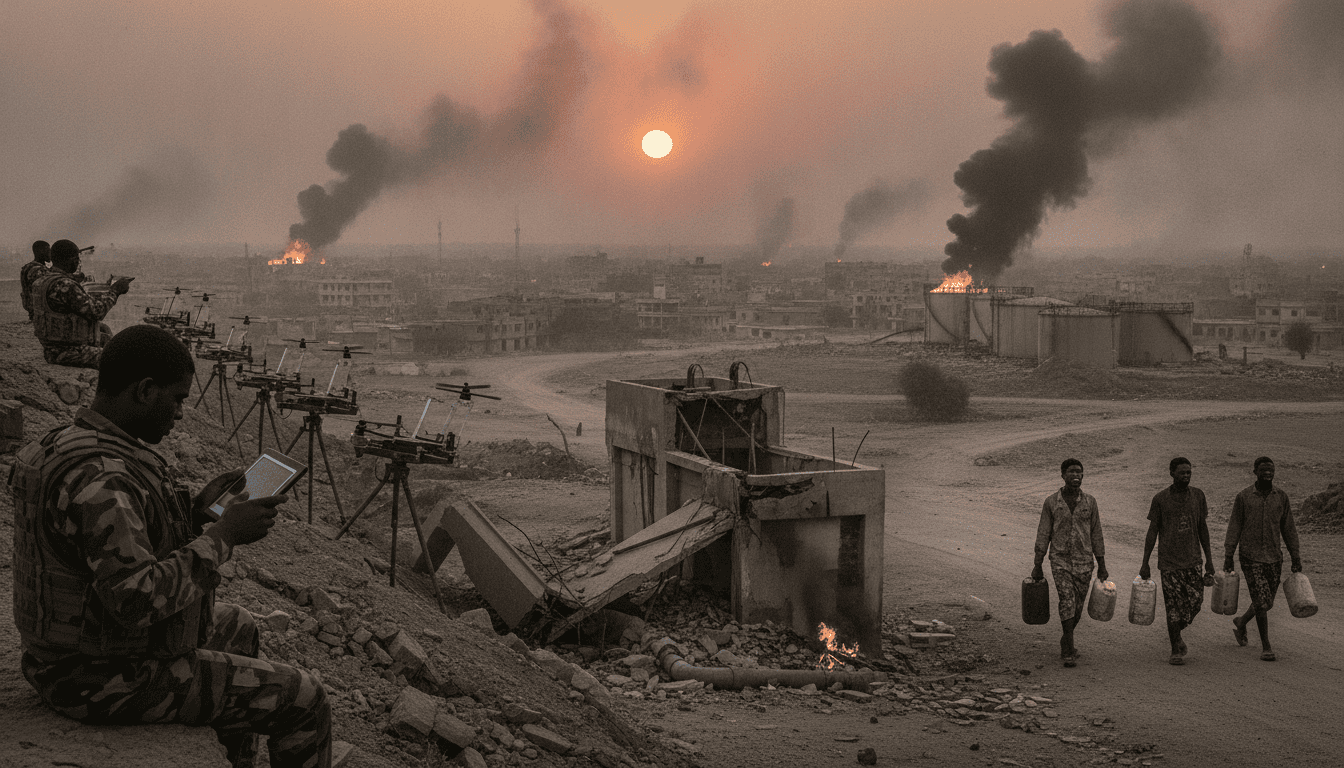
El-Obeid is under intense aerial assault and siege conditions that have crippled essential services and driven a humanitarian emergency in North Kordofan. RSF drone strikes and targeted attacks on fuel and electricity infrastructure have left large parts of the city without power or public water and forced hundreds of thousands to rely on dwindling private supplies. Satellite analysis and on the-ground accounts indicate sustained damage to life sustaining facilities while residents and aid groups warn the situation is deteriorating rapidly.
Intense drone campaign damages power and fuel infrastructure
The RSF has conducted repeated drone strikes on el-Obeid that residents and officials say have deliberately hit petrol stations, fuel tankers and the al-Abyad power substation. The attack on the al-Abyad substation on 18 June caused widespread blackouts that disrupted hospitals and municipal water pumping systems across the city. Fuel depots and many fuel pumps are now out of service and movement on the national road has been curtailed because cargo trucks and tankers have been struck or burned.
Water shortages and soaring prices force desperate measures
With public water systems offline, residents have been forced to rely on internal wells and private tankers that are increasingly scarce and costly. Reported prices show a dramatic rise with a barrel of water jumping from 5,000 to 25,000 Sudanese pounds and jerrycans of potable water becoming difficult to find. Families report that much of the available water is brackish and unsuitable for drinking and that long queues form at the few functioning distribution points.
Satellite analysis shows targeted hits and defensive works
Yale’s Humanitarian Research Lab analysed satellite imagery and found damage consistent with deliberate strikes on civilian infrastructure and at least eight gas stations damaged between 25 May and 25 June. Imagery also reveals that the Sudanese army has established at least 14 checkpoints and a roughly 51 kilometre network of berms and trenches around the city. The combination of visible damage and new defensive works underlines the intensity of the confrontation and the danger to supply lines into el-Obeid.
Civilians displaced and services at breaking point
El-Obeid now hosts almost 600,000 people including more than 105,000 people who fled violence and famine elsewhere and sought refuge in the city. The interruption of transport and fuel supplies has driven up the price of bread, medicine and transit and left many without a reliable source of income or access to health care. Parents increasingly withdraw children from schools during bombardments and humanitarian groups say internal displacement camps have expanded visibly in recent weeks.
Military positioning and local perceptions of protection
The Sudanese Armed Forces 5th Infantry Division continues to maintain headquarters inside el-Obeid, and army officials say their presence is a barrier to full RSF takeover. Residents express mixed feelings, saying they are grateful for the army presence but frustrated that lack of air defences leaves the city vulnerable to drone attacks. Local voices and military advisers warn that without improved protection and unimpeded humanitarian access the civilian toll will continue to rise.
International warnings and disputed external support
The situation in North Kordofan has prompted urgent debate at the UN Human Rights Council and public warnings from several Western capitals about the risk of mass suffering. Questions over external support for RSF forces have surfaced in interviews and public commentary with many locals stating the UAE backs the RSF while Emirati officials deny such claims. Despite international concern, no unified action has changed the trajectory on the ground and residents say international pressure has not halted the strikes or eased the siege.
The cumulative impact of sustained drone strikes, damaged infrastructure and interrupted supply routes has transformed el-Obeid from a regional hub into a city on the edge of humanitarian collapse. Residents and aid workers describe shortages of clean water, fuel and medical supplies while prices soar beyond the reach of many families. Unless corridors for assistance are secured and attacks on civilian infrastructure stop, the relief and displacement needs in el-Obeid will intensify and spread to surrounding regions.
