
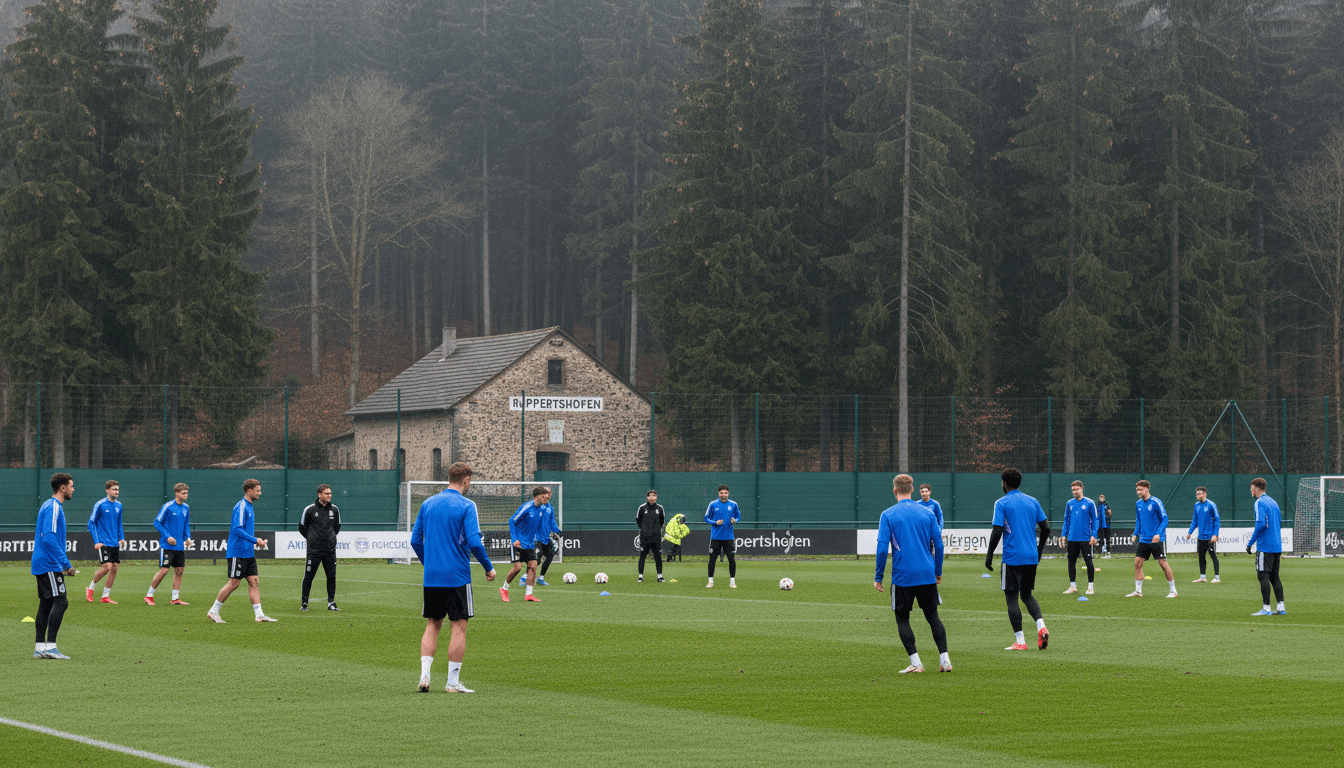
National team holds Ruppertshofen training camp to limit distractions and sharpen focus
Team manager Günter Christmann says the Ruppertshofen training camp was chosen to keep players focused, comparing the setting to Malente.
The national team has staged a compact training camp in Ruppertshofen, a small village in the Ostalbkreis, in an effort to reduce off-field distractions and reinforce discipline. The Ruppertshofen training camp placed players in a remote, rural setting roughly a half-hour bus ride from Schwäbisch Gmünd, where the team used a modest sports ground bordered by open farmland. Team manager Günter Christmann told reporters that the isolation was deliberate, citing past experiences and the need to prevent lapses in conduct.
Remote Ruppertshofen chosen for purpose
Ruppertshofen was selected specifically for its distance from urban amenities and its sparse local population. The training site sits adjacent to wide fields, and the quiet environment left little opportunity for players to leave the compound during the camp. Organizers arranged transport from Schwäbisch Gmünd, with the journey by bus taking about 30 minutes, which helped maintain a controlled daily schedule for sessions and recovery.
The choice underscores a broader approach by team management to use environment as a tool for focus. By removing easy access to nightlife and other distractions, staff aim to create a disciplined routine centered on training, tactical work and physical preparation. The small size of the venue means resources are compact and closely supervised, which management views as an operational advantage.
Players questioned the location
Several national players reportedly asked why the camp was held in such a remote spot, describing Ruppertshofen in informal terms that suggested boredom. Team manager Günter Christmann acknowledged those reactions and responded candidly in front of the squad, turning the question into a teaching moment about responsibility. His remarks pointed to a philosophy of containment intended to limit opportunities for off-field incidents or unhelpful media attention.
Christmann invoked a comparison to Malente to make the point clear, telling players to imagine a venue where movement had been heavily restricted. He said the goal was not only to sharpen training focus but to ensure players did not “do anything silly” while gathered. The exchange reflects a pragmatic, if blunt, management style aimed at preserving team cohesion and minimizing avoidable distractions.
Training environment and local setting
The sports ground used for the Ruppertshofen training camp is described as functional rather than luxurious, set directly beside agricultural land where a lone tractor occasionally passes. That rural backdrop contrasts sharply with the amenities of larger training centers and keeps the team physically removed from typical urban temptations. Facilities were organized to support daily practice cycles, medical checks and recovery work within walking distance of sleeping quarters.
Local residents experienced a sudden increase in activity around the sports field during the camp, while the broader village rhythm remained unchanged. The presence of the national team was visible but discreet; staff emphasized containment and routine rather than public events or fan gatherings. For players, the setting offered uninterrupted time for drills and meetings, albeit in surroundings that some described as austere.
Discipline, focus and the Malente comparison
Christmann’s reference to Malente framed the Ruppertshofen strategy as part of a continuum of using controlled environments to manage player behavior. While the name resonated with the squad as an example of enforced seclusion, management used the analogy primarily to highlight the benefits of limiting off-site movement. The aim was straightforward: reduce risks, improve concentration and avoid headlines unrelated to on-field performance.
The tactic of isolating a team for short, intensive periods is a longstanding one in sport, employed to sharpen tactical understanding and reinforce team culture. In this instance, team leadership emphasized that the stint in Ruppertshofen was tactical rather than punitive, intended to foster discipline ahead of upcoming fixtures. Players were expected to leave the camp with clearer focus and fewer opportunities for distraction.
Logistics and local impact
Transport logistics for the Ruppertshofen training camp were deliberately simple: daily bus runs linked the village to nearby towns and allowed for controlled access. Catering, medical support and equipment were brought in to minimize outside contacts, and staff monitored movement to ensure adherence to the camp’s objectives. These measures reduced the logistical complexity of managing player welfare while maintaining the intended isolation.
For the Ruppertshofen community, hosting the national team created a brief but notable intersection with elite sport. Residents observed the team’s presence from a distance, and the operation required coordination with local authorities to ensure the sports ground could support daily sessions. Though the impact was temporary, the camp offered the village a moment in the national spotlight without large-scale disruption.
Team objectives and expected outcomes
According to management statements, the primary objectives of the Ruppertshofen training camp were to consolidate tactical plans, refine physical readiness and minimize non-football risks during a concentrated preparation window. The controlled environment was intended to accelerate team cohesion and give coaching staff uninterrupted time to evaluate form and fitness. Staff emphasized that short-term isolation was a targeted intervention rather than an extended retreat.
Coaches and support personnel expected players to return to regular schedules with clearer priorities and improved focus. The success of the approach will be measured in training intensity, discipline in day-to-day conduct, and ultimately in performance in forthcoming matches. For now, management views the Ruppertshofen training camp as a pragmatic step to align the squad’s attention with competitive goals.
The Ruppertshofen stint illustrates a pragmatic blend of discipline and purpose: by choosing a remote setting, team leaders sought to remove temptation and tighten focus, a strategy they believe will contribute to steadier preparations and fewer off-field distractions.
