
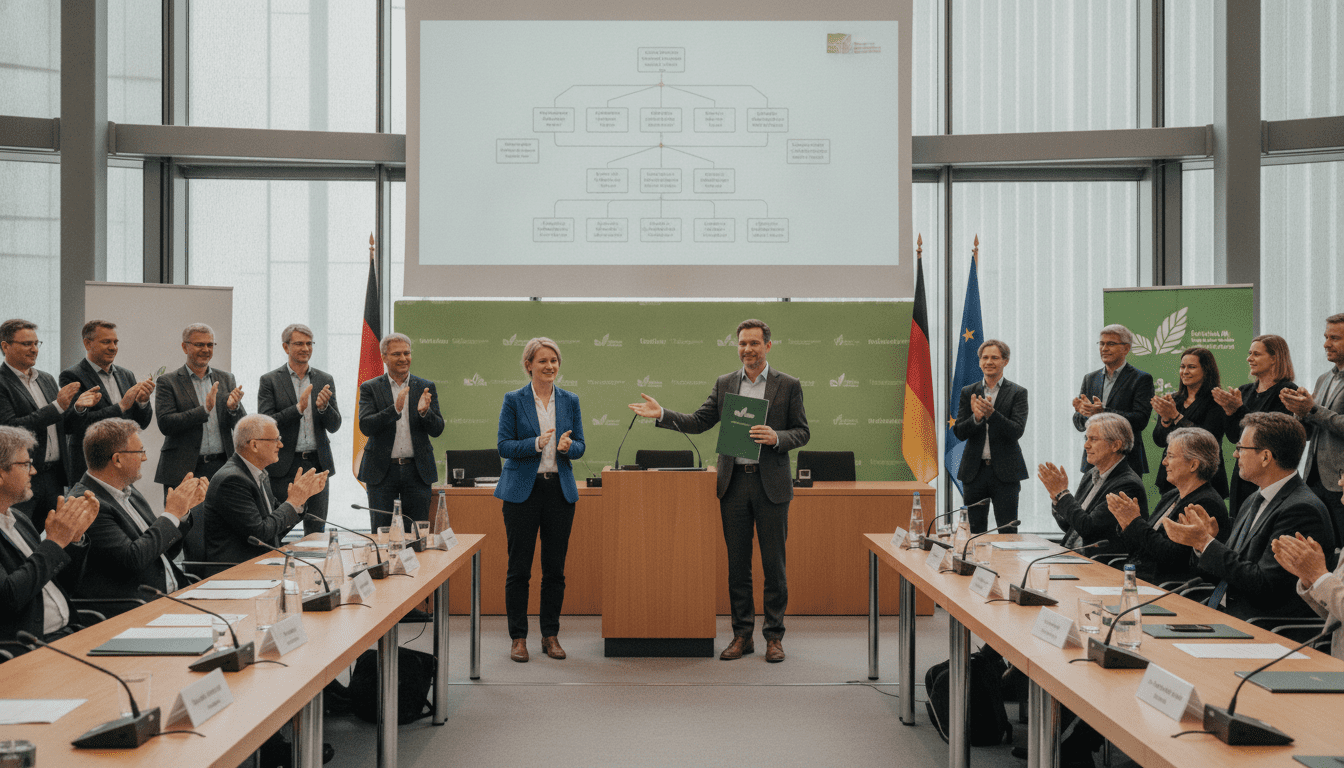
German Green Party statute reform expands leadership power and reshapes internal decision-making
German Green Party statute reform expands leadership power, streamlines decision procedures and sparks debate between grassroots members and party executives.
The German Green Party statute reform, adopted this week, tightens the role of the national leadership and aims to speed up internal decision-making across the party. The changes, which modify long-standing rules that prioritized grassroots participation, are intended to address complaints about cumbersome processes that party officials say hinder timely responses. Critics from local chapters warn the revisions risk concentrating authority and weakening the voice of rank-and-file members. Party spokespeople counter that the reform balances efficiency with continued member involvement.
Leadership Gains New Tools
The revised statute grants national leaders clearer formal powers to coordinate policy positions and make procedural decisions when swift action is required. Party executives say these tools will allow faster responses to political crises and election campaigns that need unified messaging. Opponents argue the shift blurs the boundary between representative leadership and the Greens’ tradition of base-driven decisions. Internal documents circulated during the debate framed the move as a pragmatic update rather than an ideological pivot.
Decision Timelines and Processes Shortened
Under the new rules, certain internal procedures that previously required multiple consultation rounds can be accelerated through leadership directives. Proponents highlight the time saved in crafting platforms and negotiating coalition stances as a major advantage. Detractors fear that reduced deliberation could sideline local input and diminish the legitimacy of contested decisions. Several regional branches have said they will monitor how these faster processes are applied in practice.
Grassroots Reaction and Local Chapter Concerns
Local party activists and municipal representatives have voiced concern that the statute reform undermines participatory mechanisms central to the Greens’ identity. Grassroots critics emphasize that lengthy debates have historically been a safeguard against top-down policymaking. Some local leaders have called for safeguards, such as mandatory review windows and stronger rights for state associations to appeal leadership decisions. Others within the party have urged members to wait and assess implementation before passing judgment.
Rationale Presented by Party Leadership
Senior figures defending the reform point to the changing demands of contemporary politics, where media cycles and coalition talks require swift, coherent positions. They argue that the previous framework sometimes left the party slow and disunited at key moments. Leadership supporters maintain the statute includes checks to prevent arbitrary use of newly clarified powers. The party’s central office has announced plans to publish guidance explaining the scope and limits of the leadership’s discretion.
Implications for Policy Formation and Coalitions
Observers say the statute reform could affect how the Greens negotiate within coalition governments and form electoral platforms. A stronger central coordination role may streamline negotiations but could also create friction with regional partners used to more influence. Political analysts note that the change may benefit the party in fast-moving legislative environments, but it raises questions about internal cohesion if local dissent grows. The reform may reshape internal bargaining over policy priorities in the months ahead.
Implementation Timeline and Oversight Measures
The party has set a phased timetable for rolling out the new rules, with training sessions for regional officials and explanatory materials for members. Oversight mechanisms described by party administrators include reporting requirements and periodic reviews to evaluate the statute’s practical effects. Some regional associations have already requested clarifications about appeal processes and thresholds for invoking accelerated procedures. The leadership has pledged transparency and said it will consider further adjustments based on feedback.
The statute change marks a notable moment for a party long defined by grassroots decision-making, and it will test whether the Greens can reconcile faster internal processes with deep member engagement. As the reform is implemented, attention will focus on concrete examples of how leadership powers are exercised and whether proposed safeguards are sufficient to protect local influence. In the coming months, regional reactions and real-world applications of the new rules will determine whether the Green Party statute reform achieves the balance its authors promise between efficiency and democratic participation.
