
Shetland undersea tunnel project advances as council seeks to replace ferries with four subsea car links
Council to probe financing for four undersea car tunnels connecting outer Shetland islands, a move aimed at tackling ferry strain and population decline.
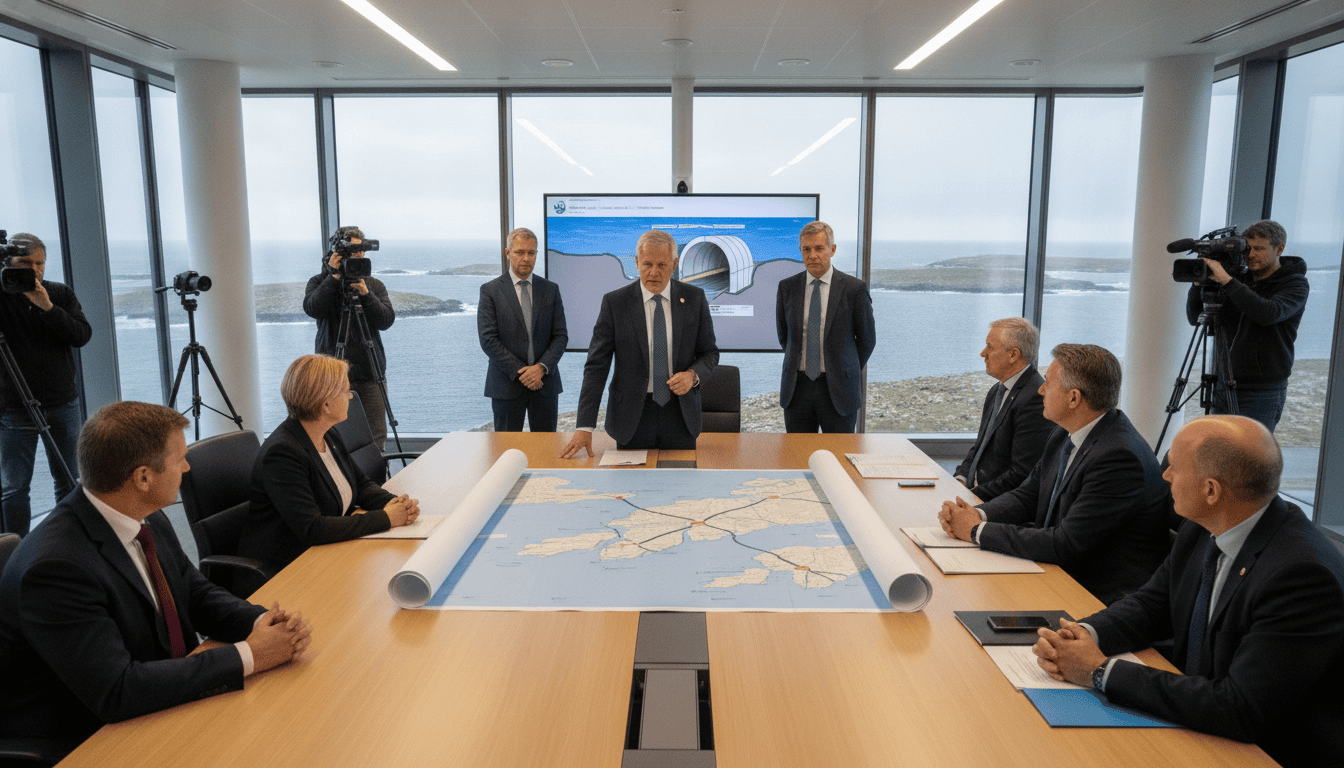
The Shetland Islands Council this week voted to advance a high-profile Shetland undersea tunnel project that would replace several ferry routes with four road tunnels beneath the surrounding seas. The proposal, driven by concerns over aging vessels, rising ferry costs and falling island populations, is pitched in a feasibility study as “economically transformative” for the archipelago. Council leaders said they will now examine financing options, timetables and the possible social and environmental impacts of the plan.
Council approves study to progress four subsea car links
The decision taken at a meeting in Lerwick commits the authority to push the tunnel project into a more detailed planning phase and to begin exploring how to pay for the works. The scheme would link smaller islands such as Bressay, Yell and Unst to the main island by four undersea road tunnels ranging from about two to six kilometres in length. Council leader Maggie Sandison described the programme as complex but necessary to address what she called long-standing connectivity and economic constraints.
A joint feasibility study commissioned by the council estimates a total construction cost of about £1.5 billion (roughly €1.8 billion) and describes the investment as potentially transformative for the island economy. Early proposals foresee tolling on the tunnels and a mix of borrowing, public grants and private capital to meet costs, although precise terms and timelines remain to be negotiated with Scottish and UK funding bodies.
Costs, timetable and financing under scrutiny
The council’s study suggests that the first of the tunnels — an automotive link to Yell — could be operational as early as 2034, subject to approvals and funding. The Yell tunnel alone is estimated at around £400 million, and the study envisages the council covering roughly a quarter of that through borrowing while seeking the remainder via government grants and private investment. Tolling would be used to help service debt and operating costs.
Local officials argue the tunnels could prove cheaper over the long term than ongoing investment in ferries and ferry terminals. The current ferry network, operated with a fleet of twelve council vessels, carries about 750,000 passengers a year and has seen annual operating costs rise to around £23 million. Transport convener Moraig Lyall warned that recruiting and retaining ferry crew is becoming increasingly difficult, a factor driving the search for an alternative.
Ferry network strain and risks to island communities
The Shetland archipelago, composed of sixteen inhabited islands and home to approximately 23,000 residents, also hosts some 300,000 sheep and swells with more than 100,000 visitors and cruise passengers in the summer months. Outer islands have experienced population decline for decades, and councillors say unreliable or infrequent ferry links have been a major barrier to economic activity and community sustainability. Proponents contend fixed road links would stabilise services, cut journey times and make local services more accessible.
Critics caution that fixed links could change the islands’ character and create new pressures. Planners will need to weigh the social benefits of easier access against potential downsides, including increased traffic, property price shifts and landscape impacts. The council has signalled that public consultation and environmental appraisal will form part of the next phase.
Economic backdrop: oil, renewables and a budding space sector
The Shetland economy punches above its population weight thanks largely to offshore oil and gas activity in surrounding waters, with Lerwick serving as a central hub for supply and decommissioning work. The oil sector is estimated to account for about one-seventh of the islands’ economy and directly or indirectly employs several thousand people. In parallel, proposals for two major wind farms on Yell reflect growing renewable energy interest in the islands.
A new commercial spaceport at SaxaVord on Unst adds another layer to the islands’ economic mix. Operators, including firms such as Rocket Factory Augsburg, plan to use the northern launch site for small-satellite missions and expect an initial summer window for launches following earlier delays. Council papers note that improved road links could bolster logistics and workforce access for both the spaceport and energy projects.
Rosebank dispute and environmental tensions
The proposed tunnels arrive against a backdrop of heated debate over the Rosebank oil and gas field, some 130 kilometres west of Shetland and the largest untapped hydrocarbon deposit in UK waters. Operators Equinor and Ithaca Energy have indicated plans for multibillion-pound investment if government approvals are granted, but environmental groups have mounted legal challenges and are pushing to block development. The UK government has yet to issue final consent, leaving the field’s future uncertain.
Local opinion on Rosebank is mixed: some residents anticipate jobs and port activity that could be supported by better transport links, while others fear a renewed emphasis on fossil fuels at odds with climate commitments. The tunnel project could intensify those debates by facilitating heavier industrial traffic through Lerwick and increasing the islands’ physical integration with mainland supply chains.
The council has made clear that the next steps will include detailed financial modelling, environmental assessments and community engagement, with central government support essential to progress. Public consultations, regulatory approvals and complex engineering challenges mean that, even with political will, the Shetland undersea tunnel project faces a lengthy path from concept to construction.
Steps on financing and planning will determine whether the proposed tunnels become the long-term answer to ferry strains and demographic decline or remain an ambitious proposal shaped by competing economic, environmental and social priorities. The council expects to set out a clearer timetable and funding approach in the coming months as it seeks partners and prepares the necessary studies.
