
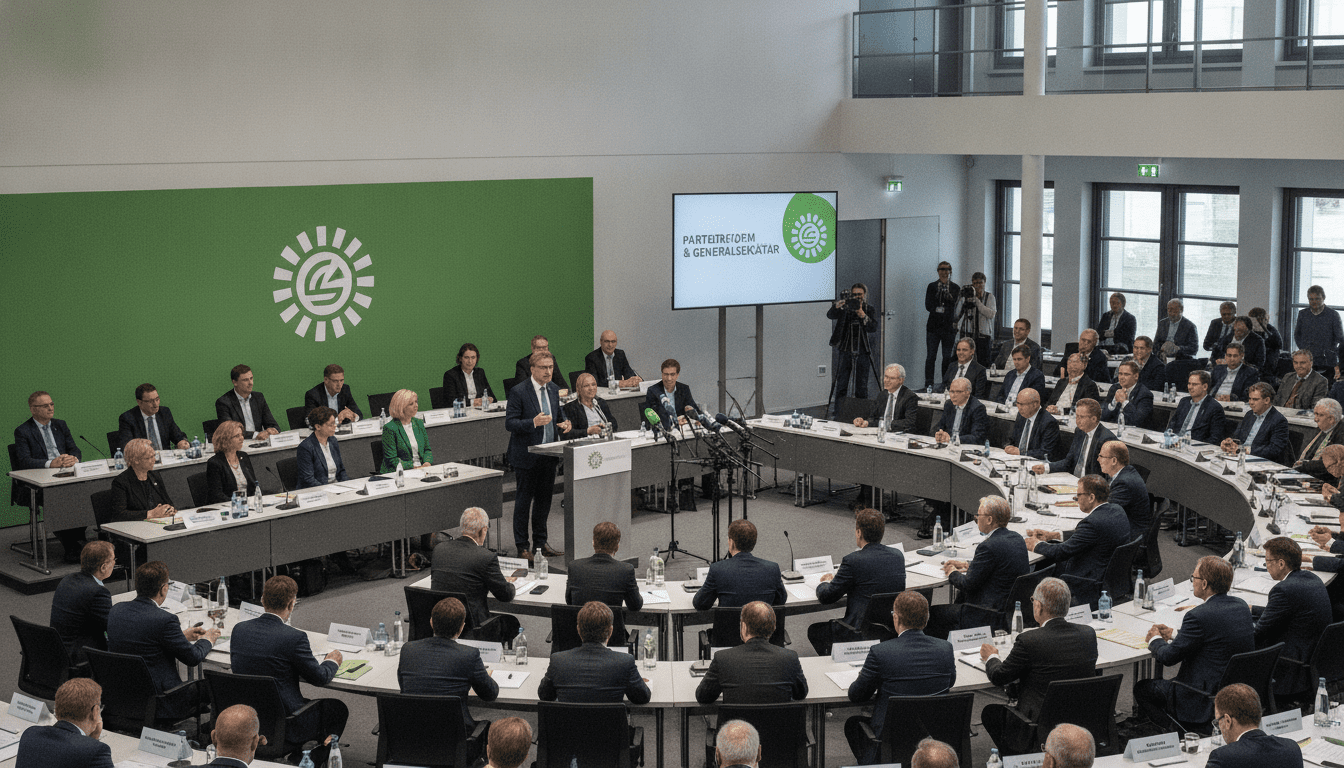
Green Party reform approved in member vote, creating Secretary General post and raising procedural thresholds
German Green Party reform approved in member vote: all 17 statute changes passed, creating a Secretary General role and raising thresholds to speed decisions.
The Green Party reform was approved by members in a three-week internal vote, with party delegates endorsing all 17 proposed statute changes intended to streamline decision-making and strengthen leadership bodies. Roughly 35 percent of the party’s approximately 184,000 members participated in the ballot, backing measures promoted by co-leaders Franziska Brantner and Felix Banaszak. The package restructures internal offices, tightens requirements for grassroots initiatives and elevates key advisory bodies to give the leadership more authority in Germany’s coalition-era political environment.
Members approve all 17 statute changes
The membership ballot concluded with unanimous approval of the full reform package, according to party officials reporting the result. Turnout stood at just under 35 percent, translating the party’s internal consent into formal changes to its statutes. Party leaders framed the outcome as a mandate to modernize organizational processes after decades of growth and shifting responsibilities.
The reforms are presented as a comprehensive update rather than a piecemeal adjustment, with the 17 items affecting staffing, candidacy rules and internal deliberative structures. Supporters say the changes are designed to make the Greens more effective in government and clearer in public communication.
New Secretary General role replaces Political Managing Director
One of the most visible changes is the creation of a Secretary General position, a post commonly found in larger parties but previously absent at the Greens. The new office will replace the role of Political Managing Director, currently held by Pegah Edalatian. Party officials argue the Secretary General will have a stronger external profile and greater capacity to coordinate national strategy and communications.
Supporters contend the new post will enable clearer public-facing leadership and faster operational decisions, particularly when the party must respond to media cycles or coalition negotiations. Critics caution that elevating a single role risks concentrating authority and shifting the internal balance between rank-and-file members and senior functionaries.
Higher hurdles set for grassroots motions and candidacies
Reform provisions raise the bar for submitting grassroots motions and for standing in federal board elections. Basis motions will now require signatures from 0.05 percent of members to be considered, which currently equals about 90 supporters, half of whom must be women. That replaces the former threshold of 50 signatories and is intended to reduce the number of peripheral or repetitive proposals at party congresses.
Changes to candidacy requirements for the federal board similarly increase nomination thresholds, a move designed to streamline slates and shorten debates at national gatherings. Proponents say higher thresholds will speed decision-making and reduce procedural delays, while opponents warn that the barriers could sideline minority viewpoints and dampen grassroots initiative.
Party Council elevated and federal board membership rebalanced
The statutes elevate the status of the Party Council (Parteirat), expanding its membership to include state and parliamentary leaders and potential federal ministers. The change is intended to create a body that can advise the federal board with greater practical expertise and ensure alignment between party organs and elected representatives.
At the federal board level, the new rules adjust limits on parliamentary representation: previously no more than one-third of board members could be elected officials, but the threshold is now up to one-half. Party officials say this reflects the realities of governing and the need for experienced parliamentary voices, while critics argue it risks tilting influence toward officeholders over ordinary members.
Member Council introduced to broaden internal debate
The reform also creates a Member Council, an assembly of 30 to 60 members chosen by lot to provide a standing forum for current debates and to feed grassroots concerns into the party’s higher bodies. Designers of the council said it will offer a more dynamic channel for member input outside the formal rhythm of party congresses and constituent assemblies.
Proponents expect the Member Council to serve as a corrective to more centralized decision-making by surfacing diverse perspectives and testing leadership proposals in a smaller, more agile setting. Skeptics note that a lottery-based body may still struggle to represent the party’s full ideological and demographic breadth.
Court bid to halt vote was rejected by Berlin court
Opponents of the reform sought to block the member ballot through legal action, arguing that such fundamental changes should be debated at a party congress rather than decided by a postal or digital referendum. A request for an interim injunction was brought to the Berlin regional court, which declined to suspend the vote. The court’s refusal allowed the membership procedure to proceed and for the results to take effect.
Party leaders portrayed the failed legal challenge as confirmation of the vote’s procedural legitimacy, while critics said the judicial outcome did not resolve deeper questions about internal democracy and member engagement.
The approved Green Party reform constitutes a major institutional shift for a party that has expanded from a small activist movement into a governing partner with responsibilities at federal and state levels. Backers argue the package will make the Greens faster and more effective in coalition politics and public communication. Opponents warn that raising procedural thresholds and concentrating roles risks weakening grassroots influence at a moment when internal cohesion remains politically important.
While the party moves to implement the statute changes, internal debates are likely to continue over how to balance efficient governance with broad member participation. The practical impact of the reforms will become clearer as the Secretary General assumes new duties and the reconfigured bodies begin operating under the revised rules.
