
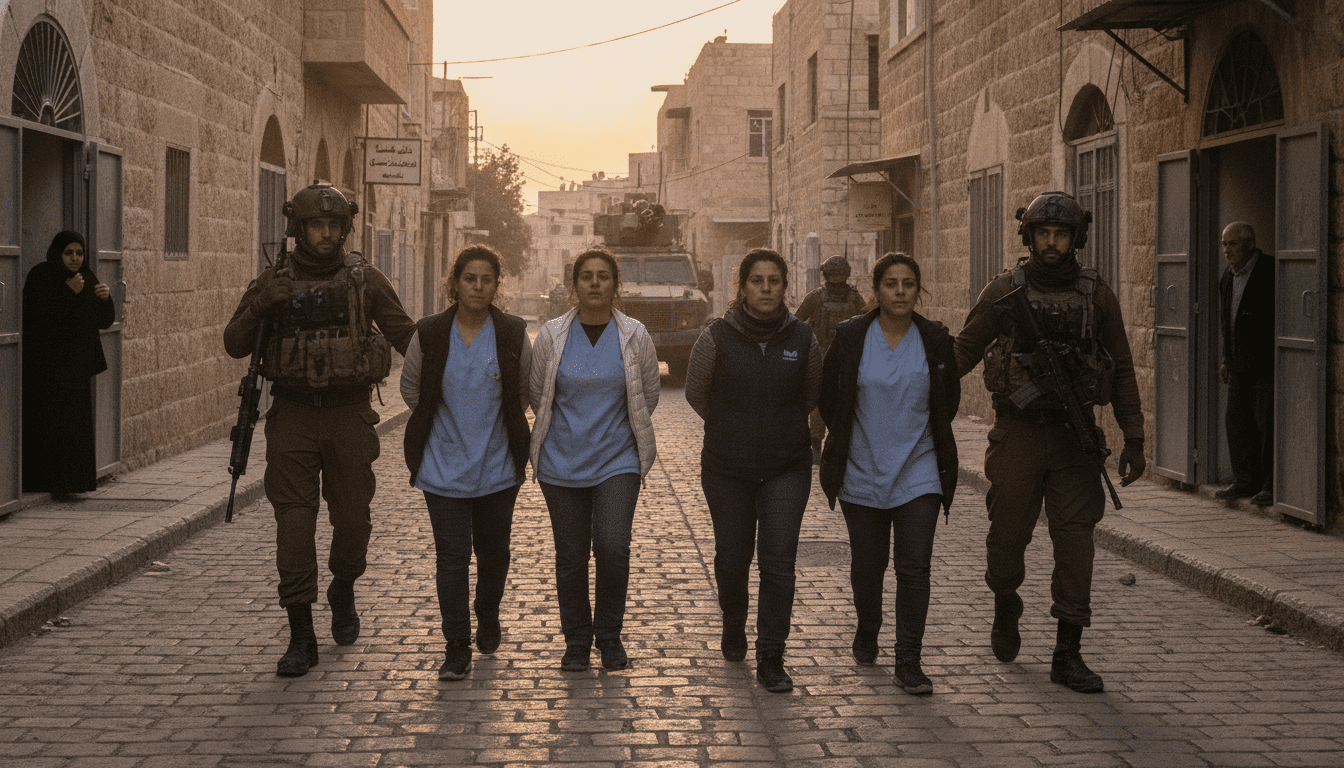
Israel arrests women activists in West Bank, detaining five in raids across Ramallah, Nablus and Hebron
Israeli army arrests women activists in West Bank, detaining five health workers in raids across Ramallah, Nablus and Hebron on Wednesday, groups say.
Early-morning raids and arrests
Early on Wednesday morning Israeli forces carried out multiple raids across the occupied West Bank that resulted in the detention of at least five women activists, local groups reported. The arrests followed house searches in several towns and came as part of a wider operation in which an additional 15 Palestinians were also taken into custody. Palestinian organizations monitoring detentions supplied the names and basic details of those detained.
The operation targeted activists who work with local health committees, according to reports from Palestinian civil-society groups. Witnesses described a swift security presence at residential compounds, with soldiers entering homes, searching rooms and removing residents in handcuffs. Authorities did not issue an immediate public statement detailing the grounds for the arrests.
Names and locations of detainees
The Palestinian Prisoners’ Club named the five women arrested as Jamila Abu Dahou and Jamila Kanaan from Ramallah, former detainees Maysar al-Faqih and Faten Hanaysheh from Nablus, and Etaf Bader from Hebron. In addition to these five, the group said about 15 other Palestinians were detained during the same set of raids. Local rights groups emphasized that several of the named women have been active in community health initiatives.
Some of the detainees have previously been held and released, according to the reporting organization, which tracks arrests and prison conditions in the West Bank. The inclusion of released prisoners among those detained again drew attention from advocacy groups monitoring patterns of arrest and re-arrest in occupied territory. Family members and local committees are reportedly seeking information on the legal status and location of the detainees.
Hebron raid: eyewitness account
A detailed account of the Hebron arrest was provided by the husband of 66-year-old detainee Etaf Bader, who spoke to Middle East Eye about the raid on their home. He said soldiers asked for his wife’s identity documents, then informed her she was under arrest after recognizing her. He described searching and seizure of household rooms and the removal of personal belongings prior to her being placed in a military vehicle.
The husband said his wife was handcuffed and blindfolded before being taken away, and that they were not told where she was being transferred. “We don’t know where she was taken, and we hope the arrest is temporary and for questioning only,” he told Middle East Eye. Family members said they had not received formal notification of charges or detention location at the time of his account.
Roles of the arrested activists
Those detained were identified by local bodies as workers with health committees that operate in their towns, providing community-based health services and coordination. These committees often fill gaps in local medical and social services, particularly in areas where movement restrictions and checkpoints affect access to clinics. Activists tied to such efforts frequently coordinate public-health outreach, patient transport and basic medical supplies.
Rights organizations say that targeting community health workers can have wider repercussions for access to services in occupied areas, though the Israeli military has not publicly connected the arrests to the detainees’ professional roles. Observers noted that detentions of civil-society actors can disrupt local public service delivery and heighten tensions between authorities and communities.
Responses from Palestinian groups and families
Palestinian human-rights groups condemned the arrests and called for transparency about the detainees’ whereabouts and legal status. The Prisoners’ Club and local advocacy organizations urged immediate access to lawyers and family visits, while community leaders demanded clarification on charges and asserted the need for due process. Families expressed fear and frustration over the lack of information in the immediate aftermath of the raids.
Community health committees and municipal officials issued statements stressing the civic and humanitarian nature of the detainees’ work. They appealed to international observers and human-rights monitors to press for clear legal procedures and to ensure detainees are not subjected to mistreatment. At the time of publication, no formal response from the Israeli military detailing the operation or naming charges had been made public.
Legal and political context of West Bank detentions
Arrests carried out by Israeli forces in the West Bank are governed by military law, and detainees can be held for questioning or charged under a range of security-related statutes. Palestinian civil-society actors and international rights groups frequently challenge the legality and conditions of such detentions. The contested legal framework and restricted access for families and lawyers often complicate efforts to track detainees and to obtain speedy judicial review.
Analysts say the arrests must be viewed within the broader context of tensions in the occupied West Bank, where security operations, protests and administrative measures periodically increase. Local organizations stress that transparency and adherence to legal safeguards are essential to preventing arbitrary detention and to upholding basic rights during periods of heightened enforcement.
The arrests of five women activists and the reported detention of other Palestinians during early-morning raids have raised urgent questions about the charges, the treatment of detainees and the impact on community services in Ramallah, Nablus and Hebron. Families and rights groups continue to seek information and access while calls for official clarification and due process persist.
