
Germany’s 500‑billion special fund: government report lists projects and reignites debate
Berlin reveals how the 500‑billion special fund (Sondervermögen) is being spent, naming major projects and prompting renewed questions about priorities and oversight.
Government report outlines spending from the 500‑billion special fund
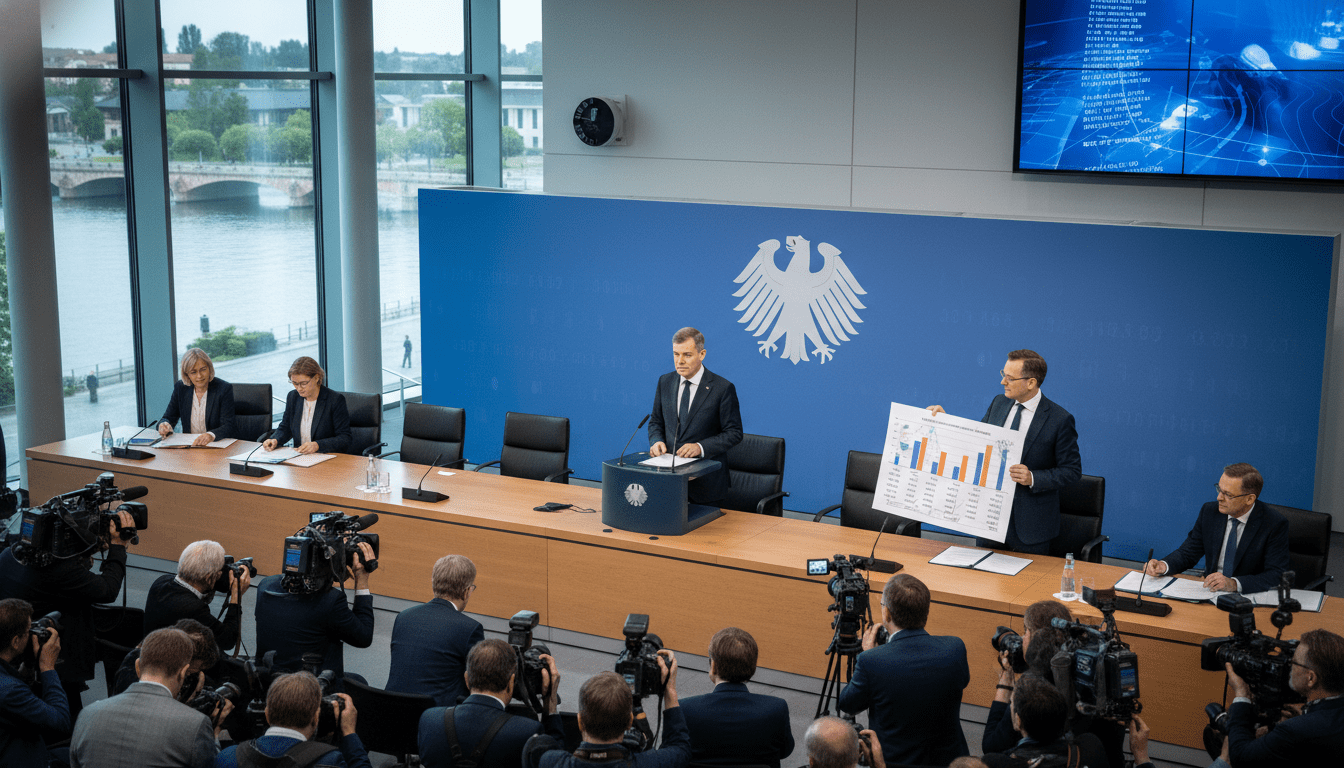
The Federal Ministry of Finance has published a detailed account of how Germany’s 500‑billion special fund is being allocated, revealing specific projects and price tags. The report covers commitments made under a loan framework approved by the Bundestag last year that runs through 2036. While the document aims to increase transparency about the Sondervermögen, it has also intensified scrutiny over whether the money is being deployed in ways that best support growth and long‑term public needs.
Major projects and their disclosed costs
The finance ministry’s list identifies a range of initiatives described as “lighthouse projects,” led by large transport and sporting investments. Among the items named is construction of a National Swimming Centre at the national training base in Magdeburg, budgeted at roughly €52 million primarily to serve elite sport. Upgrades to the Hamburg–Berlin railway corridor are recorded at about €2.3 billion, and a program to install wastewater heat pump systems in Tübingen is shown with a cost of €23.4 million. The report provides a rare line‑by‑line view of allocations drawn from the special debt facility.
Spending balance criticized for omitting education and research
Policy analysts and opposition figures reacted promptly, saying the allocation pattern underlines a mismatch between the fund’s scale and its impact on long‑term innovation drivers. Critics note that comparatively modest sums have been earmarked for science, higher education and research facilities, sectors they argue are central to competitiveness. Economists who have examined the disclosure warn that the projects named do not add up to a coherent, economy‑wide investment push and that the Sondervermögen’s growth impulse may therefore be limited.
Concerns over pace and additionality of investments
A recurring criticism is the speed of disbursement and whether the special fund delivers truly additional spending rather than merely rebranding existing commitments. Several experts pointed out that some projects would likely have been financed from regular budgets or regional programs absent the Sondervermögen, which raises questions about whether the fund is accelerating new investment or simply reshuffling prior plans. The report itself acknowledges multi‑year planning horizons, but it offers limited evidence that funds will be spent faster than under conventional budget cycles.
Transparency gains do not silence governance questions
While the ministry’s publication represents a step toward public disclosure, watchdogs and budget specialists say it falls short on oversight mechanisms. The report lists projects and amounts but provides relatively little detail on selection criteria, expected returns, or performance metrics tied to releases of committed funds. Concerns have been voiced that the special fund’s design — with a large borrowing ceiling extending to 2036 — could create incentives to shift priorities in ways that mask austerity in the ordinary federal budget. Calls for stronger parliamentary controls and more granular reporting are growing louder.
Political reactions and the outlook for parliamentary scrutiny
Opposition parties seized on the report to demand clearer rules and a tighter timetable for spending, arguing that lawmakers need better tools to hold the executive to account. Government representatives defended the approach, saying the Sondervermögen enables strategic investments that would be difficult to finance through annual budgeting alone. Observers expect parliamentary debates and committee hearings in the coming months to focus on both improving transparency and establishing benchmarks by which the fund’s success can be judged.
The finance ministry’s disclosure has made visible the early contours of how Germany intends to use its unusually large, long‑running borrowing capacity, but it has not resolved deeper disagreements over priorities and oversight. As the Bundestag and public stakeholders press for more precise outcome measures, the fate of the Sondervermögen will hinge on whether future reporting shifts from descriptive lists toward performance‑oriented accountability and clearer evidence that additional borrowing is driving measurable public benefit.
