
Germany says heat protection is primarily the responsibility of states and municipalities
Germany says heat protection and climate adaptation are chiefly state and municipal responsibilities, while the federal government provides advisory funding.
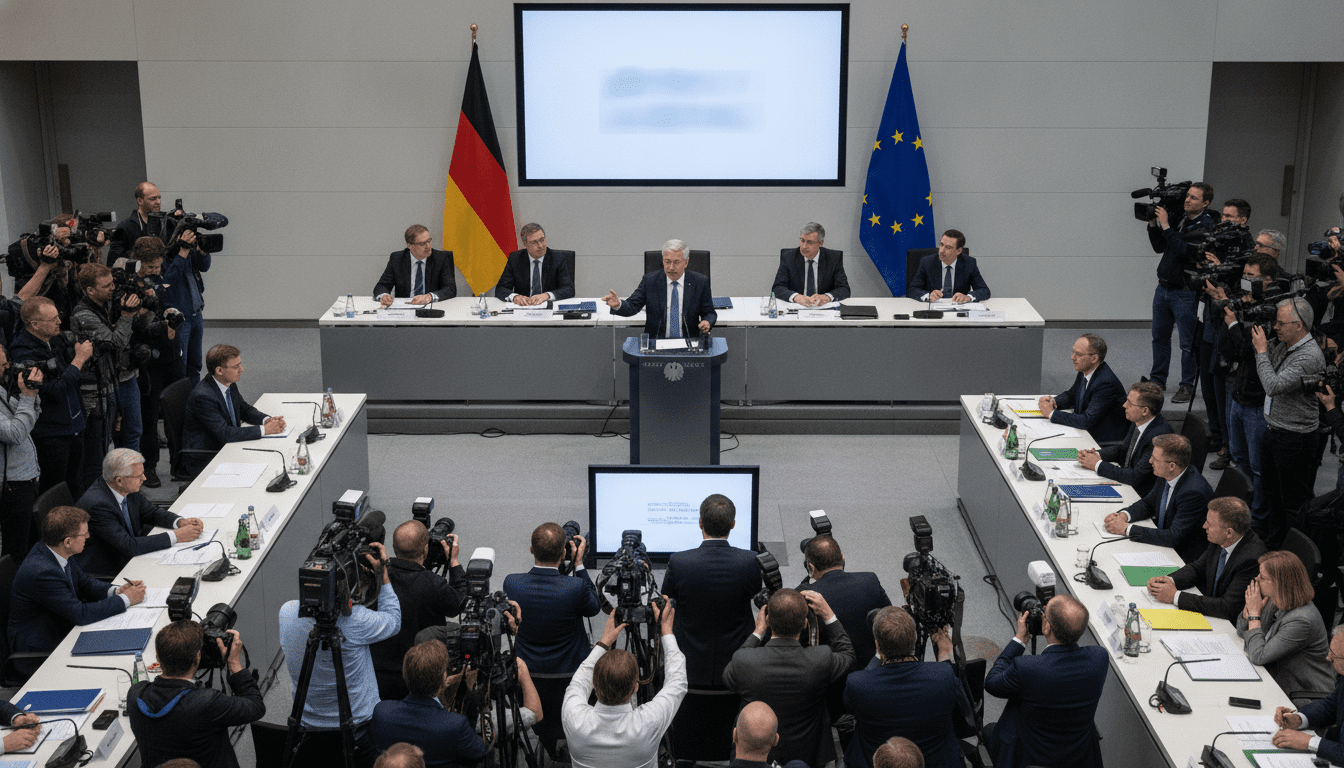
Germany’s federal government told reporters on Monday that heat protection remains mainly the responsibility of the Länder and municipalities, saying the federal role is limited to what the constitution allows. A spokesman for the Federal Ministry for the Environment said Berlin supports local authorities through initiatives and funding but will not unilaterally assume tasks reserved for other levels of government. The statement followed public debate over whether Chancellor Friedrich Merz should elevate heat protection to a top federal priority.
Federal stance and constitutional limits
The Environment Ministry spokesman underscored that the Basic Law allocates many responsibilities for civil protection and local infrastructure to states and municipalities. He said the federal government “does what we are allowed to do,” pointing to legal constraints that shape the scope of national action on climate adaptation. Officials framed the current approach as one of cooperation rather than takeover, emphasizing formal competencies and intergovernmental dialogue.
There is recognition inside government that extreme heat events are rising in frequency and severity, prompting pressure for more coordinated responses. Nevertheless, Berlin maintains that structural changes to shift duties upward would require significant legal and political negotiation with the Länder.
Federal support through the Centre for Climate Adaptation
The government highlighted a federally financed Centre for Climate Adaptation as a concrete measure to assist local authorities with heat protection and broader adaptation needs. The centre provides guidance, technical advice and resources intended to help municipalities design and implement local heat action plans. Federal funding for advisory capacity aims to bolster local response without assuming the full operational responsibilities of municipal administrations.
Municipal leaders have welcomed technical support but say consistent long-term financing and regulatory clarity are needed to scale measures such as cooling green spaces, retrofitting buildings, and updating public-health responses. The centre’s advisory role is presented as a bridge between federal expertise and on-the-ground implementation.
Reaction to Chancellor Merz’s ‘Chefsache’ suggestion
Suggestions that Chancellor Friedrich Merz should make heat protection a “Chefsache” — a top-level task personally overseen by the chancellor — drew a cautious response from government spokespeople. A federal spokesman signalled limited enthusiasm for elevating the issue to that political level without broader institutional adjustments. Officials indicated that while political leadership could help drive focus, it would not automatically change the legal distribution of responsibilities under the Basic Law.
Opponents of a unilateral push for a chancellor-led approach warn it could provoke tensions with the Länder and complicate coordination. Proponents argue that higher-profile national leadership could accelerate funding decisions and standardize heat protection measures across regions.
Legal avenues for expanding federal role would be complex
Officials noted that one potential route to broaden national involvement would be to define climate adaptation as a “gesamtstaatliche Gemeinschaftsaufgabe” — a joint task of the federation and the states. The ministry spokesman described such a change as “dicke Bretter, die man bohrt” — substantial reforms that would require time, negotiation and likely constitutional-level debates. That pathway would involve legislative changes and agreement among federal and state lawmakers.
Policy experts say converting adaptation into a joint federal-state task could unlock more coordinated funding and regulatory tools but also risks lengthy processes and contentious bargaining. Any move toward reallocation of powers would have to balance local autonomy, state interests, and national coherence.
Ongoing research into a national heat action plan
Separately, the government confirmed a research project is examining whether a national heat action plan could be viable and effective. The project is intended to identify gaps in current preparations, assess best practices from municipalities, and outline options for national-level support that respect constitutional limits. Officials said the work will feed into technical exchanges with Länder governments and inform decisions on whether to pursue deeper institutional change.
Researchers involved in adaptation studies emphasize that a national plan could guide standards for heat warnings, healthcare readiness and urban planning, but it would need clear mechanisms to engage local authorities who implement measures directly.
The debate over responsibilities is unfolding as Europe records warmer summers and as public concern grows about heat-related health risks and infrastructural strain. Municipalities and states continue to pilot local heat protection measures, while federal agencies provide advice and targeted funding through the Centre for Climate Adaptation.
A decision on moving forward—whether through legislative reform, an elevated federal initiative, or expanded advisory programs—will depend on the outcomes of ongoing research and negotiations with the Länder. In the meantime, officials say Berlin will continue supporting local heat protection efforts within the constitutional boundaries that define Germany’s federal system.
