
Volkswagen job cuts loom as management withholds targets ahead of July 9 supervisory board meeting
Volkswagen job cuts could reach 100,000 as management refuses to give targets; works council is reviewing a 43-page response before the board meets 9 July.
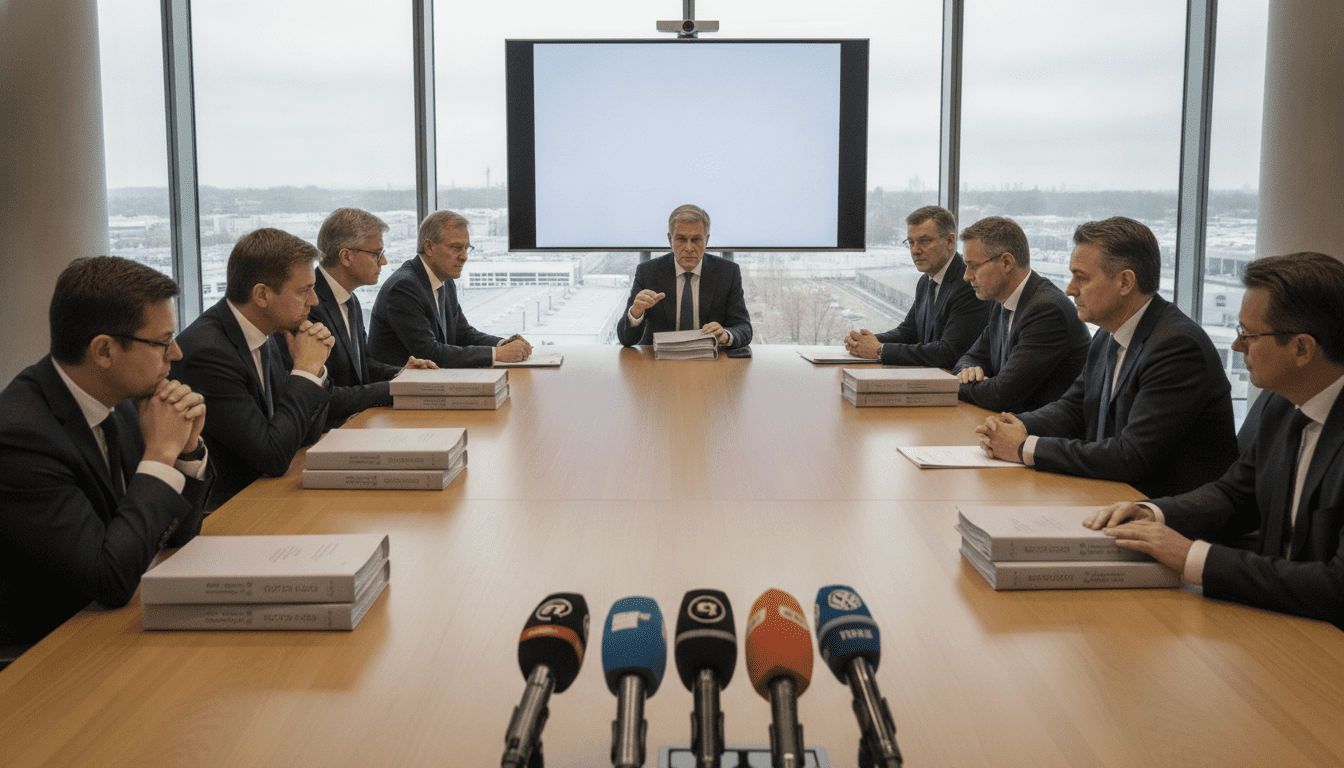
Volkswagen’s management has kept the exact scale of planned Volkswagen job cuts confidential, even as the company’s works council scrutinizes a detailed reply from the board. The works council said the 43-page response, received on June 25, 2026, answered many queries but did not include concrete reduction targets. The uncertainty follows media reports this month suggesting the company may contemplate cuts far larger than previously agreed.
VW management declines to specify numerical targets
The company’s executive board has told employee representatives that earlier agreed reductions may be insufficient, but it has not provided figures to quantify its concerns. In internal statements shared with staff and reported by several news agencies, the works council said the absence of numerical targets leaves employees and unions without clarity over potential job losses.
The works council noted that the 43-page reply is being analyzed by committees and that further meetings are planned before any measures are formalized. That analysis will shape the council’s response to proposals the management intends to present to the supervisory board.
Media reports cite up to 100,000 positions at risk
A report from Manager Magazin in June 2026 said up to 100,000 jobs at Volkswagen could be eliminated over the coming years, a figure roughly double the reductions previously discussed. Such a scale would represent the largest restructuring in the company’s near 90-year history and would have broad implications across its European manufacturing footprint.
Those media claims have amplified fears among employees and sparked debate in political and industrial circles about the future of major Volkswagen plants. Company insiders quoted by the press warned that core production lines at Emden, Zwickau, Hannover and Neckarsulm could be affected if the workforce is pared back sharply.
Works council received 43-page response after 86 questions in May
The works council said it submitted 86 formal questions in May 2026 about the company’s strategic direction and cost-cutting plans tied to the so-called “Zielbild 2030” framework. The board’s comprehensive reply arrived on the evening of June 25, 2026, and is now under detailed review by employee representatives.
According to the works council, the response addresses many technical and operational issues but omits explicit goals for potential personnel reductions. That omission has prompted the council to demand clearer scenarios and concrete numbers before engaging on any bargaining over jobs or site changes.
Unions and employee representatives pledge to resist major cuts
IG Metall leaders and Volkswagen employee representatives have publicly warned they will oppose any plan that undermines co-determination rights or threatens sites and jobs. IG Metall chair Christiane Benner, VW works council chair Daniela Cavallo and regional union figures said recent media reports have unsettled the workforce and signaled they would fight moves to erode protections or shutter plants.
The supervisory board — where employee representatives normally occupy half the seats — is central to the conflict. The works council noted that it currently holds a majority on the board due to a vacancy on the capital side after the withdrawal of a candidate in mid-June, a shift that could influence deliberations when management presents its proposals.
Production sites and the Zielbild 2030 strategy under scrutiny
Company chief Oliver Blume has been developing a new “Zielbild 2030” strategic target, which management says may require sharper cost reduction measures to adapt to industry shifts, including electrification and global competition. Management has framed a potential tightening of the savings plan as necessary to ensure long-term competitiveness, but it has so far stopped short of quantifying the human impact.
Local communities and regional politicians have already voiced concern about plant viability if large-scale cuts materialize, emphasizing the knock-on effects for suppliers and regional economies. The debate has elevated the discussion from internal company planning to a wider political and social conversation about industrial policy and employment in Germany.
The next formal milestone comes when management presents its proposals to the supervisory board on 9 July 2026; employee representatives and union leaders have indicated they will scrutinize any concrete plan and consider industrial and legal options if proposals threaten jobs or takeaways in co-determination.
