
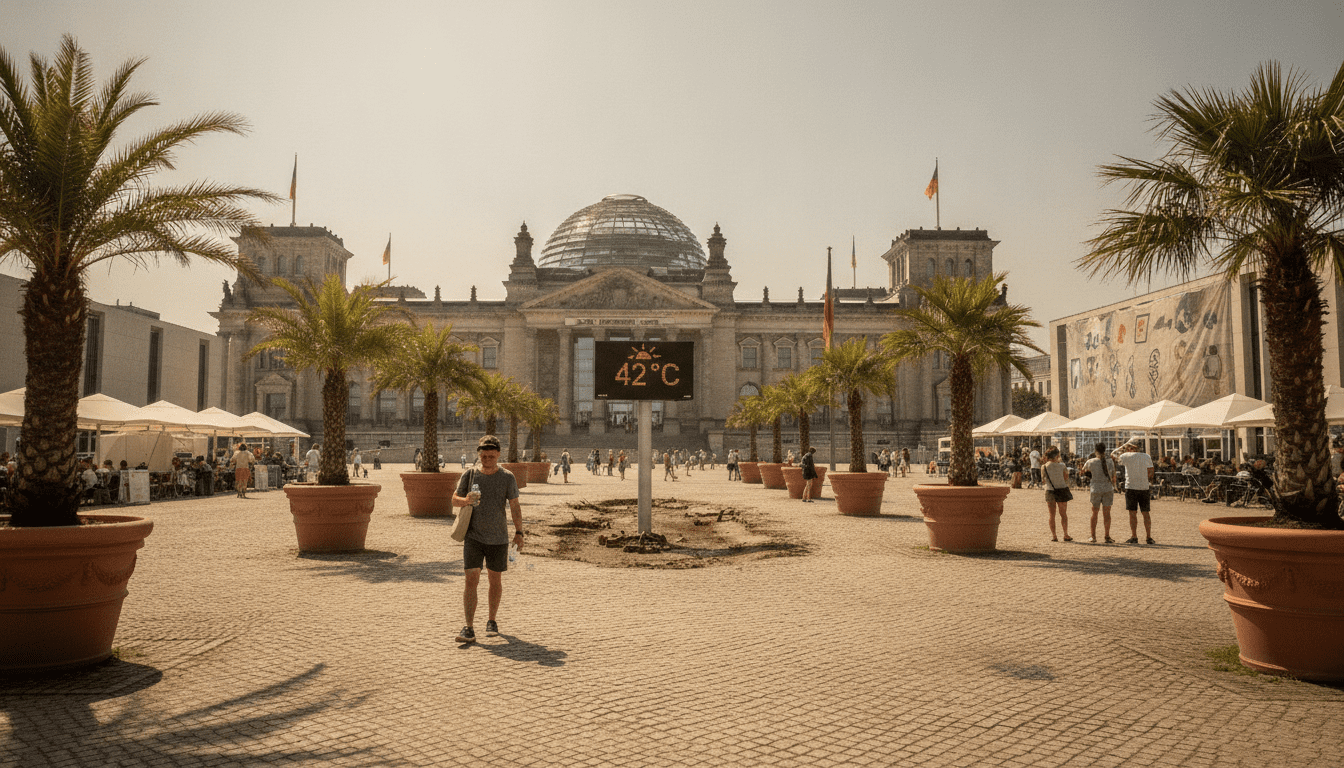
Germany climate change: German cities to inherit Italian weather as adaptation urgency rises
As climate models show, Germany climate change will shift many German cities toward contemporary Italian conditions, forcing policymakers to accelerate adaptation and protect vulnerable populations.
Opening summary
Germany climate change projections indicate that within decades the climates of many German cities will resemble those found today in regions of Italy, producing hotter, drier summers and more extreme rainfall events. Scientific modelling and recent weather observations suggest cities such as Frankfurt, Munich and others will face Mediterranean-style heat and prolonged dry spells. Officials and experts say this transition demands sweeping changes in urban planning, water management and public health preparedness.
Italian ‘climate twins’ mapped to German cities
Researchers have identified so-called climate twins: German municipalities whose projected future climate matches the current climate of specific Italian provinces. Examples cited include Frankfurt trending toward Adriatic conditions and Munich aligning with Lombardy-like heat patterns, while some northern towns are projected to resemble central Italian regions. These analogues are intended to help planners visualize plausible future weather regimes and the sorts of adaptation measures that will be required.
Rising temperatures and shifting precipitation patterns
Projections show an increase in average summer heat and longer dry periods interrupted by more intense rainfall when storms occur. Summers that once carried a cool North Sea character are expected to lean Mediterranean, with higher daytime maxima and a greater frequency of heatwaves. At the same time, heavier downpours will raise the risk of flash floods even as extended droughts lower river levels and strain water supplies.
Public health and economic implications
Higher temperatures are already causing strain on health systems and workforces, with heat-related illness disproportionately affecting the elderly and infants. Prolonged heat episodes increase mortality in vulnerable groups and complicate care delivery in non-cooled residential buildings. Economically, insurers and analysts warn of measurable productivity losses during extreme heat; one estimate finds productivity drops by roughly three percent per degree above 30°C and places aggregated heat-related costs in the tens of billions in the coming years.
Local adaptation measures becoming essential
Municipalities will need a mix of short- and long-term measures to keep communities livable, including cooling centres, retrofitting buildings with efficient cooling and better passive design, and protecting night-time airflow into urban cores. Urban greening, unsealing surfaces, and restoring wetlands and moors to retain water and reduce heat stress are among steps local governments can take now. Many of these actions require coordinated planning across sectors and sustained financing to be effective.
Water management trade-offs and infrastructure stress
A warmer Germany will face a double challenge: intense rain events that overwhelm drainage systems and long dry spells that reduce groundwater and river levels. Infrastructure built for past hydrological norms will need upgrading to cope with both extremes, from larger-capacity sewers and flood-protection measures to policies that conserve water use during droughts. The interaction of flooding risk and low river flows also threatens agriculture, navigation and electricity generation in some regions.
Policy gaps, funding uncertainty and the municipal role
Despite growing evidence of cost and harm, national accounting of adaptation spending remains incomplete, and some federal allocations have been modest compared with projected needs. Adaptation has often been treated as a secondary policy track compared with emission reductions, leaving municipalities to shoulder many practical decisions without mandatory obligations or predictable funds. Observers argue clearer mandates and dedicated financing are necessary to empower local governments to prioritize measures such as de-sealing, rewetting peatlands and planting shade trees.
Germany climate change will not be solved by adaptation alone; international mitigation remains crucial to avoid far worse outcomes. If global efforts to reduce emissions falter, the Mediterranean-like shift now seen as a mid-century scenario could be an intermediate stage on a trajectory toward even more extreme conditions. Policymakers face two simultaneous tasks: accelerate the transition away from fossil fuels worldwide and prepare towns and cities at home for a hotter, more variable climate.
The coming decades will test Germany’s planning systems and fiscal priorities, but many effective adaptation options are available now and enjoy broad public support; deploying them at scale will determine whether communities successfully manage the health, economic and environmental risks of a changing climate.
