
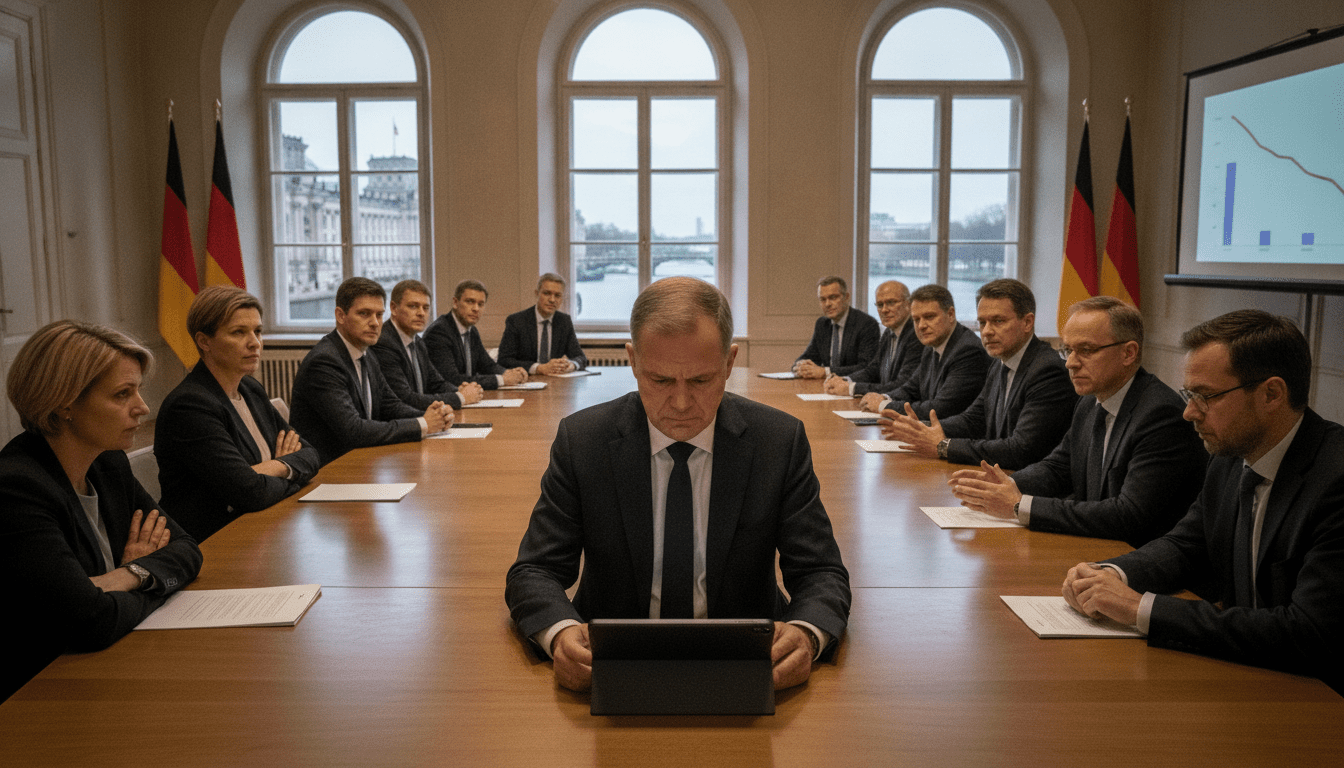
IMD World Competitiveness Ranking: Germany Falls to 23rd Place in 38th Edition
Germany drops to 23rd in the IMD World Competitiveness Ranking as high taxes, inflation and infrastructure shortfalls weigh on growth, study released June 2026.
Germany has slipped to 23rd place in the 38th edition of the IMD World Competitiveness Ranking, the annual assessment compiled by the IMD World Competitiveness Center in Lausanne. The IMD World Competitiveness Ranking shows Germany’s decline from 19th last year and marks a reversal from higher standings in recent years, with the country ranked 15th in 2022 and sixth in 2014. The report combines more than 250 quantitative indicators and executive survey responses across four pillars to rate national competitiveness.
Slide in the rankings and historical context
The IMD World Competitiveness Ranking placed Germany at 23rd in the latest list, a four-place drop from the prior year’s 19th position. This movement follows a brief uptick the year before but remains well below Germany’s standings in earlier decades, underscoring a longer-term downward trend. The ranking’s methodology blends hard statistics with a global executive opinion survey, measuring economic performance, infrastructure, and the effectiveness of companies and public administration.
IMD cites special factors and tariff shocks
At a press briefing, IMD finance professor and study director Arturo Bris attributed part of Germany’s weaker showing to exceptional external shocks. Bris pointed to tariff measures imposed by the United States as particularly damaging for Germany, given the country’s heavy reliance on exports within the European Union. He framed the four-place fall as linked to these special factors and suggested that the change, while notable, does not amount to a systemic collapse.
Tax burden, inflation and infrastructure problems
The country’s high tax burden emerged from the study’s detailed indicators as a principal drag on competitiveness. Rising consumer prices and persistent inflation were also identified as a handicap, alongside tangible shortcomings in transport and logistics infrastructure. The report singles out the performance of the national rail operator as illustrative of broader infrastructure deficits that undermine productivity and trade efficiency.
Weak GDP performance flags deeper concerns
Measured by the study’s review of real GDP developments for 2025, Germany’s economy recorded a modest 0.2 percent expansion, placing it 66th among the 70 countries analyzed. That tepid growth figure aligns with the IMD’s findings on fiscal and structural headwinds that have constrained momentum across manufacturing and export sectors. The combined indicators suggest that short-term external shocks and longer-standing domestic constraints both contribute to the subdued macroeconomic outlook.
Winners and regional patterns at the top of the list
The new ranking landscape is dominated by smaller, open economies at the top, with Singapore ascending to number one. Hong Kong and Switzerland follow among the leading positions, reflecting strengths in legal frameworks, regulatory protection and institutional quality. The prominence of compact economies in the top tier underscores the IMD’s conclusion that in today’s competitiveness race, predictability, regulation and the rule of law can matter as much as traditional cost and scale advantages.
Switzerland’s drop and U.S. movements
Switzerland, which led the previous edition, fell in the latest ranking, a shift the IMD attributes to high living costs, a strong franc and lower levels of direct investment. The study also noted the impact of U.S. tariff actions on Switzerland’s trade position and recommended closer cooperation with the European Union to prevent further erosion of competitiveness. Meanwhile, the United States moved up from 13th to 10th place, a gain driven largely by improved sentiment among business leaders; IMD authors cautioned, however, that sentiment may be improving faster than underlying fiscal or trade fundamentals.
Germany’s performance in the IMD World Competitiveness Ranking raises immediate policy questions for Berlin on taxation, infrastructure investment and export resilience. The study’s mixture of external shocks and domestic structural gaps suggests a two-pronged response: short-term measures to shield exporters and longer-term reforms to reduce costs and upgrade logistics. The rankings provide a comparative benchmark, but translating them into concrete policy shifts will determine whether Germany can arrest the slide and rebuild competitiveness in the years ahead.
