
FIFA World Cup 2026: Complete schedule, groups, stadiums and Germany’s 7–1 opening victory
FIFA World Cup 2026 schedule, groups, stadiums and CET kickoff times. Read the full fixtures, Germany’s 7–1 opener and the tournament’s knockout roadmap.
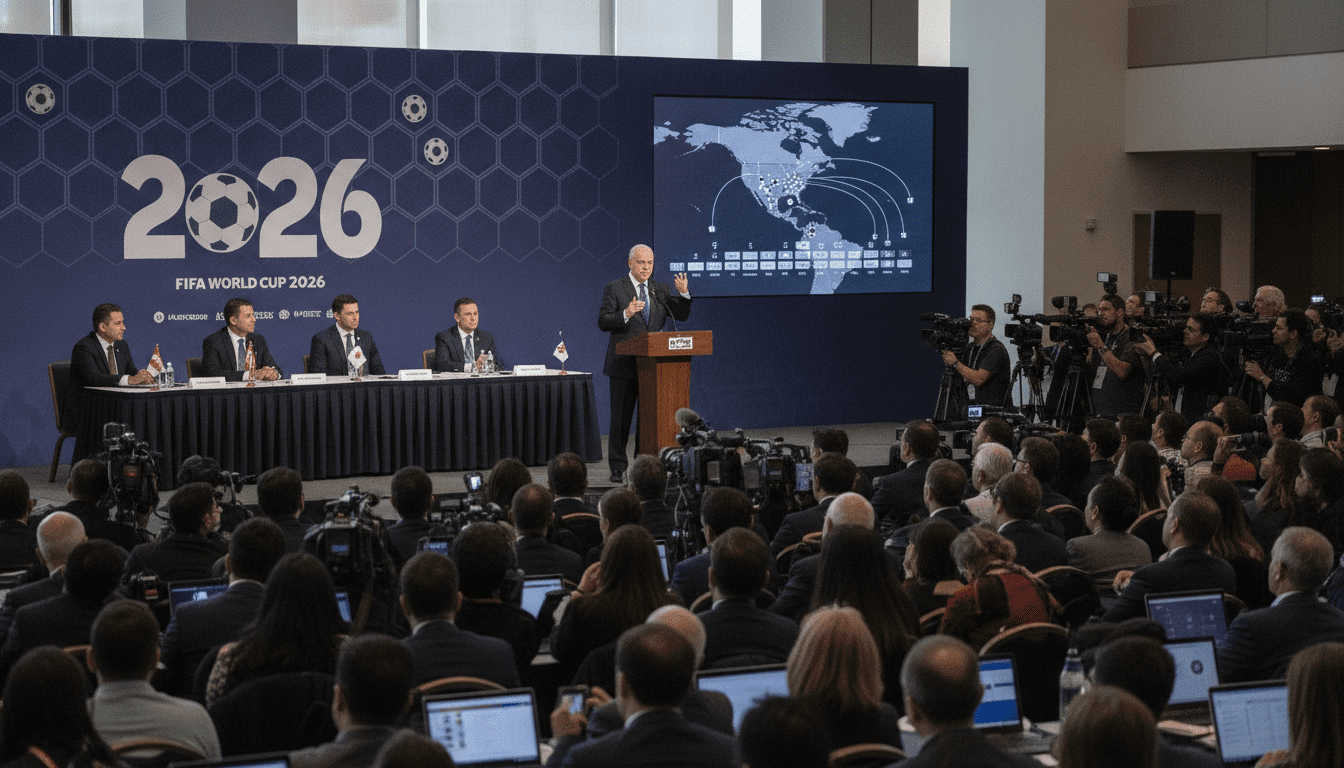
The FIFA World Cup 2026, staged across the United States, Mexico and Canada from June 11 to July 19, 2026, brings an expanded 48-team format and the most matches and host cities in tournament history. Germany announced itself emphatically in the group phase with a 7–1 win over Curaçao on June 14 in Houston, a result that sets a high bar for the DFB squad as the competition moves into the second week. This guide outlines the groups, key fixtures, stadiums and the schedule in Central European Summer Time (CEST).
Germany’s commanding start and upcoming fixtures
Germany opened the tournament with a dominant 7–1 victory against Curaçao on June 14 in Houston, a match that featured goals from multiple DFB players and provided coach Julian Nagelsmann with an encouraging debut result. The national team’s next group match is scheduled for Saturday, June 20, with kick-off at 22:00 CEST in Toronto against the Ivory Coast. Germany’s final group game is set for Thursday, June 25, at 22:00 CEST in New York against Ecuador.
A win in Group E would position Germany strongly for the knockout stages, while finishing second or third would shape a different path through the new round-of-32 system. With varied opponents and travel between North American venues, squad rotation and recovery will be central to Germany’s campaign in the weeks ahead.
Group composition and high-profile matchups
The 48 teams are arranged in twelve groups of four, with the top two in each pool advancing and the eight best third-placed teams filling out the new round of 32. Germany competes in Group E alongside Curaçao, Ivory Coast and Ecuador, a mix that blends established international sides with emerging nations. Several other groups feature marquee confrontations: Group I pairs France with Norway and Senegal, while Group C brings Brazil and Morocco into the same section.
Across the group stage there are head-to-heads likely to draw global attention, from Spain’s fixtures to Argentina’s matches in Group J. The varied geography of venues and the time differences to Europe mean many fixtures are scheduled late in the evening CEST, concentrating high-profile games into prime viewing hours for European audiences.
Schedule highlights, kickoff times and broadcast details
Organizers have published a compact schedule that takes local time zones into account while listing all kickoff times in Central European Summer Time (CEST) for viewers in Germany and elsewhere in Europe. The group phase runs through late June, with the round of 32 beginning on June 28 and the final slated for July 19 in New York at 21:00 CEST. Match times are influenced by six to nine hours’ time difference across venues.
In Germany, public broadcasters ARD and ZDF share coverage of a large portion of the tournament and are scheduled to screen roughly 60 of the 104 matches between them. The pay platform MagentaTV holds streaming rights for every game, offering full live coverage for subscribers. Viewers can also follow livestreams on the broadcasters’ respective apps and web services.
Hosts, stadiums and logistical footprint
For the first time a World Cup is hosted by three countries and staged across 16 cities and stadiums. Eleven arenas are in the United States, three in Mexico and two in Canada, together accommodating the 104-match slate. Prominent venues include the Azteca in Mexico City (around 83,000 capacity), the Dallas stadium in Arlington (approximately 94,000), and the New York/New Jersey stadium in East Rutherford (about 82,500).
Canadian stages feature Toronto’s 45,000-seat stadium and Vancouver’s BC Place with roughly 54,000 capacity. Time-zone differences between host cities — ranging from six to nine hours behind Central Europe — will factor into team logistics, fan travel and television scheduling throughout the month-long event.
Knockout structure and tiebreaker rules
The tournament retains a group phase followed by a modified knockout progression: the top two teams from each group advance automatically, and the eight best third-placed teams join them in a newly introduced round of 32. That stage leads into the traditional round of 16, quarterfinals, semifinals and the final on July 19. The third-place match is scheduled for July 18 in Miami.
Tie-breaking criteria remain conventional: teams level on points are separated first by goal difference, then by goals scored, and then by head-to-head results if necessary. If teams are still indistinguishable, fair-play points — based on yellow and red cards — are used as a further determinant. These regulations mean that goal margins and disciplinary records can be decisive for teams fighting over third-place qualifying spots.
Despite the expanded field, the knockout calendar is compressed into a tight window of July dates to conclude the competition in mid-July. The round-of-32 kicks off on June 28 in Los Angeles and runs through early July, with successive knockout rounds staged across multiple host cities leading to semifinals in Dallas and Atlanta on July 14 and 15.
The FIFA World Cup 2026 presents an unprecedented scale of travel, stadia and fixtures, and the coming weeks will test squad depth, tactical adaptability and endurance. As group games conclude and the knockout phase approaches, teams such as Germany will look to convert strong early results into sustained progress deep into the tournament.
