
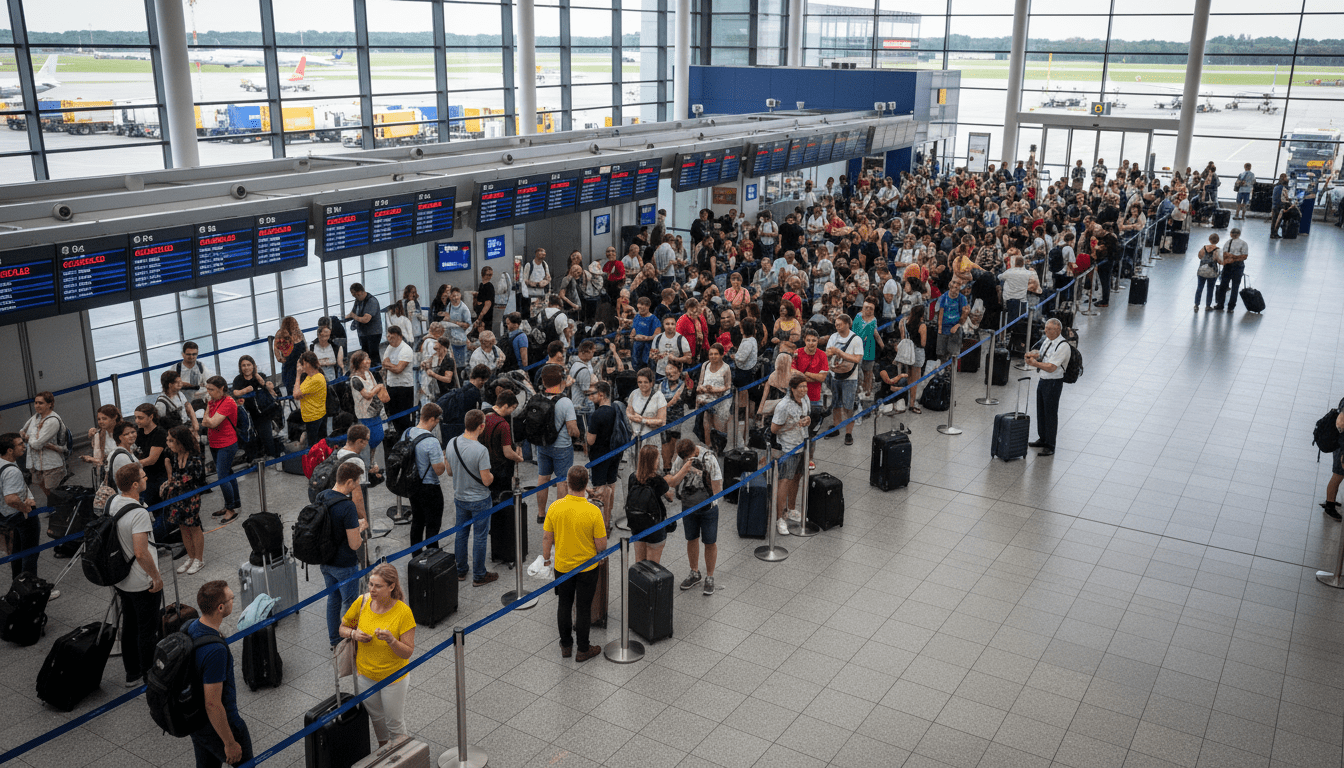
Kerosene crisis threatens summer flights at German airports, ADV warns
Kerosene crisis could force flight cancellations affecting up to 20 million passengers at German airports this summer, ADV warns; carriers seek relief.
The head of the Association of German Airports warned that a persistent kerosene crisis could force large-scale flight cancellations at German airports during summer 2026. He said passenger traffic could stagnate at best and that, in a worse scenario, some airports could see capacity fall by around ten percent, affecting as many as 20 million travellers. The kerosene crisis — driven by sharply higher jet-fuel prices — is already squeezing airline schedules and could reshape service patterns for the coming peak season.
ADV Chief Warns of Mass Cancellations
Ralph Beisel, chief executive of the Arbeitsgemeinschaft Deutscher Verkehrsflughäfen (ADV), told industry stakeholders that the kerosene crisis has pushed fuel costs to more than double pre-war levels. He said many routes become uneconomical for carriers at these prices, increasing the risk of cancellations and network cuts. Beisel warned that even with available fuel, airlines may choose to suspend or reduce services on marginal routes.
Several airports could face a measurable capacity decline if carriers withdraw slots or scale back frequencies. The ADV’s assessment frames the issue as both a commercial and operational problem for airports that depend on a mix of scheduled, low-cost and seasonal services.
Scale of Passenger Impact
The ADV’s modeling suggests that under a worst-case scenario up to 20 million passengers could be affected across German airports during summer 2026. That figure represents a substantial share of expected seasonal traffic and would translate into thousands of cancelled or reduced flights. In a more optimistic outcome the association expects passenger numbers to stagnate rather than grow, reflecting a halt in recovery momentum after recent years of rebound.
Airport operators anticipate the effects will vary widely by location, with major hubs likely to absorb more traffic shifts while regional and leisure-focused airports face the steepest declines. The passenger impact will be measured not only in cancelled seats but also in higher fares and reduced connectivity for certain destinations.
Why Fuel Costs Have Soared
Industry officials point to geopolitical tensions and longer-term supply constraints as central drivers of the kerosene crisis. The ADV noted that jet-fuel prices have been elevated for more than two months and are roughly twice what they were before the outbreak of conflict in the region that disrupted markets. Refining bottlenecks and logistical complications have compounded the pressure, limiting the ability of airlines to hedge or secure stable fuel supplies at manageable prices.
Higher fuel costs directly raise operating expenses for carriers, eroding margins and forcing route-by-route profitability reviews. For many airlines, the choice is between raising fares, cutting routes, or seeking state support to bridge the gap while markets stabilise.
Routes and Carriers Most at Risk
Low-cost carriers and routes with primarily tourist demand are seen as particularly vulnerable to cuts driven by the kerosene crisis. These services often operate on thin margins and depend on high load factors and predictable fuel costs to remain viable. If fuel surcharges and ticket prices rise, leisure travellers may defer trips or seek alternatives, further depressing demand.
By contrast, core business routes and major hubs are likely to be protected longer because of higher yields and stronger year-round demand. Nevertheless, cascading network effects could still reduce frequencies at smaller airports and lead to the temporary suspension of some international links that rely on feeder traffic.
Economic Consequences and Passenger Prices
Airlines and airports warn that reduced capacity will have knock-on effects for prices, tourism, and regional business connectivity. With fewer seats available, market dynamics typically push ticket prices higher, disproportionately affecting price-sensitive travellers. Tourism-dependent regions could see a downturn in visitor numbers at a crucial time for local economies.
Airports are also bracing for revenue losses from reduced passenger volumes, which would affect retail, parking and commercial leases on site. For some smaller airports the combined hit to aeronautical and non-aeronautical income could strain budgets already stretched by recent years of recovery investments.
Calls for Government Relief
To blunt the immediate damage of the kerosene crisis, the ADV has called for targeted government measures to support connectivity and passenger demand. Short-term proposals include a temporary suspension of the air traffic tax, while a medium-term step under discussion is at least a halving of the levy. Industry leaders argue these measures would help maintain routes while fuel markets remain volatile.
Airlines and airport operators emphasise that any public support should be time-limited and focused on preserving essential connectivity rather than underwriting uneconomic services. Governments will face pressure to weigh fiscal costs against economic benefits, particularly in regions where air links underpin wider business and tourism activity.
Public authorities will also be asked to consider complementary measures such as facilitating fuel logistics and coordinating with international partners to stabilise jet-fuel markets. The scale of the potential passenger disruption has made kerosene pricing and taxation a political as well as an industry concern.
The coming weeks will be decisive as carriers finalize summer schedules and reassess route profitability in light of sustained high fuel costs. Airports, airlines and policymakers must weigh immediate relief options against long-term market signals as they work to limit disruptions for travellers and regional economies.
