
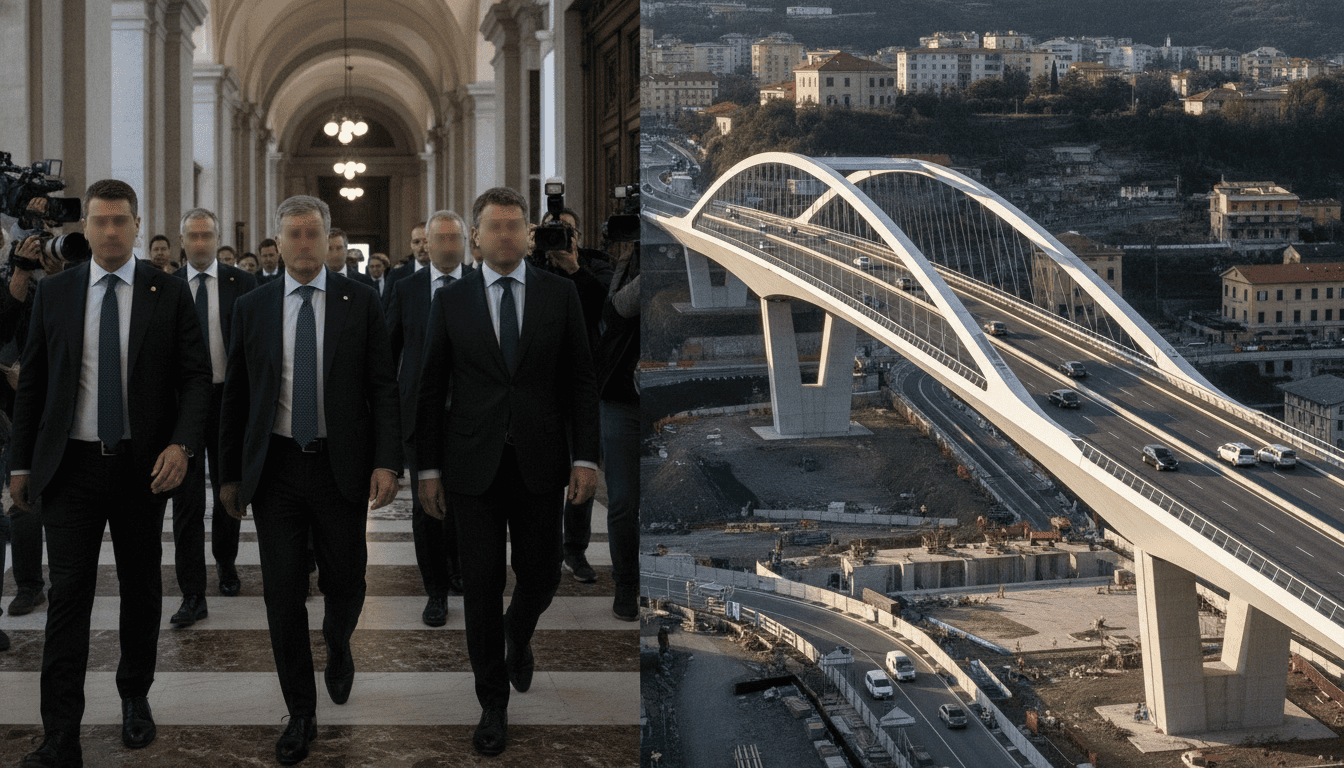
Genoa bridge verdict and rapid rebuild reveal uneven results from €194bn EU recovery funds
Genoa bridge verdict and the rapid St. George rebuild expose uneven outcomes from €194bn in EU recovery funds, highlighting stalled projects and lingering legal and economic fallout.
The court’s recent first-instance verdict in the Genoa bridge case has renewed scrutiny of Italy’s infrastructure governance and the speed with which projects are delivered and financed. The Genoa bridge collapse of 14 August 2018, which killed 43 people, remains the touchstone for debates about public safety, corporate responsibility and the capacity of the state to modernize critical links. The trial ruled against many defendants, but judges and prosecutors note the slow march toward final justice and the possibility that further appeals could take years.
Verdict hands prison terms but leaves many questions
A first-instance court convicted a large number of defendants connected to the 2018 collapse, handing down sentences that together total roughly two centuries behind bars. Giovanni Castellucci, the former chief executive of the motorway operator Autostrade per l’Italia, received a 12-year term for involuntary manslaughter and endangering road safety. The ruling is not final, and legal observers warn that protracted appeals could dilute the deterrent effect as some allegations risk becoming time-barred.
Rapid reconstruction became a national showcase
By contrast with the slow pace of litigation, the physical replacement of the collapsed span moved at extraordinary speed. Engineers and contractors completed the new steel St. George Bridge in about 18 months and 310 working days of continuous shifts, a finish that officials and designers framed as a model of urgency and coordination. Renzo Piano’s design and the concentrated management effort cut through typical procedural delays and allowed vehicle traffic to resume in August 2020, less than two years after the disaster.
Special commissioner powers created the ‘Genoa model’
The government’s decision to appoint a special commissioner for the reconstruction tightened decision-making and streamlined approvals. Marco Bucci, then mayor of Genoa and later regional president of Liguria, was granted sweeping authority to coordinate the demolition, debris removal and new construction. Officials say those special powers, combined with focused funding and managerial continuity, were decisive in producing a rapid outcome that many regarded as a blueprint for future emergency works.
EU recovery funds reshaped investment but were widely dispersed
Italy has received large sums from the EU recovery package deployed since 2021 — approximately €194 billion in total, including loans and grants — and those resources supported hundreds of thousands of projects across the country. Government statements indicate the funds were allocated to roughly 300,000 initiatives spanning rail and road works, digital upgrades, housing, education and sport. Critics argue that dispersing money so widely diluted transformational potential and produced many modest upgrades rather than a few flagship projects with clear national impact.
Transport upgrades show stark regional differences
In transport, the recovery money helped accelerate work on routes and airports that were already high-priority, preserving and in some cases improving service standards in the north and on major high-speed lines. At the same time, other essential upgrades have lagged; the long-planned three-lane expansion of the main Florence–Rome motorway remains slow, despite being first built in the 1960s and long overdue for enlargement. Analysts caution that concentrating investment on already well-performing corridors risks leaving structurally weak parts of the network underfunded.
Major projects still face delays and doubts
Ambitious undertakings such as the proposed bridge across the Strait of Messina illustrate the limits of current momentum: intended construction timetables have slipped and once-firm schedules for groundbreaking and completion are no longer realistic. Observers say the combination of legal uncertainty, fragmented funding, and bureaucratic inertia undercuts Italy’s ability to deliver large, complex infrastructure on schedule. The imbalance between symbolic rapid successes and wider systemic weaknesses raises questions about whether isolated feats like the Genoa rebuild can be replicated at scale.
The Genoa bridge saga now serves as both a cautionary tale and a partial success story: fast rebuilding demonstrated what concentrated authority and focused funding can achieve, but the slow adjudication of responsibility and the scattered allocation of recovery money underline the structural challenges that remain. Moving from episodic responses to a durable strategy for maintenance, oversight and concentrated investment will be essential if Italy is to translate high-profile wins into lasting, nationwide resilience.
