
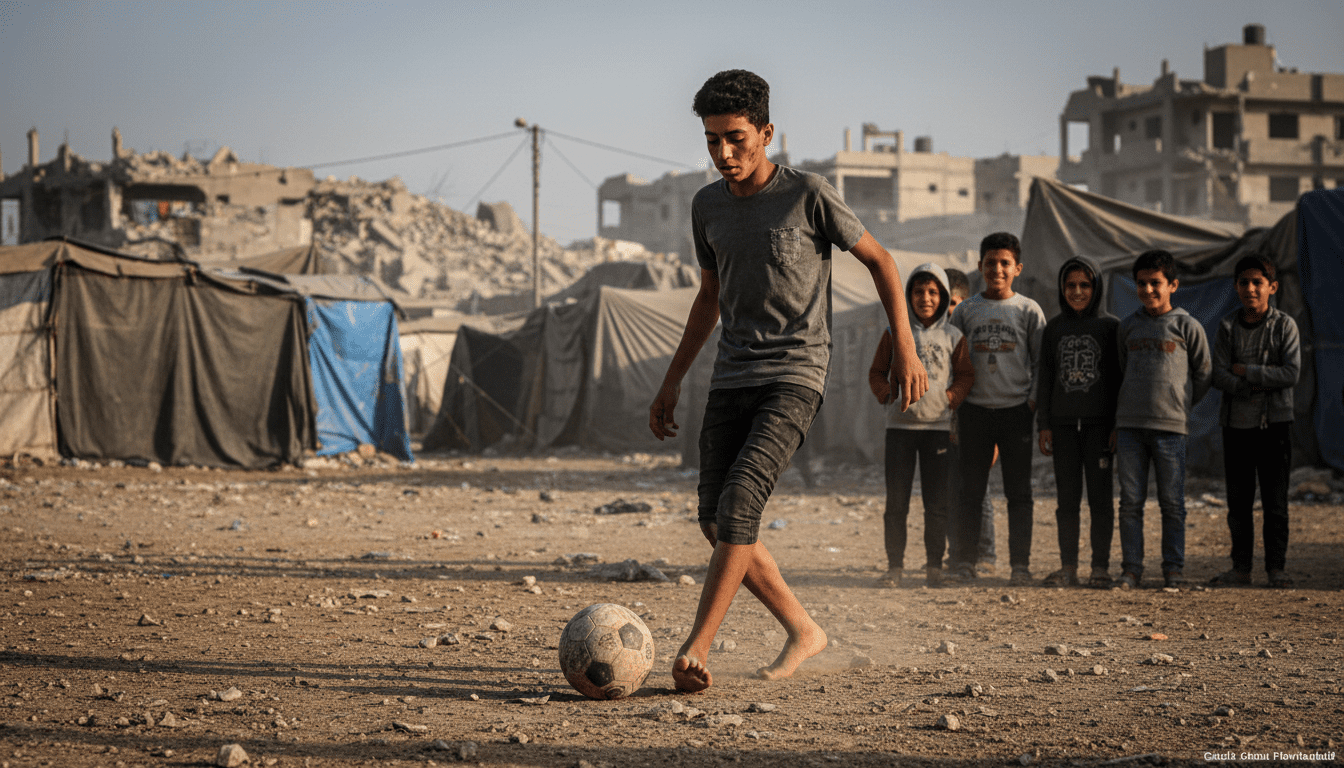
Gaza Teen’s Football Dream Survives After Family Killed in Jabalia Strike
After an October strike killed his family, 16-year-old Mohammed turns to football in Gaza, where destroyed pitches and deadly commutes test players’ resilience.
Mohammed Eyad Azzam, a 16-year-old from the Jabalia refugee camp, survived an Israeli airstrike on October 11, 2024 that collapsed his family’s multistorey home and killed his parents and two older brothers. The Gaza teen’s football ambitions now coexist with the responsibilities of caring for his elderly grandmother amid displacement and daily shortages. His story highlights how sport has become both a refuge and a reminder of loss for young Palestinians across the besieged enclave.
Jabalia strike leaves teen orphaned
Mohammed said he was sitting at home with his family when the warplane struck without warning, burying him in rubble for about 10 minutes before his grandmother dug him out. He woke up in a neighbour’s house on a ventilator and later buried his relatives in a makeshift grave because ongoing bombardment made access to cemeteries impossible. The attack, which residents describe as sudden and devastating, transformed an adolescent who was “pampered” into the primary provider for his surviving kin almost overnight.
From rubble to displacement
Today Mohammed lives in northern Gaza’s Shati refugee camp among thousands driven from their homes, carrying water and lighting fires to support his grandmother. His club, Khadamat Jabalia, once a local hub for youth football, was destroyed and reportedly repurposed by Israeli forces during the incursion. Former training grounds and neighbourhood pitches that nurtured players like Mohammed have largely been reduced to rubble, forcing families into cramped tented shelters and disrupting everyday life.
Football as a psychological lifeline
Despite the trauma, Mohammed finds temporary relief on a dirt pitch, where lacing up his boots helps release “negative energy” and stave off despair. Before the conflict, he played for Khadamat Jabalia and was considered a promising young talent; now the Palestinian Football Association (PFA) says such opportunities are rare and precarious. Organisers recently arranged a tournament for players born in 2009 on one of the last playable patches of land in Gaza, an effort designed to give youngsters a sense of normalcy even as the wider sport infrastructure lies in ruins.
PFA details heavy toll on sports community
The Palestinian Football Association reports stark losses across Gaza’s sporting sector, saying 1,113 people affiliated with sport have been killed, including more than 560 football players, coaches and administrators. The PFA adds that 265 sports facilities have been destroyed or damaged over the past two-and-a-half years and that all 56 football clubs in Gaza have been severely affected. Mustafa Siyam, head of the PFA’s media department in Gaza, described Mohammed’s plight as representative of tens of thousands of talented children who have lost families, clubs and access to education.
Players face dangerous journeys to play
With main stadiums either ruined or converted into shelters, youth competitions are now held on a handful of surviving fields such as Palestine Stadium in Gaza City and two small grounds in the central strip. Players often walk three to four kilometres through tents and rubble to reach these sites, a journey Mohammed says is “draining” and exposes youths to the risk of renewed air strikes. PFA officials acknowledge the danger but say organisers press on because the games offer psychological relief and a symbolic assertion that life and sport continue under dire conditions.
Appeals to international sporting bodies and tribunals
Palestinian sports officials have publicly criticised FIFA for what they describe as inconsistent responses to conflicts, citing swift sanctions against Russia in 2022 but little action over the losses sustained in Gaza. The PFA has said it will pursue remedies through international sports tribunals and seeks wider solidarity from global federations to protect players, facilities and the right to compete. At the same time, PFA representatives stress that any long-term recovery will depend on a durable ceasefire and the reopening of Gaza’s borders so local talent can train and travel for national selection.
Mohammed says he plays now to honour his parents’ dream and keep their support alive on the pitch, even though he no longer has family in the stands to cheer him on. He speaks softly of a future in which he becomes a professional footballer, a goal that he and his late parents shared before war and loss reshaped his childhood. As Gaza’s football community tallies its human and material losses, players like Mohammed continue to train and compete where they can, holding on to sport as both memory and hope.
