
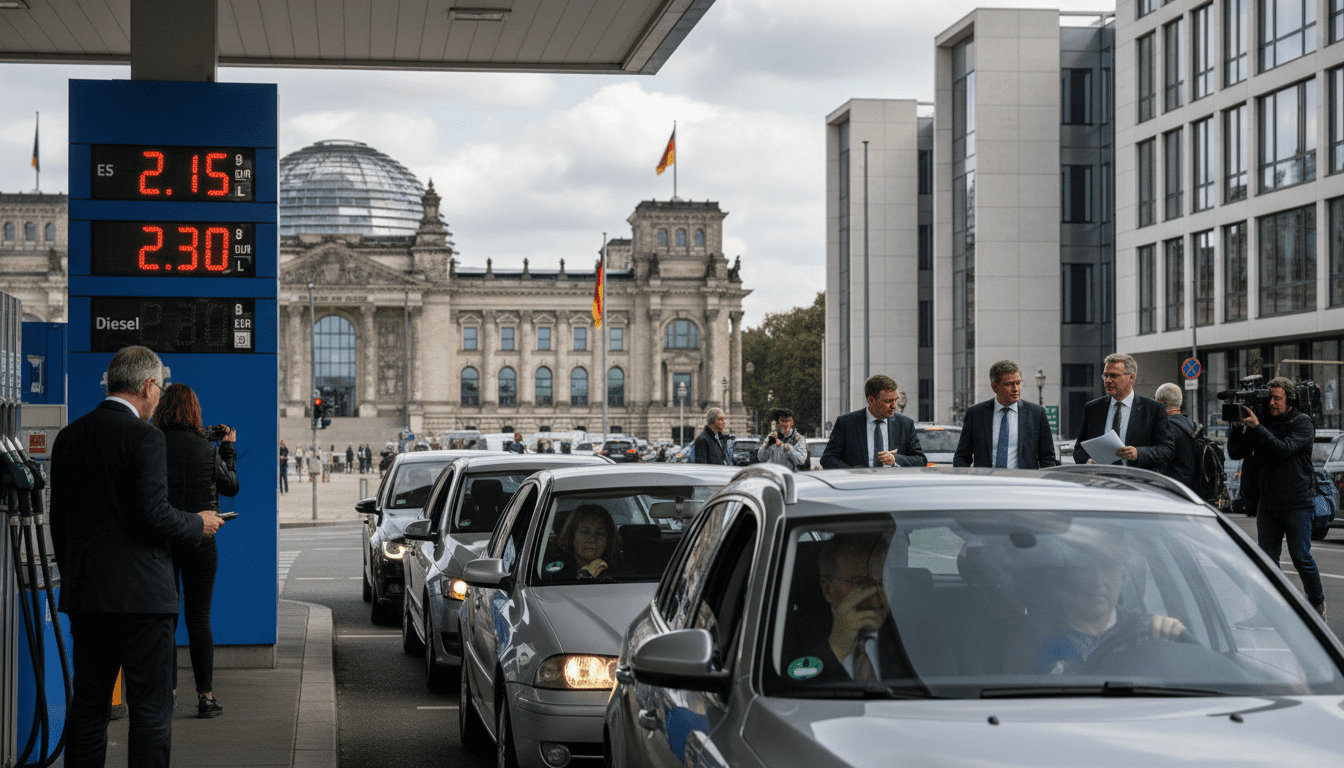
Fuel prices in Germany remain above €2 despite 17-cent tankrabatt as pressure mounts on coalition
Fuel prices in Germany continue to exceed €2 per litre in many areas despite a 17-cent government tankrabatt, keeping consumer discontent high and forcing renewed political debate over further relief and fiscal trade-offs.
Rising pump prices in Germany have become a central barometer of public satisfaction with the coalition, with many motorists paying more than the government rebate would suggest. The Union–SPD taskforce is scheduled to reconvene at the end of May to reassess relief measures as geopolitical supply worries and the approaching summer driving season amplify political pressure. Ministers face a choice between extending immediate support and safeguarding long-term fiscal stability amid growing budgetary constraints.
Consumer frustration grows as pumps stay above €2
Many drivers report that local station prices remain stubbornly high even after the 17-cent reduction at the pump, fueling a sense that the rebate has not reached consumers as intended. For households that commute, the extra monthly cost is often modest on paper, but visible prices at the forecourt have an outsized impact on public mood and polling. That visible frustration has turned fuel costs into a politically potent symptom of wider concerns about living expenses.
Union and SPD taskforce to revisit relief at month’s end
Lawmakers from the Union and SPD convened a joint taskforce to discuss targeted measures, and the group is due to meet again at the end of May to weigh next steps. The timeframe matters: prolonged disruptions to tanker routes through the Strait of Hormuz and the approach of school holidays could intensify demand and public pressure for further support. Officials say any new interventions will be judged against both short-term relief needs and the state’s fiscal capacity to finance them.
Crisis-era interventions reshaped public expectations
Recent crises have reset public expectations about what the state should cover, scholars and officials note, creating a political environment in which calls for broad assistance are hard to resist. Large-scale emergency spending during the pandemic and subsequent energy relief measures established precedents that many citizens now expect to be repeated. Those policies secured political consent during acute phases but have also increased the baseline of public expectation for government intervention.
Subsidies and fiscal strain on the federal budget
Official figures and expert estimates show a sizable and growing subsidy footprint: the finance ministry’s accounting puts annual subsidy volume around €80 billion, while some economists calculate totals in the triple-digit billions when broader support programs are included. At the same time, economic growth has slowed and annual borrowing remains elevated, with debt rising by roughly €200 billion a year in recent cycles. Projections for the medium term indicate that by 2030 a large share of federal revenue will be committed to social spending and interest payments, narrowing the space for discretionary policy.
Political and practical barriers to rolling back support
Once introduced, many support measures prove difficult to unwind because beneficiaries organize to defend them and politicians face electoral risk when cutting visible benefits. Targeted programs that benefitted relatively well-off households—such as subsidies for home charging infrastructure in cases where owners already had substantial resources—have drawn criticism for misdirecting public funds. Policymakers who seek to trim such programs must navigate both public sentiment and pressure from interest groups representing affected industries.
Voices calling for a recalibration of state priorities
A number of policymakers and analysts argue for refocusing state spending toward measures that boost long-term competitiveness and social resilience rather than broad, permanent subsidies. Suggestions include redirecting resources to lower tax and social-security burdens for workers and firms, and tightening the scope of entitlements to concentrate public funds on those most in need. In health policy, proposals have surfaced to prioritize medically necessary services and limit funding for interventions judged non-essential, reflecting a wider debate on the appropriate size and role of the state.
As ministers and lawmakers prepare for further deliberations, the central political dilemma remains stark: whether to provide additional, visible relief that may calm voters in the short term, or to resist expanding permanent commitments that could constrain fiscal options for years. The coming weeks will test the coalition’s ability to balance immediate political pressures from rising fuel prices in Germany against the imperative of medium-term budgetary sustainability.
