
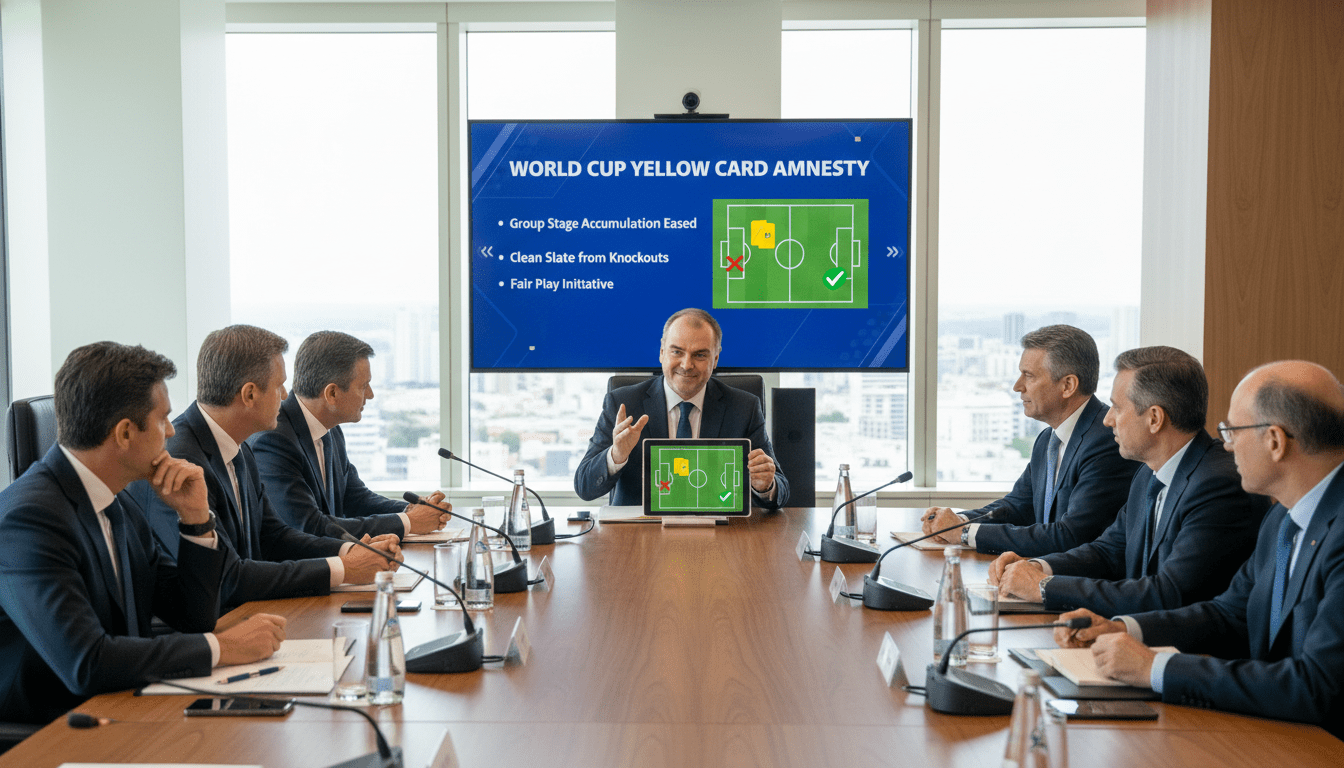
FIFA to erase yellow card suspensions after group stage at 2026 World Cup
FIFA will wipe yellow card suspensions after the group stage at the 2026 World Cup, easing late-stage bans and adapting to the expanded 48-team format.
FIFA has moved to reduce the risk of players missing late-stage matches by erasing yellow card suspensions after the three group games at the 2026 World Cup. The change means accumulated cautions will be cleared following the group stage rather than waiting until the quarterfinals, a shift designed to reflect the tournament’s expanded format. The adjustment, reported initially by the BBC and confirmed to the German press agency dpa, is expected to be ratified at the FIFA Council meeting on Tuesday, April 28, 2026.
Scope of the new yellow card suspension rule
The new rule will apply to cautions accumulated in the early phase of the tournament and will remove the threat of a one-match suspension after a player’s second yellow card once the group stage concludes. Under the previous system, players faced suspension after two bookings at any point in the tournament, with warnings only being wiped after the quarterfinals. By clearing yellow cards after the three group matches, FIFA intends to reduce the likelihood of key players missing knockout ties because of earlier, often tactical, cautions.
Reasoning behind the change
FIFA officials say the modification responds to the increased number of fixtures introduced by the tournament expansion from 32 to 48 teams. The larger field creates an additional knockout round — a round of 32 — and consequently extends the number of matches top squads may play. That longer competition window, FIFA argues, raises the chance that a player might be suspended during a critical tie late in the tournament, prompting the governing body to intervene to preserve competition integrity.
How the 48-team format alters suspensions
With the 2026 World Cup running from June 11 to July 19, 2026 across the United States, Canada and Mexico, teams will face a denser schedule and one extra knockout round compared with previous editions. The added round increases match exposure to cautions and gives more opportunities for players to accumulate bookings. Clearing yellow cards after the group stage effectively resets the tally before the knockout phase begins, meaning players who picked up early warnings will not carry that disciplinary baggage into most of the elimination rounds.
Historical precedent and high-profile examples
FIFA has employed similar wipes in the past to prevent important players from missing finals after earlier cautions. The measure aims to avoid repeats of notable incidents such as Michael Ballack’s absence from the 2002 World Cup final due to a suspension that followed a semifinal booking. That incident has often been cited in debates on disciplinary systems and helped shape previous decisions to clear warnings at later stages; the current adjustment brings forward that clearing point to the group-stage breakpoint.
Reactions from European football authorities
The proposed change mirrors calls for more lenient handling of yellow-card totals in other competitions. Vincent Kompany, coach of Bayern Munich, has publicly advocated easing yellow-card suspensions in UEFA club competitions, arguing the number of fixtures makes existing rules punitive. UEFA’s Club Competitions Committee is currently discussing a similar potential adjustment, and Fernando Carro, Bayer Leverkusen’s sporting director and a committee member, told t-online that he personally supports Kompany’s view while acknowledging differing opinions within the panel.
Practical implications for teams and referees
For national team coaches, the clearance of yellow-card suspensions after the group stage alters selection calculations and disciplinary management. Managers may now weigh tactical cautions differently knowing early bookings will not necessarily lead to enforced absences in the knockout rounds. Referees and match officials will still issue cautions under the laws of the game, but disciplinary panels and team staff will need to adjust their monitoring and appeal strategies around the new reset point.
The change also prompts administrative updates: tournament regulations will need to reflect the timing of the suspension wipe, and confederations overseeing domestic or regional competitions may re-examine their own rules in light of the World Cup precedent. Medical teams and sporting directors will likely brief players on the revised risk profile for yellow cards and adapt training and discipline policies accordingly.
Final decisions on disciplinary policy aside, the move underlines FIFA’s intention to balance fair play with the practical realities of a larger tournament. By erasing yellow card suspensions after the group stage at the 2026 World Cup, the governing body aims to protect the presence of key players in high-stakes matches while recognizing the expanded schedule that comes with a 48-team field.
