
EU sanctions package against Russia agreed in watered-down 21st round after Greek LNG exemption
EU states approve a diluted 21st EU sanctions package against Russia after Greece secured exemptions for pre-war LNG contracts, while measures still target oil, finance and crypto.
The European Union approved its 21st sanctions package against Russia early Thursday after protracted negotiations that produced significant exemptions for liquefied natural gas (LNG) contracts signed before the invasion of Ukraine. EU ambassadors in Brussels reached the deal following last-minute concessions to Greece, which insisted that long-term transport contracts be carved out of a general LNG prohibition. Officials described the package as weakened by those exemptions but still aimed at constraining Russia’s war economy.
Ambassadors confirm agreement and unanimity condition
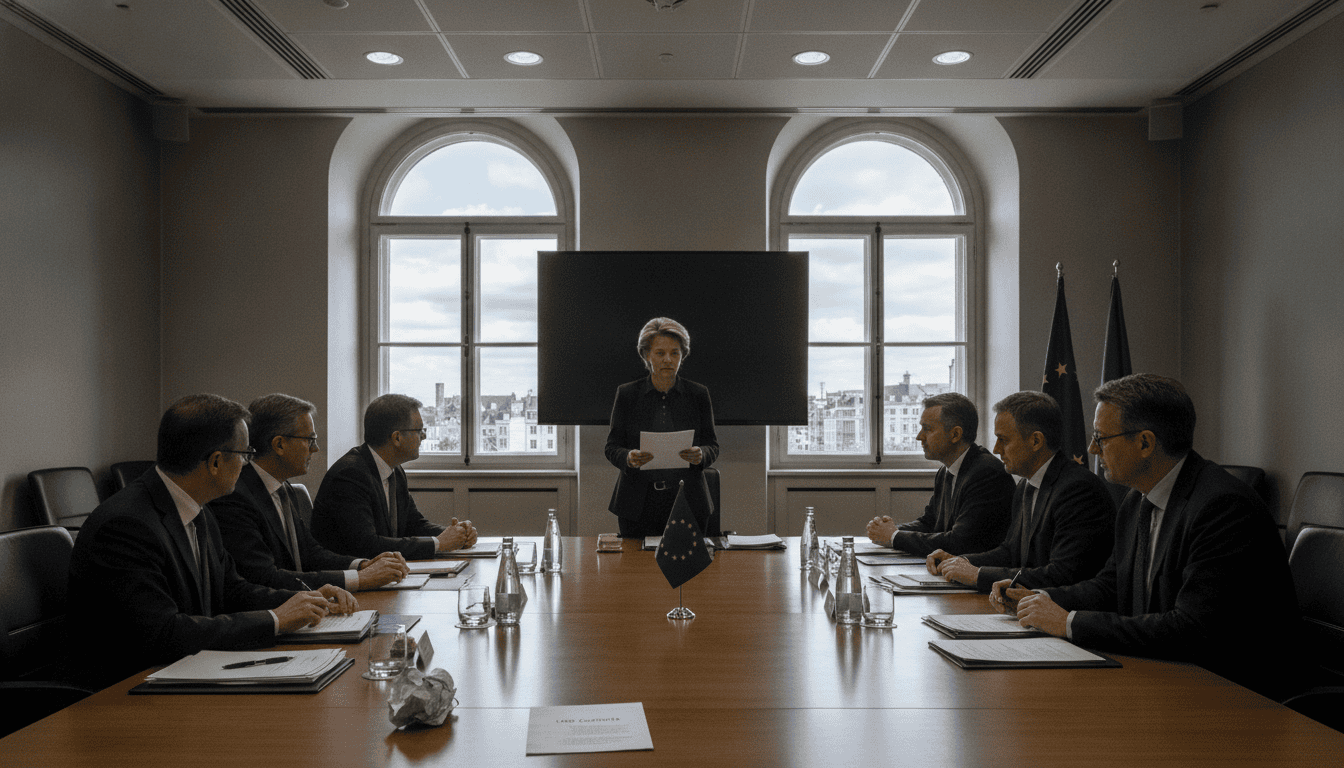
EU ambassadors formally backed the sanctions package after intensive talks that required a measured concession to secure unanimity among member states. Diplomats said the agreement preserves the EU’s united front while introducing a yearly review of the LNG exemption that can only be revoked by unanimous decision. The need for unanimous consent to end the exemption was highlighted as a core compromise that allowed the overall package to pass.
LNG exemption protects pre-war contracts
The package exempts LNG shipments governed by contracts signed before the Russian invasion, a carve-out that principally benefits Greek shipowners and long-term charter agreements. Greek shipping companies operate a large share of the EU’s LNG tanker capacity, and many of the contracts in question date back years with terms extending up to two decades. Those pre-existing agreements were central to Greece’s demands and were cited as the justification for the narrow but consequential exemption.
The exemption’s practical effect is to allow continued transport and revenue flows tied to Russian gas projects on the Yamal and Gydan peninsulas. Observers noted that the decision preserves income streams for both shipping firms and Russian producers, reducing the immediate economic pressure the EU sought to exert through a broader LNG ban. Member states opposing the carve-out said the move undermines the aim of depriving Russia of energy revenues linked to the war effort.
Oil price cap frozen for twelve months
As part of the package, the EU agreed to freeze the mechanism that would have adjusted the price cap on Russian crude oil and to keep it at the current level for twelve months. That suspension removes a scheduled adjustment that could have raised the cap and potentially loosened the oil squeeze on Moscow. Greece had initially pushed for a three-month pause; the unanimous acceptance of a year-long freeze reflects broader bargaining to secure the package.
Lawmakers and diplomats framed the decision as a way to maintain market stability while continuing to pressure Russian energy exports. The year-long freeze effectively pauses a contentious policy lever, leaving room for future recalibration depending on market developments and political consensus among member states.
New restrictions on finance, crypto and the shadow fleet
Despite concessions, the package contains the largest single set of individual measures the EU has issued in recent years, reflecting a broadened approach to targeting Russia’s economic networks. The measures introduce tighter restrictions and transaction bans aimed at Russia’s financial sector, alongside new steps to curb the use of cryptocurrencies to evade sanctions. The list also expands designations of vessels tied to the so-called shadow fleet, adding scores of ships to existing blacklists.
The combined financial, digital currency and maritime measures are intended to choke evasive channels that have allowed sanctioned goods and services to reach Russia. Officials emphasized that the package’s breadth — including trade curbs on defense-related goods — is intended to further isolate key elements of the Russian war economy even as energy-related measures were softened.
Political dynamics shaped the final text
Member-state politics drove several of the package’s most consequential changes, including the LNG exemption and the absence of restrictions on certain individuals after bilateral objections. The end of a prior blocking stance by Hungary following a change in its government allowed many previously stalled entries to be included. Conversely, Bulgaria’s insistence led to the continued exclusion of the Russian Orthodox Patriarch from the sanctions list.
Diplomats described the negotiations as arduous but ultimately necessary to preserve EU cohesion. They noted that compromises were deliberate, reflecting the trade-offs the bloc accepted to prevent a collapse of consensus and to send a unified message of continued pressure on Moscow.
Next steps for enforcement and review
The package requires member states to implement the new measures domestically and to cooperate on enforcement actions aimed at the newly listed ships, companies and financial nodes. The LNG exemption will be reviewed annually, creating multiple opportunities for member states to revisit the carve-out if political will changes. Monitoring and coordination mechanisms at the EU level are expected to focus on preventing circumvention through alternate routing and third-country intermediaries.
Brussels will also watch market indicators and energy flows closely to assess whether the balance struck in this package maintains pressure on Russia without triggering undue disruption to European energy supplies. The success of the measures will depend on consistent enforcement across member states and on the ability of the EU to adapt quickly if gaps are exploited.
The 21st sanctions package signals that the EU remains committed to restricting Russia’s war-fighting capacity while illustrating the limits of consensus in a diverse bloc with differing energy dependencies and maritime interests.
