
Epstein files release: US Justice Department publishes millions of pages, videos and images
The Justice Department’s release of Jeffrey Epstein investigation files, completed with a massive disclosure on January 30, 2026, exposed more than three million pages and thousands of media items linked to the long-running probe into sex trafficking and abuse.
The January 30, 2026 disclosure capped a court-ordered process that began after Congress mandated public access to unclassified files in a November 2025 law, and it marks the most comprehensive public view to date of the federal investigation into Jeffrey Epstein.
Scope of the January 30, 2026 disclosure
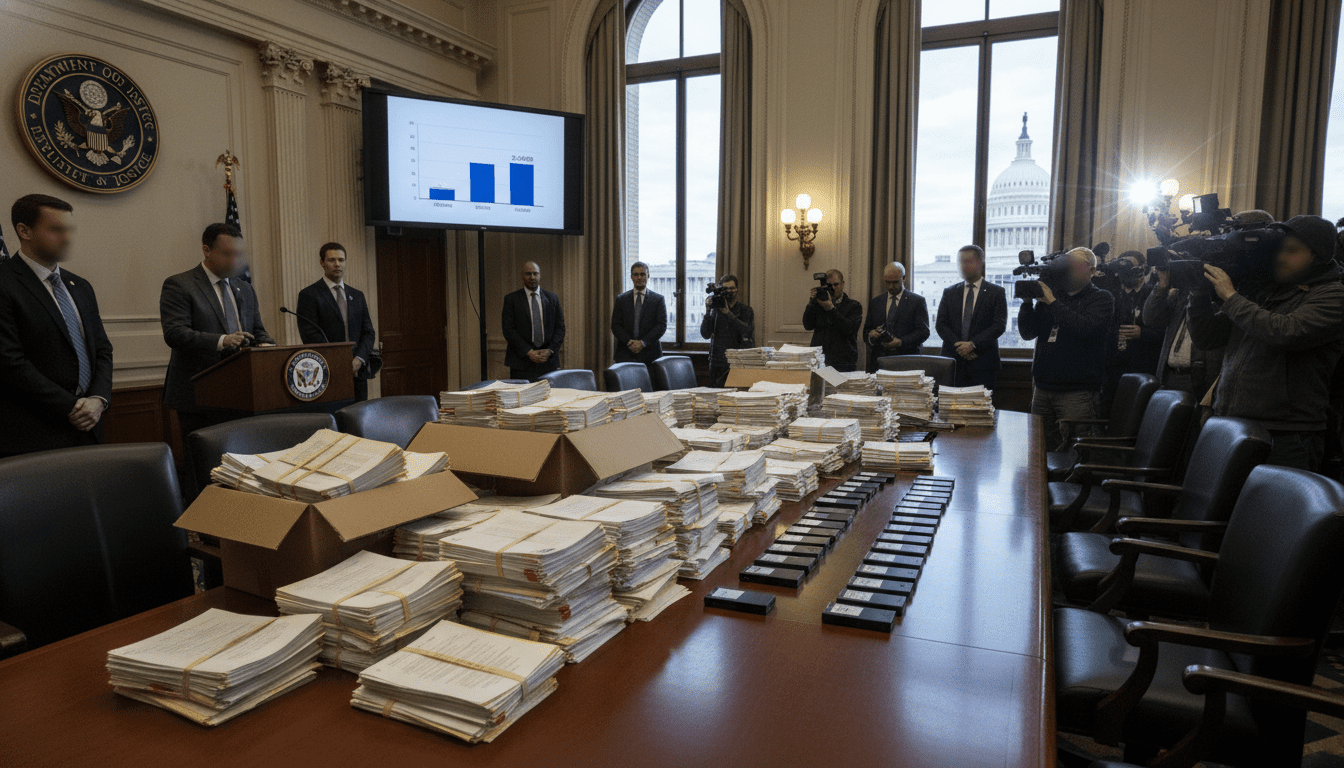
The Justice Department’s January 30 release comprised over three million pages of documents, approximately 2,000 videos and about 180,000 images, according to the department’s summary of the production.
Officials described the package as the final major tranche of unclassified investigative material, fulfilling statutory obligations that followed congressional action late in 2025.
The sheer volume of material has created logistical and legal challenges for researchers, journalists and advocacy groups attempting to review the records in full.
Congress ordered public access in November 2025
In November 2025, Congress passed legislation requiring federal authorities to release all unclassified records related to the Epstein investigation.
That law set a deadline for the Justice Department to make files public and aimed to provide transparency about the handling of prior state and federal prosecutions.
Lawmakers cited longstanding public interest in the case and questions about past prosecutorial decisions when pushing the measure through.
Justice Department cited victim privacy for phased releases
Officials at the Justice Department defended a phased and gradual disclosure process, saying many documents required redaction to protect victims’ identities and ongoing privacy concerns.
The department said extensive review and careful redaction were necessary before public posting, and that certain sensitive material had to be withheld or heavily edited under federal privacy rules.
Those explanations were offered repeatedly as the department released documents in multiple batches ahead of the final January 30 disclosure.
Redactions and identification failures drew criticism
Civil rights advocates, victim representatives and some lawmakers sharply criticized the department’s approach after numerous victims were identified in the released files despite claimed redactions.
Observers pointed to inconsistent blackouts, incomplete masking of names and metadata that revealed identities, arguing the protections proved inadequate in practice.
Rights groups urged additional review and corrective action to avoid further harm to people named in the materials.
Legal timeline: December 19, 2025 statutory deadline and subsequent delays
The statute required the Justice Department to complete its disclosure by December 19, 2025, but the department released many documents only in partial or heavily redacted form on and after that date.
Officials attributed the delay to the volume of records and the need for manual redaction work, a rationale that did not satisfy critics who had expected faster compliance.
The largest and most detailed release ultimately arrived on January 30, 2026, when the department provided the extensive dataset now under review.
Political and public fallout surrounding the files
The files intensified public scrutiny of past prosecutorial choices and of prominent figures connected to Epstein, reviving questions about who knew what and when.
Political leaders, including former and current officials whose names appear in records, faced renewed demands for explanation and transparency following the disclosure.
The release also reignited debate over how to balance transparency with privacy and how best to support victims while preserving the public’s right to know.
The materials made public on January 30, 2026 fill significant gaps in the public record and will likely generate additional inquiries, legal actions and investigative reporting in the months ahead.
