
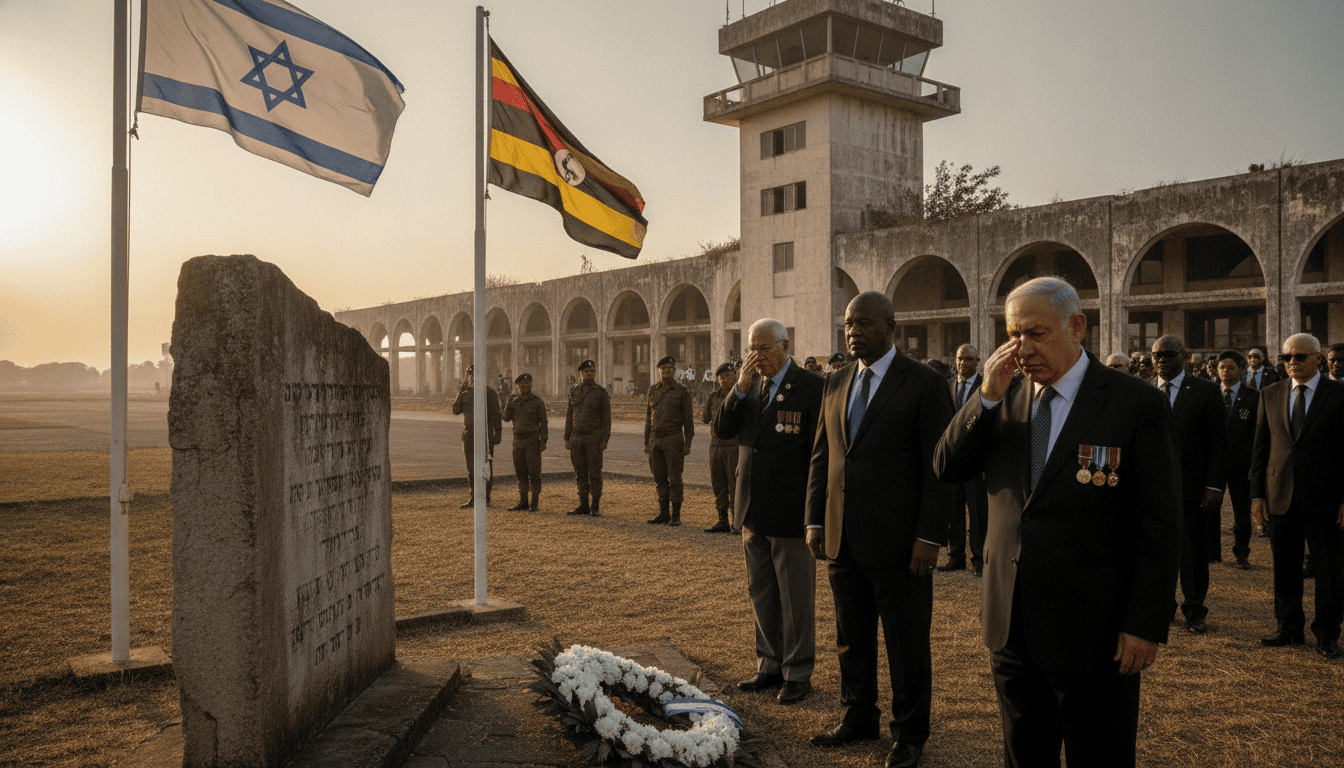
Entebbe raid: Israel marks 50 years since the daring 1976 hostage rescue
On July 4, 2026, Israel marks the 50th anniversary of the Entebbe raid, the 1976 hostage rescue that freed 102 hostages and reshaped international counterterrorism responses.
The Entebbe raid, also known as Operation Thunderbolt or Operation Jonathan, remains one of the most audacious long‑range hostage rescues in modern history. On July 4, 1976, Israeli commandos flew nearly 4,000 kilometres to Uganda, carried out a pre‑dawn assault on Entebbe airport and liberated the majority of hostages taken from an Air France jet. The mission’s blend of deception, speed and risk made it a seminal moment in how states respond to airliner hijackings and political terrorism.
Raid plan relied on a staged presidential convoy
Israeli planners transported vehicles, including a black Mercedes‑Benz 220D and several Land Rovers, in a transport aircraft to recreate a convoy they believed would pass for one belonging to Ugandan leader Idi Amin. The aim was to drive directly into the old terminal where hostages were held, exploit the expected deference to Amin’s entourage and achieve tactical surprise. Intelligence gathered from released passengers and technical familiarity with the airport informed the deception.
The operation used careful timing and allied support, including logistical assistance from Kenya, to move aircraft at low altitude across the Red Sea and avoid regional radar detection. Israeli engineers and firms who had worked on the terminal provided further operational detail, aiding the commandos’ approach under cover of darkness.
Convoy stopped after vehicle mismatch thwarted full surprise
The ruse was compromised when Amin’s actual vehicle—a white Mercedes—had recently replaced the black model the raiders had expected. Ugandan sentries stopped the approaching convoy and questioned its identity, prompting an immediate firefight at the checkpoint. Commandos shot two sentries to break through and rushed the terminal, abandoning part of the original deception plan.
Once inside the hall the assault unfolded rapidly. Israeli forces engaged the hijackers and Ugandan soldiers in intense close‑quarters combat. The commandos ultimately killed all seven hijackers and numerous Ugandan fighters, but the action carried heavy costs for both sides and for some hostages.
Casualties, evacuations and the death of Yonatan Netanyahu
The raid rescued 102 hostages alive, while three hostages were killed during the assault. Israeli forces suffered a single fatality among approximately one hundred commandos: Yonatan (Jonathan) Netanyahu, commander of the Sayeret Matkal unit, who was killed while leading the assault. His death became a powerful symbol in Israel and had a lasting impact on national memory.
Beyond the immediate battlefield losses, the operation prompted chaotic evacuations of freed hostages by the military transports that had carried the assault teams. The entire ground phase of the raid is widely reported to have lasted roughly an hour from landing to takeoff, underlining the speed and precision that made the operation possible despite the earlier setback at the checkpoint.
German hijackers, demands and the selection of Jewish passengers
The Air France aircraft had been hijacked on June 27, 1976, after departing Tel Aviv for Paris and stopping in Athens, where the group took control. Among the hijackers were two Germans, Wilfried Böse and Brigitte Kuhlmann, associated with the left‑wing Revolutionary Cells, together with members of a splinter of the Popular Front for the Liberation of Palestine (PFLP‑EO).
The captors demanded the release of 53 militants imprisoned in Israel, Germany, France and Switzerland. At Entebbe the hijackers segregated passengers, singling out Israeli and other Jewish travellers for continued detention. That act of selection reverberated politically in Germany and beyond and was cited by figures such as Joschka Fischer as pivotal to their rejection of leftist militancy.
Israeli government debate and archival revelations
Israel’s response was preceded by intense, public and private deliberations within the cabinet and military leadership. Initial reactions—such as Prime Minister Yitzhak Rabin’s assessment that France should lead the response—gave way to a decision that Israel itself must act. Documents later released by Israel’s state archives reveal the depth of the dilemma faced by leaders weighing the risks of a rescue against the precedent set by capitulation.
Defence Minister Shimon Peres framed the choice starkly in a July 3 meeting, arguing that a bold intervention was necessary despite the uncertainties. Military planners and political leaders balanced operational feasibility, the safety of hostages and the broader implications for international aviation and Israeli security when they authorised the raid.
Aftermath in Uganda and regional repercussions
Ugandan leader Idi Amin reacted with fury to the incursion. In the raid’s immediate aftermath Amin reportedly ordered reprisals: one remaining hostage in a Ugandan hospital was murdered, and punitive measures against perceived collaborators followed. Estimates of those killed in subsequent reprisals, including Kenyan nationals living in Uganda, run into the hundreds, reflecting the brutal local consequences of the international confrontation.
Internationally, the operation altered the calculus of how states confronted hijackings, signaling a move from negotiation and concessions in the 1970s toward the option of targeted military rescue when feasible. It also strengthened tactical cooperation among Western and regional security services and influenced the training and posture of specialised counterterrorism units in several countries.
Fifty years on, the Entebbe raid endures in military studies, diplomatic histories and public memory as a case study in the risks and costs of extraordinary rescue missions. Its legacy touches on political leadership, the ethics of hostage policy, and the human toll borne by rescuers, captives and civilian populations entangled in geopolitical violence.
The Entebbe raid remains contested terrain in historical interpretation: lauded by some as a moral and military necessity, criticised by others for the collateral losses it produced and for the diplomatic fallout that followed. Whatever the view, the events of July 4, 1976, continue to shape debates over how states balance force, diplomacy and the protection of citizens in the face of terrorism.
