
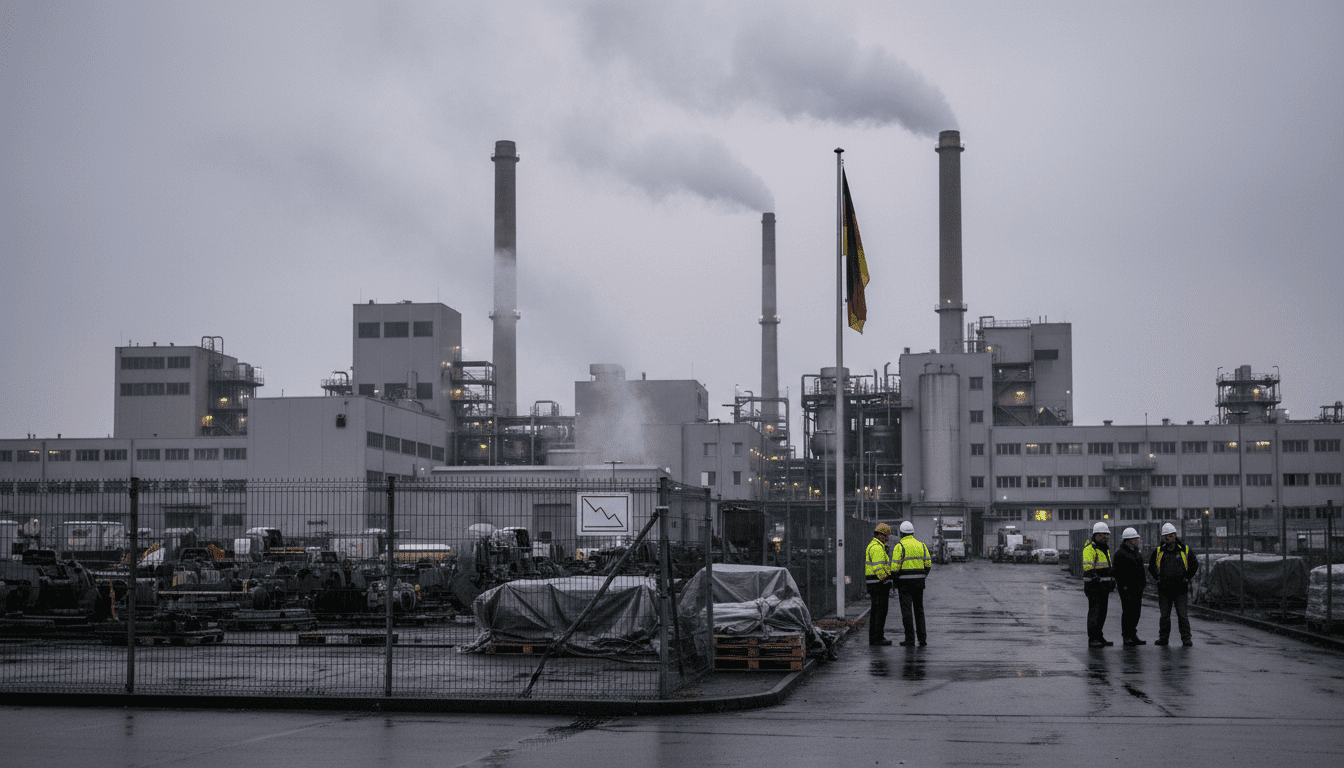
Energy-intensive industry in Germany falls 15.2% as energy prices bite
Germany’s energy-intensive industry declined 15.2% between February 1, 2022 and March 31, 2026 as soaring energy costs reshaped output and employment, the Federal Statistical Office reported.
Production Declines in Energy-Intensive Industries
The Statistische Bundesamt found that production in Germany’s energy-intensive industry fell 15.2% over the four-year period from February 2022 to March 2026. By comparison, overall industrial output in Germany dropped 9.5% in the same interval, underscoring the disproportionate impact on sectors that consume large amounts of energy. Officials and analysts link the decline directly to the sharp rise in energy prices that followed Russia’s full-scale invasion of Ukraine in February 2022.
Sectoral Winners and Losers
Not all sectors moved in the same direction; mineral oil processing was the standout, with production rising 24.6% over the period. In contrast, the deepest contractions occurred in glass, ceramics and stone products, where output fell roughly 25%. The paper industry and the chemical sector also saw substantial reductions, with declines of about 18.5% and 18.1% respectively.
Energy Mix and Gas Dependence in 2024
Energy-intensive industries consumed 75.6% of all industrial energy in 2024, the office reported, highlighting their centrality to industrial energy demand. Natural gas accounted for just over one quarter of the energy used, while mineral oil made up 21%, coal 18.1% and electricity 15.2%. That fuel mix left many manufacturers vulnerable when global gas supplies tightened and prices spiked after 2022.
Employment Trends and Labor Market Impact
The production downturn translated into fewer jobs: employment in energy-intensive industry fell 6.3% compared with early 2022 levels, reaching 794,400 workers. Job losses were concentrated in the paper sector, where market contraction and cost pressures drove cutbacks. Mineral oil processing bucked the trend by adding approximately 1,000 positions since 2022, reflecting its output gains.
Operational Responses and Cost Management
Companies in affected sectors adjusted operations to cope with higher input costs, including reduced capacity utilization, temporary shutdowns and renegotiated supply contracts. Many firms accelerated investments in energy efficiency or delayed energy-intensive projects to preserve cash flow. Some operators also pursued fuel switching where feasible, though technical and financial constraints limited how rapidly plants could convert to alternatives.
Policy Pressure and Industry Appeals
The downturn has intensified calls from industry groups for targeted policy measures to shield vulnerable manufacturers and support competitiveness. Proposals put forward by trade associations include temporary relief for energy surcharges, accelerated funding for electrification and efficiency upgrades, and measures to stabilize gas markets. Policymakers face a balancing act between short-term support and longer-term decarbonization goals, with both priorities shaping the debate.
Germany’s energy-intensive industry now confronts a test of resilience as producers weigh investment, staffing and supply decisions under lingering price uncertainty. The sector’s recovery will depend on how quickly energy costs normalize, the pace of efficiency and fuel-switching investments, and the policy choices made in Berlin to sustain strategic industrial capacity.
