
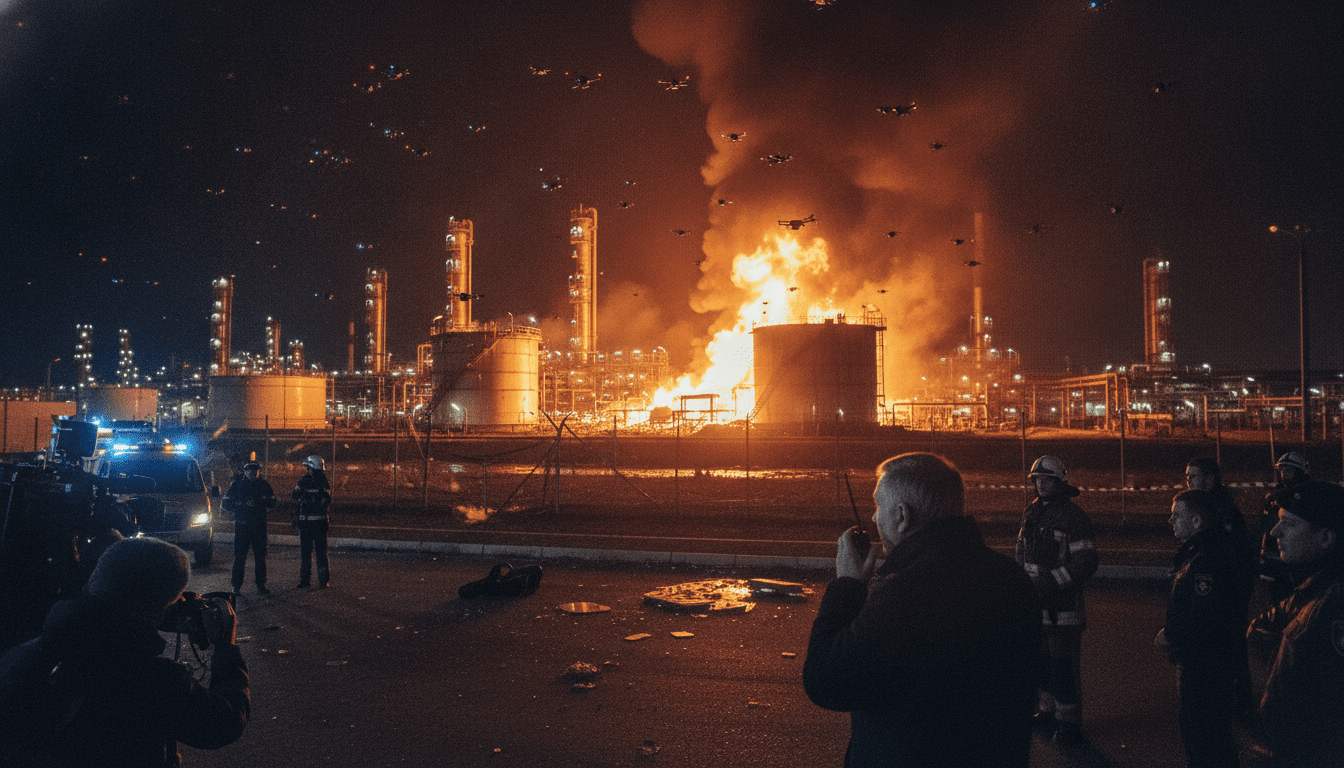
Drone attack on Moscow refinery: Mayor reports 60 drones intercepted after footage showed strike at Kapotnya
Drone attack on Moscow refinery: Mayor Sergei Sobyanin reported 60 drones downed as footage circulated showing a strike on the Kapotnya facility; officials say the fire has been extinguished and there were no injuries.
A wave of drones struck Moscow early Tuesday, with Mayor Sergei Sobyanin’s Telegram channel reporting that air defenses had shot down some 60 unmanned aircraft in what local authorities described as a large-scale attack on the capital. The phrase “Moscow refinery drone attack” began trending after video clips from Ukrainian channels and comments from President Volodymyr Zelenskyy circulated showing a drone impact and flames at the Kapotnya oil refinery in southeast Moscow. Russian emergency services later reported the blaze was extinguished and that there were no casualties.
Mayor’s office reports multiple drones intercepted
Mayor Sergei Sobyanin’s Telegram updates, posted despite platform restrictions, said air defenses engaged dozens of incoming drones in the early hours and that around 60 had been intercepted. The municipal posts noted one drone damaged an unspecified “object” within the Kapotnya refinery complex but did not publish photographic evidence to corroborate the claim.
Sobyanin’s account framed the incident primarily as an air-defense success, with local emergency responders dispatched to secure the site. That tally of intercepted drones was echoed by several Russian local briefings as authorities worked to reassure residents after a tense morning of alarms.
Video circulated by Ukrainian channels shows a strike at Kapotnya
Contrasting with the mayor’s sparse imagery, Ukrainian Telegram channels and President Zelenskyy’s team released graphic footage reportedly filmed at the Kapotnya refinery, showing a drone striking within the complex and a plume of smoke rising above industrial structures. Zelenskyy described the strike as evidence of Ukraine’s long-range capabilities, saying attacks at such distance put pressure on Russia to revise its conduct in the war.
An exiled Russian portal immediately relayed commentary from an analyst in exile who estimated damage to a significant portion of the refinery’s capacity, suggesting the hit could reduce output materially. That assessment has not been confirmed by independent experts or the refinery’s operators.
On-site observations show limited visible damage
Journalists and observers who visited the Kapotnya site after the incident found limited outward signs of a major blaze. Access to the facility appeared largely open, with only a few emergency vehicles present and no widespread smoke or strong odors of burning. Workers were seen going about tasks in adjacent garages and local residents continued routine movements through nearby parks.
A small ornamental pond in front of the refinery — complete with swans and islanded enclosures — remained undisturbed, a striking juxtaposition to the images of fire released online. The disparity between dramatic video clips and calmer on-the-ground reporting highlights the difficulty of establishing the scale of damage amid competing narratives.
Authorities say refinery operations were not disrupted
The regional civil-defense service reported that the fire at the Kapotnya facility was “completely liquidated” and described the situation as stabilized, asserting that the incident had not affected the plant’s functioning. Inspectors noted that only the flare stack’s pilot flame remained visibly active in the aftermath, a normal safety measure used to burn off excess gases.
Earlier this year, a separate drone wave in mid-May caused injuries near the same refinery entrance and damaged several structures, though municipal officials then said processing equipment was not compromised. In the latest incident, authorities emphasized continuity of operations to allay concerns about fuel supply and production in the Moscow region.
Transport disruptions and broader city impacts
As with previous drone episodes, Moscow suspended operations at all four major airports for several hours early in the day, a precautionary measure that has become routine during heightened threats. Commuters and travelers altered plans to avoid early-morning flights, while residents inside the city ring road reported more frequent sonic booms and a perception that strikes were drawing closer to urban districts.
In the industrial town of Elektrostal, about 50 kilometers east of the capital, emergency services responded to an unrelated large fire that broke out at the top of a residential tower, underscoring a busy morning for first responders across the region. The cumulative effect of repeated alerts and intermittent damage has altered daily life for many Muscovites, who say they now avoid weekend trips to dachas and travel less frequently outside the ring road.
Responses from Kyiv and Moscow remain oppositional
Kyiv’s public release of footage and statements from President Zelenskyy framed the incident as part of a deliberate campaign to pressure Russia by targeting fuel-processing assets and other logistical nodes. Kyiv characterized long-range drone strikes as a necessary tool to compel a change in Russia’s military posture.
Moscow responded through official channels by highlighting the effectiveness of air defenses and stressing that emergency services had contained damage and prevented casualties. State and municipal messaging sought to minimize panic, even as images and claims from multiple sides circulated widely across social media platforms.
The circulation of competing footage and assessments has left analysts and residents trying to reconcile a patchwork of reports. As investigators assess equipment damage and refine casualty and production figures, the immediate human toll appears limited, but the incident adds another high-profile episode to a pattern of strikes that has pressured energy infrastructure and civilian routines in and around Moscow.
